 Save to Pinterest
 I discovered the Fibonacci Fan Salad by accident while reorganizing my kitchen one afternoon, thumbing through a book on sacred geometry and suddenly seeing spirals everywhere. It hit me that food could be both nourishing and mathematically beautiful, so I grabbed whatever vegetables were in the crisper drawer and started arranging them in expanding arcs on a white plate. The result was so visually striking that my daughter asked if we were eating it or framing it, and that question became the whole point.
Last spring, I made this for a small dinner where one guest was newly vegetarian and honestly skeptical about salad as real food. Watching her expression shift as she took that first forkful—hitting spinach, then arugula, then the sweet burst of blueberries and walnut crunch—felt like I'd cracked some secret code. She asked for the recipe before dessert arrived, and it became our standing joke that geometry finally convinced her vegetables were worth eating.
Ingredients
- Baby spinach: Use the tender young leaves as your base; they're mild enough not to overpower but sturdy enough to anchor the spiral without wilting instantly.
- Arugula: This peppery green creates the next ring and adds that sharp bite that makes every other ingredient taste more alive.
- Cherry tomatoes: Halved so they nestle into the spiral's curves; room-temperature tomatoes taste sweeter than cold ones straight from the fridge.
- Cucumber: Slice paper-thin on a mandoline if you have one, but a sharp knife and patience work just fine.
- Radishes: The thin slices add visual pop and a subtle spice that builds on your palate as you eat.
- Red onion: Finely sliced and used sparingly as an accent; it mellows slightly once it touches the lemon dressing.
- Avocado: Slice this just before assembling so it doesn't brown, and choose one that yields slightly to pressure.
- Blueberries: These unexpected bursts of sweetness are what make people say the salad tastes like more than the sum of its parts.
- Toasted walnuts: Toast them yourself in a dry pan for two minutes until fragrant; store-bought toasted ones often taste stale by the time they reach you.
- Feta cheese: Crumble it by hand rather than using pre-crumbled if possible; the pieces stay more distinct and flavorful.
- Extra-virgin olive oil: Use one you actually like drinking, because you'll taste it clearly here without any cooking to hide behind.
- Lemon juice: Fresh squeezed from a room-temperature lemon yields more juice than a cold one.
- Honey: Just a touch to round out the dressing's edges without making it sweet.
- Dijon mustard: The emulsifier that holds everything together and adds a subtle depth.
Tired of Takeout? 🥡
Get 10 meals you can make faster than delivery arrives. Seriously.
One email. No spam. Unsubscribe anytime.
Instructions
- Lay your foundation:
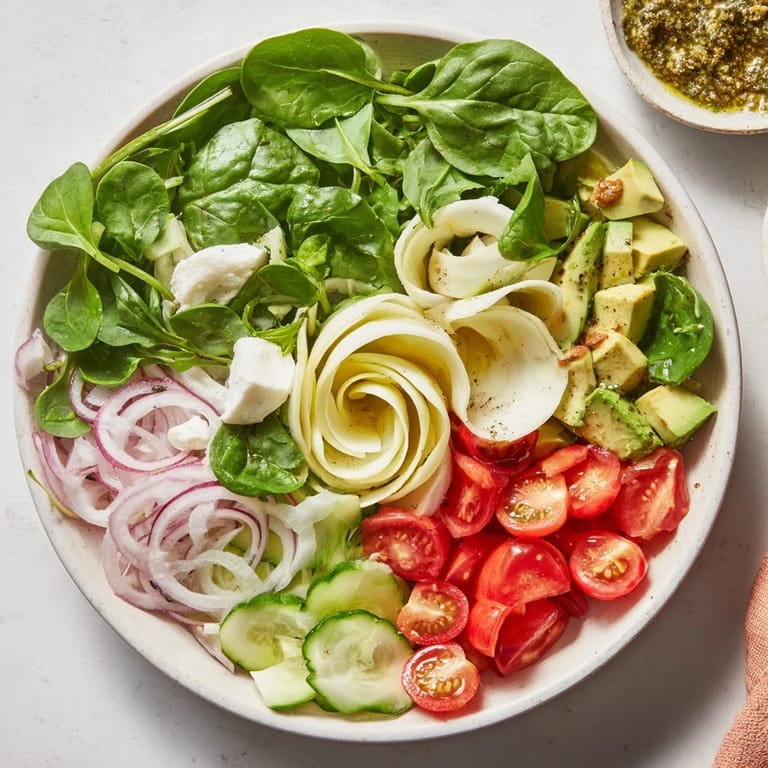
- Start with spinach leaves arranged in a crescent shape at the center of a large round platter, overlapping them slightly like roof shingles. This innermost arc sets the spiral's starting point and should feel intentional but not rigid.
- Build the second ring:
- Fan your arugula outward in an expanding arc that touches but doesn't overlap the spinach too much. You're creating depth here, so let some leaves stand at angles rather than pressing them flat.
- Continue the expansion:
- Arrange cherry tomatoes in the next ring, then cucumber slices, then radishes, each section noticeably larger and further out than the last. The spiral grows organically; you're not measuring, just following the mathematics your eye already understands.
- Add accent and jewels:
- Slip red onion slices as a thin ring toward the outer edge, then tuck avocado slices and blueberries into the spaces where they'll catch light and look intentional. This is where the salad stops being vegetables and becomes something people want to photograph.
- Top with texture:
- Scatter toasted walnuts and crumbled feta across the entire spiral, concentrating a bit more in the outer sections where the larger vegetables can handle the stronger flavors.
- Make the dressing:
- Whisk oil, lemon juice, honey, mustard, salt, and pepper in a small bowl until the mixture emulsifies and turns slightly pale. Taste it undressed first, then add salt and pepper knowing you can always adjust.
- Finish with intention:
- Drizzle the dressing evenly just before serving, letting it pool slightly in the spirals' curves. The moment between plating and eating is when this salad is at its absolute peak.
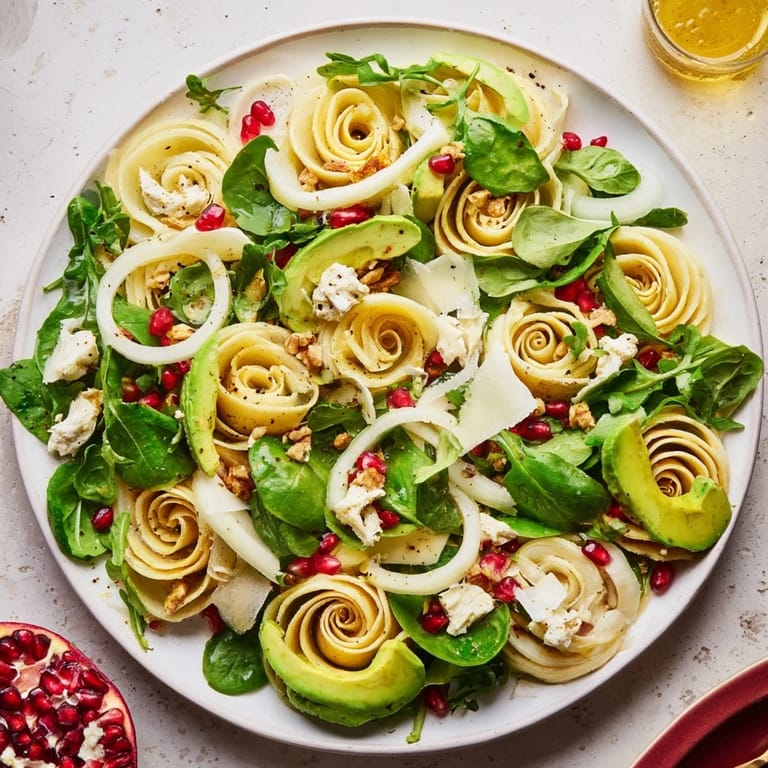 Save to Pinterest
 There's something almost meditative about arranging this salad, a quiet moment before the meal begins where you're thinking about balance and beauty instead of rushing. My hands slowed down the first time I made it, and I've noticed that same rhythm every time since—it's become as much a part of the recipe as the ingredients themselves.
Why the Fibonacci Pattern Works Here
The golden spiral isn't just beautiful to look at; it actually creates portions that feel instinctively balanced. Each expanding ring naturally holds slightly more of its ingredient than the last, so by the time someone's fork reaches the outer sections, they're hitting larger bites of radish and cucumber that can stand up to the bolder flavors gathering at the edges. The arrangement teaches you how to eat the salad—start at the center and spiral outward, and your palate develops like the spiral itself, each element building on what came before.
Variations That Keep It Fresh
Once you understand the spiral structure, the specific vegetables become suggestions rather than rules. I've made this with shredded beets in autumn, crispy roasted chickpeas scattered across the top in winter, and grilled peaches in late summer. The magic isn't the ingredients; it's the arrangement. Change what you layer, but keep the spiral, and you'll still get that same moment when people realize they're not just eating a salad.
Serving and Storage Tips
This salad is at its best served immediately after assembly, when everything is still crisp and the colors are vibrant. If you need to prep ahead, keep the ingredients separate and assemble the spiral just before your guests arrive, drizzling the dressing only when everyone's ready to eat. The dressing keeps for three days in a jar in the refrigerator, and individual vegetables can be prepped up to a day ahead if stored in separate airtight containers.
- For added protein, tuck grilled chicken strips or roasted chickpeas into the spiral as you build it.
- Goat cheese crumbles work beautifully if you prefer a tangier flavor over feta's salty nuttiness.
- Don't skip toasting the walnuts yourself; it's the small step that makes the biggest difference in the final bite.
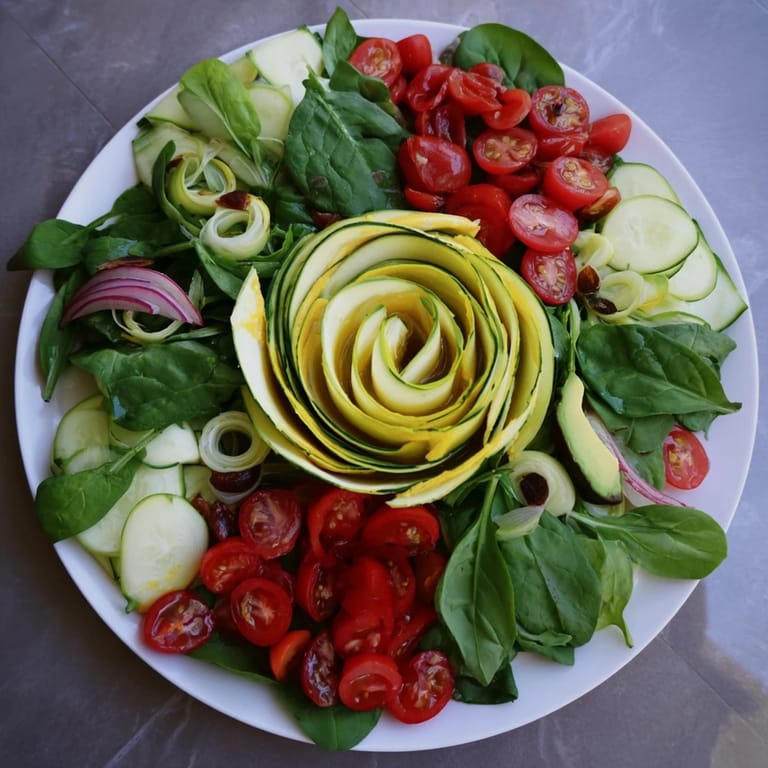 Save to Pinterest
 This salad taught me that presentation and flavor aren't opposing forces—sometimes they're the same thing. When food is beautiful enough to pause for, you taste it more carefully.
Recipe FAQs
- → What is the arrangement style of the ingredients?
Ingredients are laid out in expanding arcs following the golden spiral to create a balanced and visually stunning presentation.
- → Can the dressing be adjusted for sweetness?
Yes, the honey amount can be modified or replaced with other sweeteners to suit personal taste preferences.
- → Are there alternatives to feta cheese?
Goat cheese can be used as an alternative to feta to offer a different flavor profile.
- → What nuts are used in this salad?
Toasted walnuts are sprinkled over the salad to add crunch and a nutty flavor.
- → Is this dish suitable for gluten-free diets?
Yes, all ingredients are naturally gluten-free, making it suitable for gluten-free diets.
- → Can this be served with added protein?
For extra protein, grilled chicken or chickpeas can be added on top before serving.