 Save to Pinterest
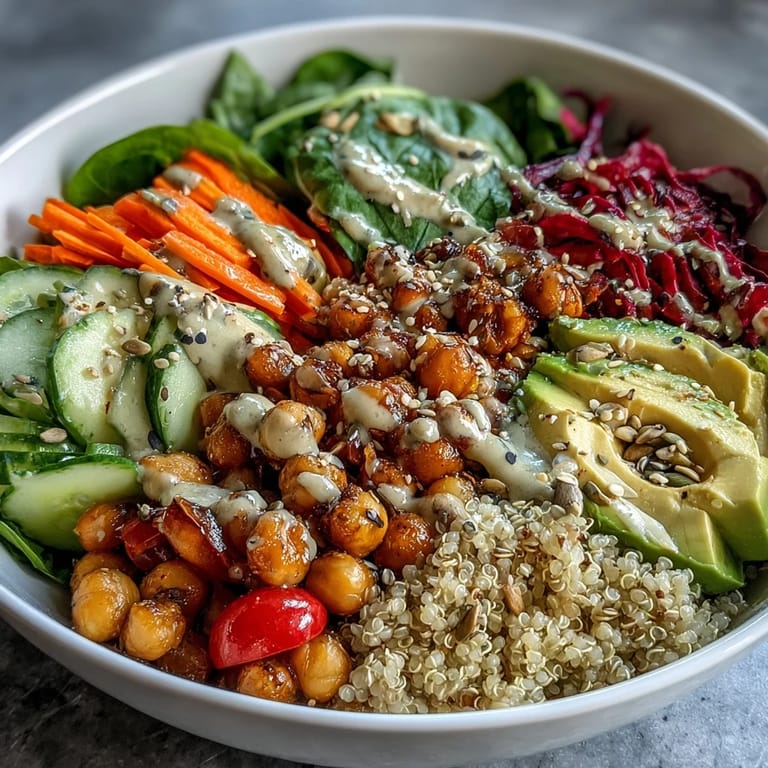
 A few years back, I was standing in my kitchen on a Tuesday afternoon, staring at a delivery box of farmer's market vegetables that seemed to mock my lack of inspiration. There were so many colors—purples, oranges, yellows, greens—and I remember thinking they deserved to be in the same bowl instead of scattered across different meals. That's when I started layering them over fluffy quinoa, drizzling tahini, and something just clicked. It became my answer to every question: What's for lunch? What do I bring to a potluck? How do I eat my feelings when they're complicated? This Rainbow Buddha Bowl became the dish.
I made this for my sister the first time she came back home after moving away, and she actually paused mid-bite to comment on how good it was. We sat outside on the porch, and I watched her eat slowly, savoring each component, and realized that this bowl had become my way of saying I care without making it awkward. Now whenever she visits, she requests it before she even puts her bags down.
Ingredients
- Quinoa, rinsed: This grain is your foundation, and rinsing removes the bitter coating that nobody wants to taste—trust me, I learned that the hard way.
- Water: Two cups ensures your quinoa absorbs evenly without turning to mush, which is the biggest mistake people make here.
- Salt: Half a teaspoon seasons the grain as it cooks, so you don't have to rescue it later.
- Cooked chickpeas: These deliver protein and earthiness; canned works beautifully if you rinse them well.
- Red cabbage, thinly sliced: The color doesn't fade, and it stays crisp even after a day in the fridge, which is when this bowl becomes truly useful.
- Carrots, julienned: Julienne them thin so they have presence without being chewy; it's worth the extra minute with a sharp knife.
- Cherry tomatoes, halved: Their sweetness balances the tahini's richness, so don't skip them.
- Yellow bell pepper, sliced: Yellow adds brightness that red or orange can't quite match, and it stays sweet after cooking.
- Cucumber, sliced: Keep this until the end—it wilts if you let it sit with dressing too long.
- Fresh baby spinach: It softens slightly from the warm quinoa underneath, becoming tender instead of raw.
- Ripe avocado, sliced: Add this right before eating or assembling to order, because it browns faster than you'd think possible.
- Toasted pumpkin seeds: Toasting them yourself takes three minutes and makes them taste infinitely better than raw ones.
- Sesame seeds: A light toast in a dry pan brings out their nuttiness; it's a small thing that changes everything.
- Tahini: This is your dressing base, and quality matters—a jarring, bitter tahini will sabotage the whole bowl.
- Lemon juice: Fresh lemon, not bottled, cuts through the richness and brightens every vegetable without making anything sour.
- Maple syrup or honey: Just a tablespoon balances the tartness and adds body to the dressing.
- Garlic, minced: One clove is enough; more and it becomes aggressive instead of supportive.
- Salt and black pepper: Taste as you go—what works for one batch might need adjustment for the next.
Tired of Takeout? 🥡
Get 10 meals you can make faster than delivery arrives. Seriously.
One email. No spam. Unsubscribe anytime.
Instructions
- Rinse and cook your quinoa:
- Bring water to a rolling boil, add rinsed quinoa and salt, then lower the heat so it simmers gently without boiling over. The quinoa will absorb all the water in about 15 minutes, at which point you remove it from heat and let it sit covered for five minutes—this last step matters because it lets the steam finish the job.
- Prep your vegetables while everything cooks:
- Slice the cabbage thin enough to be delicate, julienne the carrots so they're elegant, halve the tomatoes, slice the peppers and cucumber, and have your spinach ready. If you're prepping ahead, keep everything in separate containers so the colors stay distinct until assembly.
- Whisk together your dressing:
- Combine tahini, lemon juice, maple syrup, minced garlic, water, salt, and pepper in a bowl, whisking until it's smooth and pourable. If it's too thick, add water a tablespoon at a time—you want it to drizzle, not sit there like glue.
- Fluff your cooked quinoa:
- Once the five-minute rest is done, use a fork to gently break up the grains so they're light and separate, not clumped together.
- Assemble your bowls:
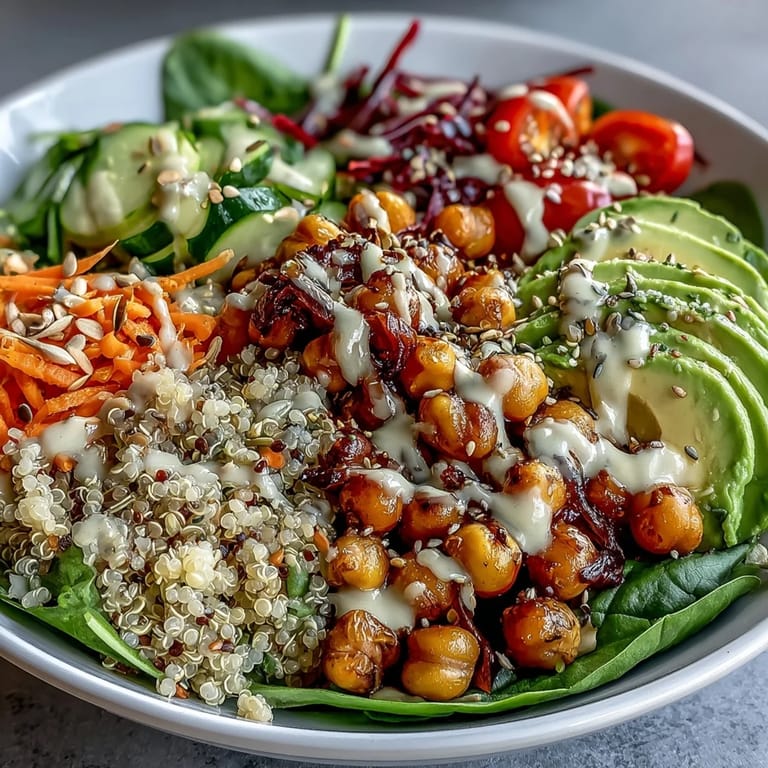
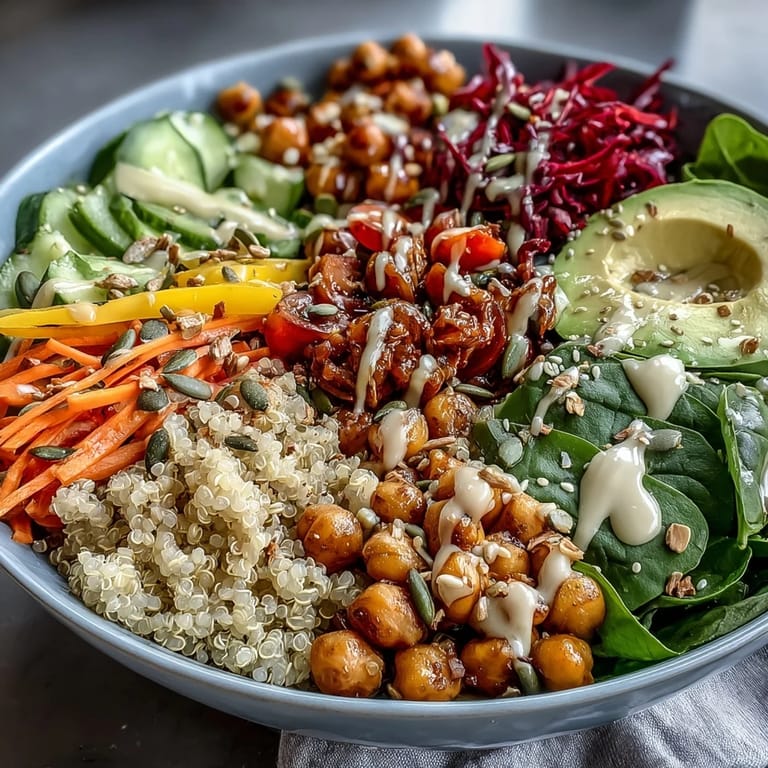
- Divide the quinoa among four bowls, then arrange each vegetable in its own section around the grain like you're creating something meant to be photographed. Place chickpeas wherever there's a gap, and lay avocado slices on top just before serving.
- Dress and garnish:
- Drizzle tahini dressing over everything—not too much, just enough so it runs into the crevices and coats the quinoa. Finish with a sprinkle of toasted pumpkin seeds and sesame seeds, and serve immediately while everything is still distinct and beautiful.
 Save to Pinterest
 There's a moment after I've assembled a Rainbow Buddha Bowl where I pause before eating, just looking at it. The colors seem almost unreal—that kind of vibrant that makes you feel like you're taking care of yourself in the most visible way possible. It stopped being just lunch and became a little act of kindness I do for myself on days when nothing else feels manageable.
Storage and Make-Ahead Magic
The genius of this bowl is that you can prepare almost everything the night before and still have something that tastes fresh. I keep the quinoa and vegetables in separate containers, which takes up fridge space but means I can assemble a bowl in the time it takes to boil water for tea. The only things I never make ahead are the avocado and the dressing, because one browns and the other makes everything slippery.
Ways to Spin It
Once you've made this bowl a few times, you'll start seeing it as a template rather than a fixed recipe. I've swapped the chickpeas for baked tofu when I'm trying to change things up, added roasted sweet potato when I wanted something more substantial, and even thrown in steamed broccoli on days when I was feeling virtuous. My friend added sriracha to her dressing and it became her signature, so now whenever she brings a bowl anywhere, everyone knows it's hers.
The Dressing Is Everything
I once made this bowl with a terrible store-bought tahini dressing because I was lazy, and it completely changed the experience—suddenly it tasted like guilt instead of nourishment. The moment I went back to whisking the dressing myself, the whole thing came alive again. It's creamy and tangy and slightly sweet, and it's the difference between a bowl that's just vegetables and a bowl that feels intentional and delicious.
- Make the dressing thinner than you think you want it—it thickens slightly as it sits and coats the other ingredients better.
- A squeeze of fresh lime works beautifully instead of lemon if that's what you have on hand.
- If you're serving this to someone with a sesame allergy, swap tahini for almond butter and use pumpkin seeds only—it's still gorgeous.
 Save to Pinterest
 This bowl has become the dish I turn to when I want to feel grounded and nourished without feeling deprived. It's colorful and healthy and delicious, which means you actually want to eat it instead of forcing yourself through it. That's the whole point, really.
Recipe FAQs
- → What makes this Buddha bowl nutritious?
Complete protein from quinoa and chickpeas, fiber from colorful vegetables, healthy fats from avocado and seeds, plus essential vitamins and minerals from fresh produce.
- → Can I prepare this bowl ahead?
Yes, assemble without avocado and dressing, then refrigerate up to 2 days. Add fresh avocado and drizzle tahini dressing just before serving.
- → What proteins work as alternatives?
Grilled tofu, tempeh, edamame, black beans, or lentils provide excellent protein variations while maintaining the bowl's nutritional balance.
- → How do I achieve fluffy quinoa?
Rinse quinoa thoroughly, simmer with salt in measured water, let rest covered 5 minutes after cooking, then fluff gently with a fork to separate grains.
- → What vegetables can I substitute seasonally?
Roasted sweet potato, steamed broccoli, shredded Brussels sprouts, roasted beets, or sautéed kale work beautifully in place of any listed vegetable.
- → Is this bowl gluten-free?
Naturally gluten-free when using certified GF quinoa and tahini. Always verify ingredient labels to ensure no cross-contamination during processing.