 Save to Pinterest
 There was this one July afternoon when my neighbor brought over a basket of strawberries so ripe they practically fell apart in your hands, and I realized I'd made pasta salad the same way for five summers running. I wanted something different, something that would match those berries instead of competing with them. That's when the idea hit—what if I treated strawberries like a real salad ingredient, not a garnish? Mixed with cool yogurt, sharp feta, and fresh herbs, it became something I couldn't stop making.
I first served this at a small gathering on a warm Saturday, and watching people take a second bite with genuine surprise was the moment I knew it belonged in regular rotation. One guest asked if it was inspired by something Polish and something British at the same time, which felt like exactly the right question—it kind of is.
Ingredients
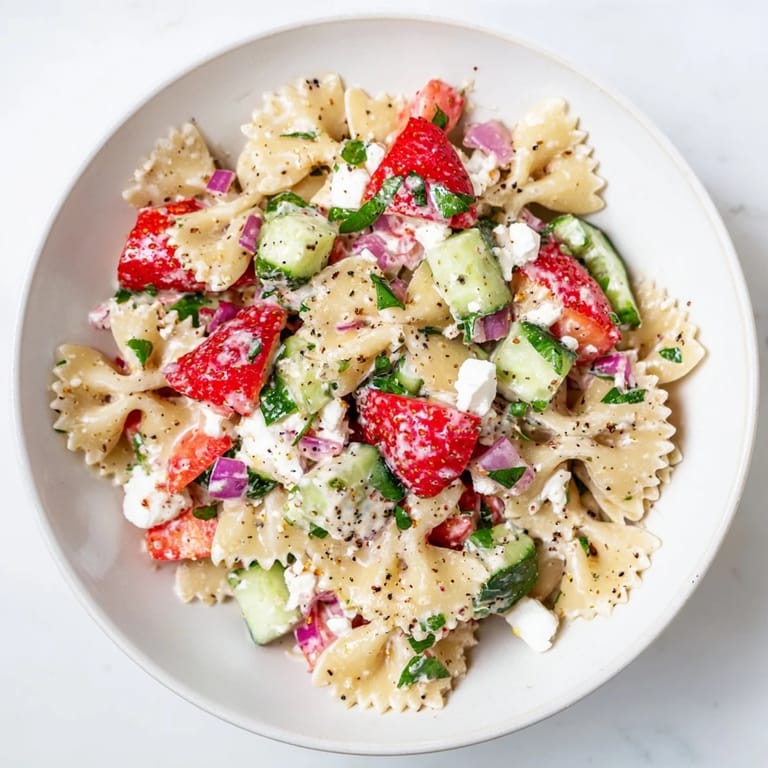
- Short pasta (farfalle or fusilli), 250 g: These shapes catch the dressing beautifully and hold up to tossing without breaking down like longer pasta would.
- Fresh strawberries, 300 g, hulled and quartered: Buy them ripe and use them the same day if you can; the juice they release is half the dressing.
- Feta cheese, 100 g, crumbled: Get block feta and crumble it yourself—pre-crumbled tends to be drier and less flavorful.
- Cucumber, 1 small, diced: Adds cool crunch that keeps the whole thing from feeling heavy, even on hot days.
- Red onion, 1 small, finely chopped: Start with less than you think you need; it gets stronger as it sits.
- Fresh mint and parsley, 2 tbsp each, chopped: Don't skip these—they're what make it taste alive and not just sweet.
- Plain Greek yogurt, 120 g: Regular yogurt will work in a pinch, but Greek yogurt has the right tang and body.
- Honey or maple syrup, 2 tbsp: Honey dissolves more cleanly into the dressing; maple syrup adds a subtle earthiness if you prefer it.
- Lemon juice, 1 tbsp: Squeeze it fresh from a real lemon—bottled tastes thin next to everything else here.
- Dijon mustard, 1 tsp: Sounds strange with fruit, but it's the secret that stops this from tasting like dessert.
- Freshly ground black pepper, to taste: Salt the pasta water generously; this is where it gets its backbone.
Tired of Takeout? 🥡
Get 10 meals you can make faster than delivery arrives. Seriously.
One email. No spam. Unsubscribe anytime.
Instructions
- Boil the pasta until it's exactly right:
- Use plenty of salted water—it should taste like seawater—and cook a minute less than the package says because it keeps cooking as it cools. Drain it, rinse it under cold running water while stirring gently with your hand, and spread it on a clean kitchen towel or large plate to cool completely.
- Build the base:
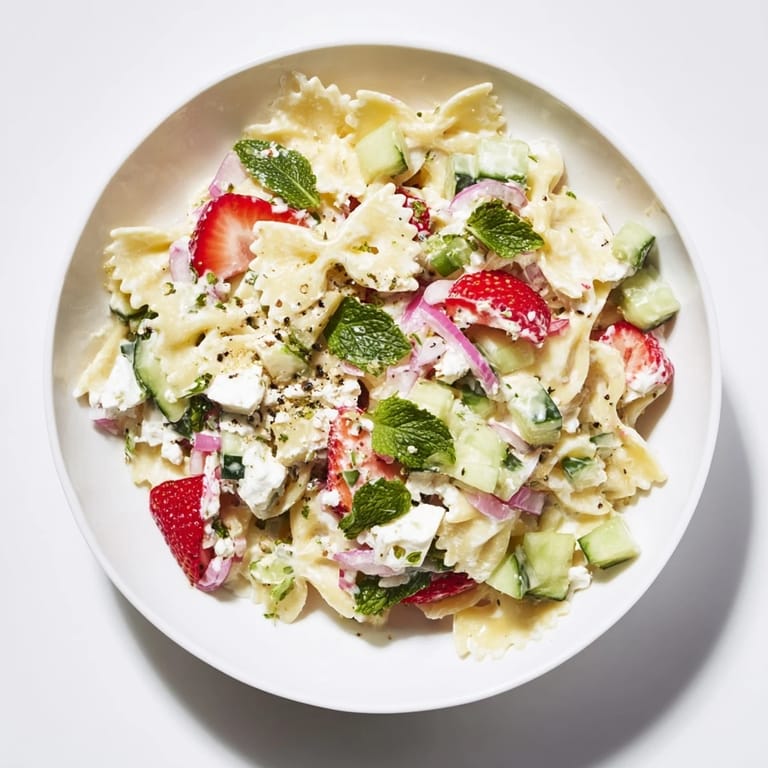
- Toss strawberries, feta, cucumber, red onion, mint, and parsley together in a big bowl. This is when you taste a strawberry and a piece of feta together to make sure you're happy with the balance.
- Make the dressing smooth:
- Whisk yogurt, honey, lemon juice, mustard, and pepper in a small bowl until everything is combined and looks creamy, about a minute. If it feels too thick, a splash of cold water loosens it up.
- Bring it together gently:
- Add the cooled pasta to the strawberry mixture, pour the dressing over everything, and toss with your hands or two spoons—not too aggressively, so the strawberries and feta keep their shape. You want to see all the ingredients wearing the dressing, not broken down.
- Let it rest:
- Cover it and put it in the fridge for at least 30 minutes so the flavors actually talk to each other. Taste it one more time before serving and adjust the lemon juice or pepper if it needs it.
 Save to Pinterest
 What I love most about this dish is watching people's faces when they realize strawberries and pasta belong together. It stopped being just something I made and became something people asked me for.
Why the Sweet-and-Savory Thing Works
The first few times I made this, I was honestly nervous about mixing fruit and feta so deliberately. But strawberries have this natural tartness that feta echoes, and the yogurt dressing sits in the middle like a bridge between them. The Dijon mustard was the breakthrough—just a touch keeps it from feeling like a dessert pretending to be dinner, and the fresh herbs make sure you always taste that this is real food, not a gimmick.
Timing and Temperature Matter More Than You'd Think
This is a dish that gets better as it sits, but only up to a point. If you make it three hours ahead and leave it uncovered, the herbs fade and the pasta absorbs too much liquid. The sweet spot is somewhere between 30 minutes and two hours—cold enough that the flavors have melded, but recent enough that everything still feels bright. Serve it straight from the fridge on warm days; there's nothing worse than a room-temperature strawberry.
What Comes Next
Once you've made this basic version, you'll start noticing things you want to add. That's the right instinct. I've thrown in toasted walnuts for crunch, swapped the feta for goat cheese when I wanted something creamier, and added torn basil when mint wasn't what I was feeling. The beauty of this recipe is that it's solid enough to handle changes but balanced enough that it doesn't need them.
- Toasted walnuts or pecans add a nutty crunch that keeps it interesting on the second day.
- A tiny drizzle of aged balsamic over the top right before serving brings out the strawberry sweetness even more.
- If you're feeding vegetarians specifically, this already is—just double-check your pasta label.
 Save to Pinterest
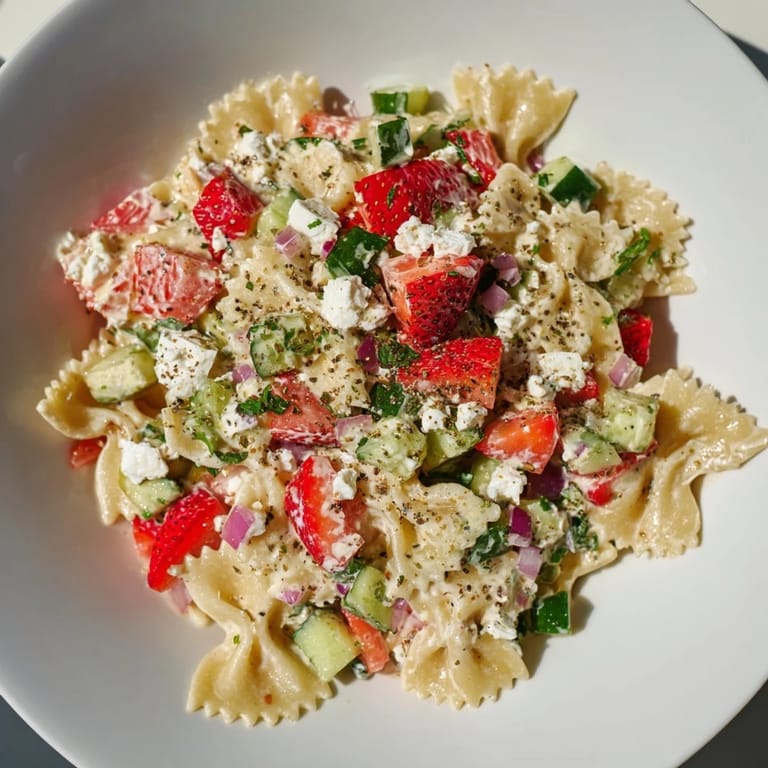
 This recipe taught me that the best dishes are often the ones that shouldn't work on paper but somehow do. It's become my answer to what to make when the weather is warm and someone brings home beautiful fruit from the market.