 Save to Pinterest
 There's something quietly magical about the way lentils soften in simmering broth, how they release an earthy warmth that fills the entire kitchen. I discovered this soup on a rainy Tuesday when my fridge felt bare but my pantry held promise—a few dried lentils, some vegetables starting to wrinkle, and a half-empty box of ditalini. What emerged was far more comforting than the sum of its simple parts, and now it's the soup I return to whenever I need something nourishing without fuss.
I made this for my neighbor last winter when she was recovering from surgery, ladling it into mason jars still warm from the pot. She said it reminded her of soups from her childhood, and that simple compliment made me realize some dishes transcend recipes—they become small acts of kindness.
Ingredients
- Olive oil: Just enough to coat the bottom of the pot and coax out sweetness from the vegetables.
- Yellow onion, carrots, and celery: The holy trinity of vegetable cookery—if you remember these three, you'll never make a boring broth.
- Garlic: Never skip the minute after you add it; that fragrant signal means you're on the right track.
- Brown lentils: They stay firm through the cooking time, unlike red lentils which collapse into creaminess; choose based on the texture you crave.
- Ditalini pasta: These small tubes catch broth in their centers, but any small pasta shape works if that's what you have on hand.
- Vegetable broth: Low-sodium lets you taste the vegetables, and you can always add salt later.
- Diced tomatoes and tomato paste: The paste concentrates tomato flavor, while canned tomatoes bring brightness and body to the broth.
- Thyme, oregano, and bay leaf: These herbs are the backbone—dried works perfectly here since they simmer long enough to bloom.
- Red pepper flakes: A whisper of heat rather than a shout; add it if your household leans spicy.
- Fresh parsley and Parmesan: The finishing touches that remind you this is finished, not just done cooking.
Tired of Takeout? 🥡
Get 10 meals you can make faster than delivery arrives. Seriously.
One email. No spam. Unsubscribe anytime.
Instructions
- Build your base:
- Heat the olive oil in your largest pot over medium heat, then add the chopped onion, carrots, and celery. Let them soften for 6 to 8 minutes, stirring occasionally—you want them tender but not browned, releasing their sweetness into the oil.
- Wake up the garlic:
- Stir in the minced garlic and cook for just 1 minute until the smell hits you like a gentle wake-up call. This stops the garlic from burning while letting it flavor the oil around it.
- Build the broth:
- Add the rinsed lentils, canned tomatoes with their juice, tomato paste, thyme, oregano, bay leaf, and red pepper flakes if you're using it. Stir everything together so the tomato paste dissolves and coats the vegetables and lentils.
- Simmer gently:
- Pour in the vegetable broth and bring the whole pot to a boil, then lower the heat to a gentle simmer and cover it. The lentils will soften in about 20 minutes; you're looking for them to be tender but not falling apart.
- Add the pasta:
- Stir in the ditalini and let it cook uncovered for 8 to 10 minutes, stirring now and then so the pasta doesn't stick to the bottom. The soup will thicken as the starch releases from the pasta, creating a light, creamy texture without any cream.
- Finish and taste:
- Fish out the bay leaf, then taste and season boldly with salt and pepper. Remember that bay leaf or you'll find it in a spoonful—it's bitter and tough.
- Serve with joy:
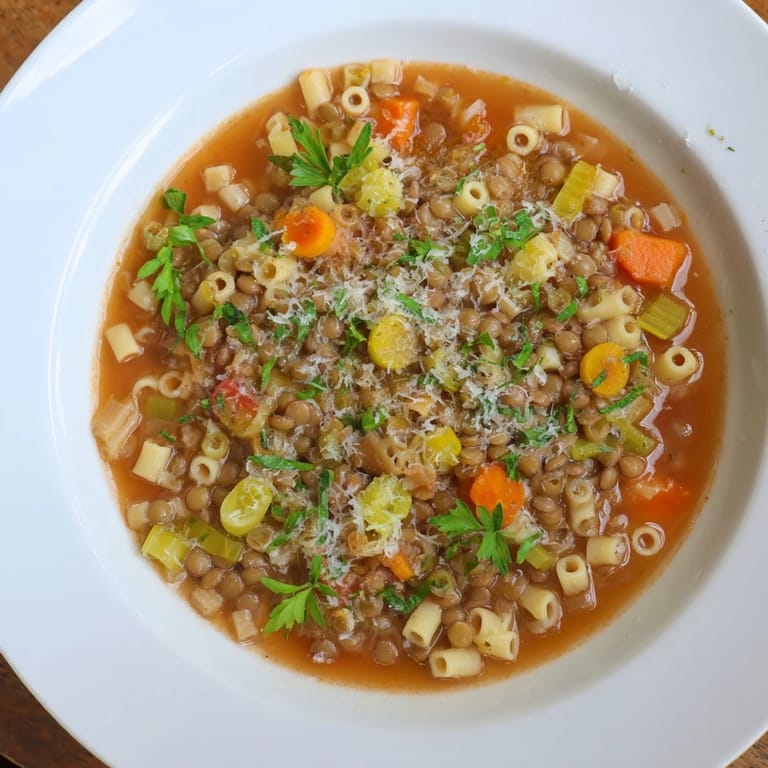
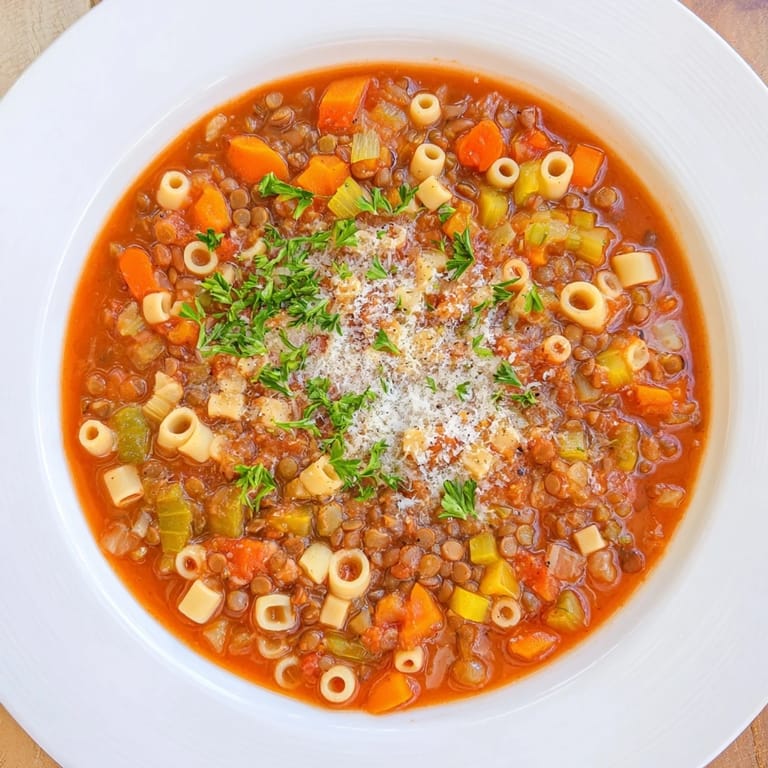
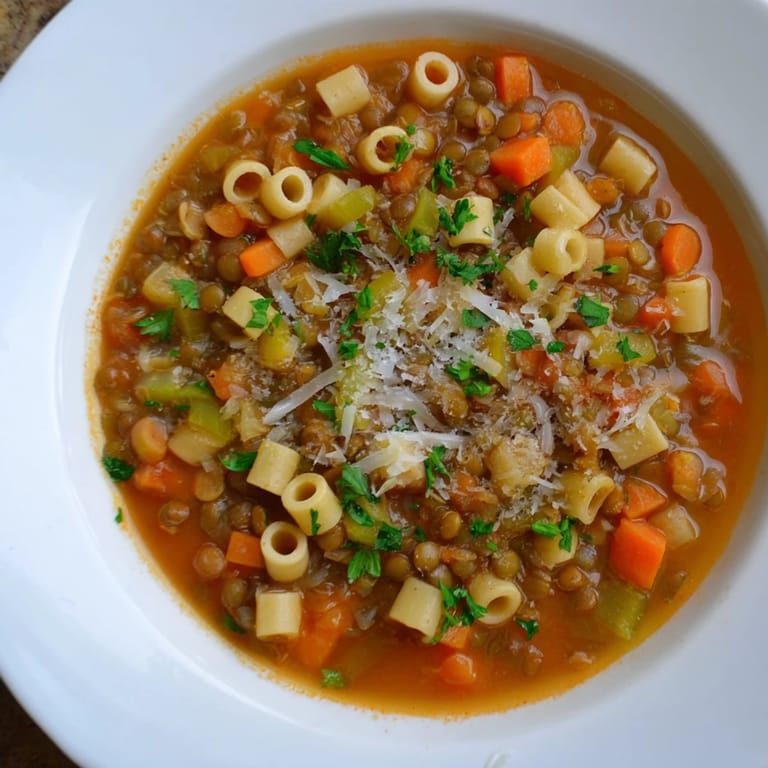
- Ladle into bowls and top with fresh parsley and, if you like, a shower of Parmesan cheese that will melt slightly from the heat.
 Save to Pinterest
 This soup taught me that cooking doesn't always need perfection or complexity to bring people together. Some of the warmest moments in my kitchen have happened over steaming bowls of this simple, unassuming soup.
The Soul of Humble Cooking
This recipe embodies everything I love about Italian home cooking—economical ingredients that somehow taste abundant, a technique so straightforward that even a tired weeknight version comes out delicious, and the kind of comfort that makes you feel cared for. There's no pretension here, just honest flavors building on each other until you find yourself reaching for a second bowl you didn't plan to eat.
How to Make It Your Own
While the recipe as written is perfect, the beauty of this soup is its flexibility. I've added everything from chopped spinach to shredded zucchini, swapped out the ditalini for orzo or pastina, and even used red lentils when brown ones weren't on hand—each version turned out differently wonderful. Some days I skip the Parmesan entirely and finish with a drizzle of good olive oil instead, and the soup tastes equally nourishing.
Serving Suggestions and Storage
Serve this soup with thick slices of crusty bread for dunking, or pair it with a simple green salad if you want something lighter alongside. It stores beautifully in the refrigerator for up to 5 days, and it freezes well for up to 3 months—I often make a double batch and freeze portions in containers so I have ready-made comfort waiting for future cold days.
- Reheat gently on the stovetop with a splash of broth or water, since the pasta will have absorbed liquid while stored.
- For vegan diners, simply omit the Parmesan or use a plant-based alternative that melts softly.
- Fresh herbs like basil or thyme stirred in at the end brighten the soup if you have them growing on a windowsill.
 Save to Pinterest
 This is the soup I reach for when I want something that feels like home, tastes nourishing, and doesn't demand much of me. It's proof that the best meals often come from simplicity and trust.
Recipe FAQs
- → Can I substitute ditalini pasta?
Yes, small pasta shapes like elbow macaroni or small shells work well as alternatives to ditalini.
- → How long should lentils cook to become tender?
Brown lentils typically take about 20 minutes of simmering to soften without becoming mushy.
- → Can I make this dish vegan?
Omit the Parmesan cheese or use a plant-based alternative to keep the dish vegan-friendly.
- → What herbs complement the flavor?
Dried thyme, oregano, and a bay leaf add an aromatic, earthy profile to the broth.
- → Is it possible to add greens to this preparation?
Yes, adding chopped spinach or kale in the final minutes of cooking introduces extra nutrients and color.
- → How should the soup be seasoned at the end?
Salt and freshly ground black pepper are added to taste after cooking to balance the flavors.