 Save to Pinterest
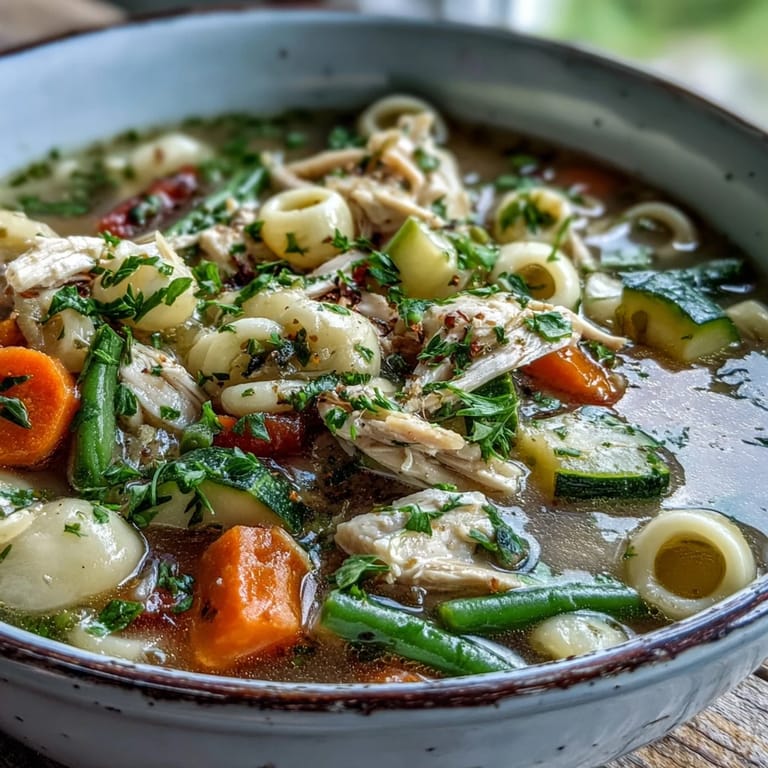
 There's something about a pot of soup that makes a kitchen feel like the heart of everything. My neighbor once stopped by on a gray Tuesday afternoon, and the smell of this chicken and pasta soup simmering on my stove made her linger longer than she'd planned. That's when I realized this wasn't just a weeknight dinner—it was the kind of dish that slows people down and makes them want to stay.
I made this for my daughter's first day home from college, and watching her eat bowl after bowl while telling stories about her roommate felt like a small victory. There's comfort in knowing a simple pot of soup can bridge the distance that builds during a semester apart.
Ingredients
- Boneless, skinless chicken breasts (2, about 400 g): Cut them into half-inch cubes so they cook evenly and quickly without becoming tough or stringy.
- Medium carrots (2), peeled and sliced: They add natural sweetness and stay slightly tender in the broth, which is exactly what you want.
- Celery stalks (2), sliced: This is your aromatic base alongside the onion and garlic—don't skip it even if you think you don't like celery.
- Medium onion (1), finely chopped: The foundation of flavor for any good soup; use sweet onions if you can find them.
- Garlic cloves (2), minced: Mince it fresh and add it at just the right moment so it becomes fragrant without burning.
- Medium zucchini (1), diced: This brings a subtle earthiness that mellows the broth beautifully.
- Green beans (1 cup or 150 g), trimmed and cut into 1-inch pieces: They stay bright and slightly snappy if you time the cooking right.
- Frozen peas (1 cup or 150 g): Add these near the end so they stay plump and sweet rather than mushy.
- Diced tomatoes (1 can, 400 g), undrained: Keep the juice—it's liquid gold for the broth.
- Fresh parsley (2 tablespoons), chopped: Stir it in at the very end for brightness that ties everything together.
- Small pasta shapes (1 cup or 100 g), like ditalini or elbow: These tiny shapes get cradled by the broth rather than drowning in it.
- Low-sodium chicken broth (8 cups or 2 liters): Good broth is worth the investment; taste yours first before adding extra salt.
- Olive oil (1 tablespoon): Just enough to get the vegetables softening without making the soup feel heavy.
- Dried thyme (1 teaspoon): Thyme has this peppery, almost minty quality that becomes gentle and layered in a long simmer.
- Dried basil (1 teaspoon): Basil whispers rather than shouts, so don't be shy with it.
- Bay leaf (1): Remove it before serving—it's there to do its quiet work, not to be eaten.
- Salt and freshly ground black pepper, to taste: Taste as you go; you might need less salt if your broth is already seasoned.
Tired of Takeout? 🥡
Get 10 meals you can make faster than delivery arrives. Seriously.
One email. No spam. Unsubscribe anytime.
Instructions
- Build your flavor foundation:
- Heat the olive oil in your large soup pot over medium heat, then add the onion, carrots, and celery all at once. Let them soften for about five minutes, stirring occasionally—you'll notice the kitchen starting to smell alive.
- Wake up the garlic:
- Add the minced garlic and cook for just one minute, watching for that moment when the rawness disappears and it becomes fragrant. Don't let it brown or it'll taste bitter in your finished soup.
- Introduce the chicken:
- Stir in your chicken cubes and let them cook for four to five minutes until they're lightly browned on the outside but still slightly underdone in the center. This partial cooking keeps them from becoming tough once they finish in the broth.
- Layer in the vegetables and seasonings:
- Add the zucchini, green beans, tomatoes with their juices, thyme, basil, bay leaf, salt, and pepper. Give everything a good stir so the herbs distribute evenly throughout.
- Bring it to a boil:
- Pour in the chicken broth and turn the heat up until you see active bubbling. Then lower the heat, place a lid on the pot, and let it simmer gently for fifteen minutes—this gives the vegetables time to soften and the flavors to meld.
- Finish with pasta and peas:
- Remove the lid, add the pasta and frozen peas, and simmer uncovered for ten to twelve minutes. The pasta will gradually absorb the broth while getting tender, and the peas will turn a vibrant green.
- Final touches:
- Fish out the bay leaf and discard it, then stir in the fresh parsley. Taste the soup and adjust the salt and pepper—you might find you need just a touch more.
 Save to Pinterest
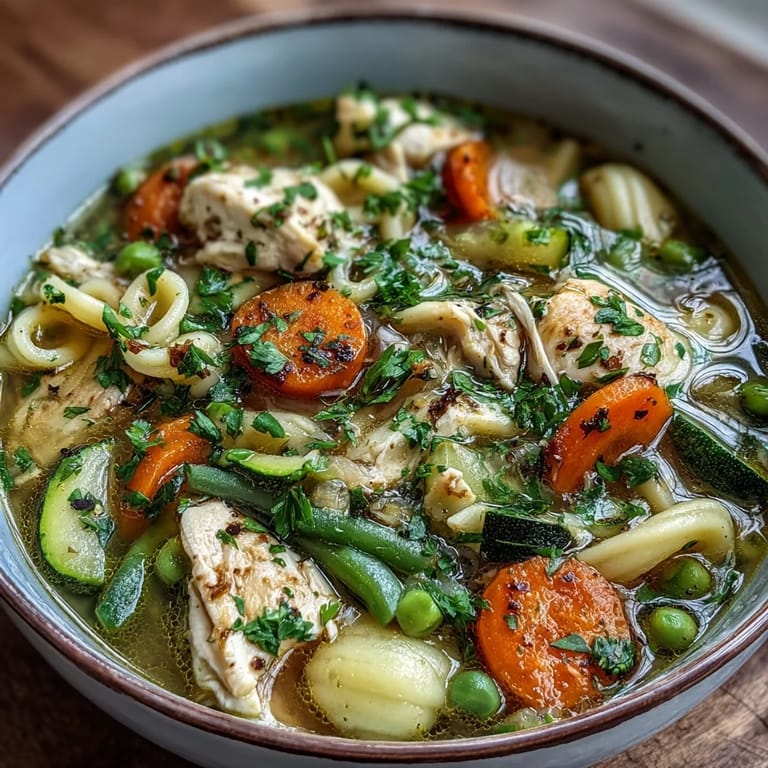
 This soup has a way of appearing on tables when someone needs it most—after a long day, during a cold snap, or when there's simply nothing else in the kitchen except intention. It asks very little of you but gives back warmth and substance in equal measure.
Playing with Vegetables
One rainy afternoon I had bell peppers, spinach, and corn but no zucchini or green beans, so I threw them all in without hesitation. The soup turned slightly sweeter and earthier, and I realized this dish thrives on improvisation. Whatever vegetables you have on hand will work—just keep the quantities roughly the same and trust that the broth will tie them all together. Some people add mushrooms or swap in fresh herbs like dill instead of thyme. The beauty is that the structure of the soup is forgiving enough to bend with what's in your kitchen.
Broth Matters More Than You Think
Years ago I made this with a deeply flavorful homemade broth I'd been hoarding in the freezer, and the difference was almost shocking—the soup tasted rounder and more refined without me changing anything else. Since then, I've learned to taste my broth before adding salt and to choose low-sodium options when I'm using store-bought. Good broth is the difference between a soup that tastes like ingredients floating in water and one that feels intentional and complete. If you ever have the time to make your own broth, this is the recipe that will make you a believer.
Serving and Storage Wisdom
Serve this soup hot with crusty bread on the side—something you can drag through the broth and the bottom of your bowl. It pairs beautifully with a crisp white wine like Sauvignon Blanc, and the acidity cuts through the richness without competing with the herbs.
- Leftover soup keeps well in the refrigerator for three to four days in an airtight container.
- If you're storing it for longer, you can freeze it for up to three months, though the pasta texture will soften slightly upon reheating.
- Reheat gently on the stovetop and add a splash of broth if the soup has thickened too much.
 Save to Pinterest
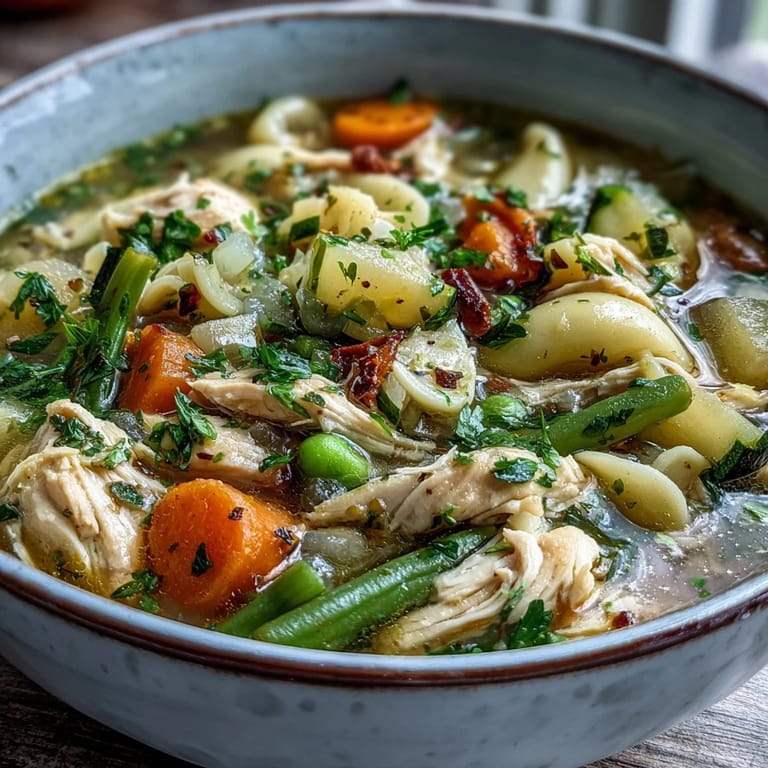
 This is the kind of soup that asks nothing except that you give it a little time and attention. Whatever you're making it for—a quiet night at home or a table full of people who need feeding—it will do its job with grace.
Recipe FAQs
- → What pasta shapes work best in this soup?
Small pasta shapes like ditalini, elbow macaroni, orzo, or small shells work perfectly. They hold their shape well during simmering and are easy to spoon up with the broth and vegetables.
- → Can I make this soup ahead of time?
Yes, but the pasta will absorb liquid as it sits. For best results, cook the soup without pasta, refrigerate up to 3 days, then add fresh pasta when reheating and simmer until tender.
- → How do I prevent the pasta from becoming mushy?
Add pasta during the last 10-12 minutes of cooking and keep the broth at a gentle simmer. If storing leftovers, consider keeping pasta separate and adding it when reheating individual portions.
- → Can I use rotisserie chicken instead of raw chicken?
Absolutely. Use shredded rotisserie chicken and add it during the last 5 minutes of cooking just to heat through. This saves time and adds extra depth of flavor from the seasoned chicken.
- → What vegetables can I substitute?
Spinach, kale, corn, bell peppers, or butternut squash work well. Adjust cooking times accordingly—leafy greens need just 2-3 minutes, while harder vegetables like squash may need longer simmering.
- → How can I make this gluten-free?
Simply replace regular pasta with gluten-free pasta shapes and ensure your chicken broth is certified gluten-free. The cooking method remains exactly the same.