 Save to Pinterest
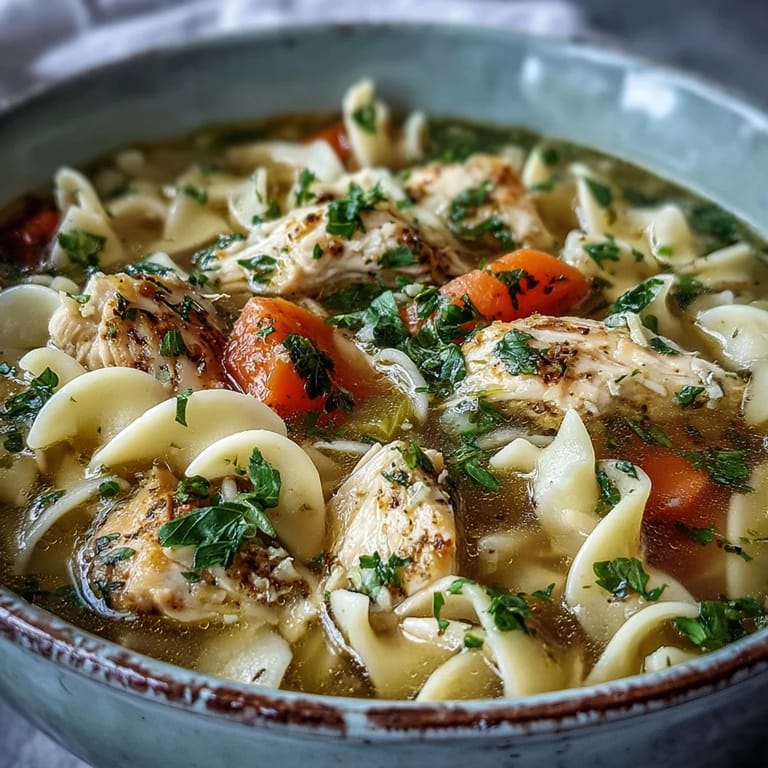
 My neighbor knocked on the door one February afternoon with snow still melting in her hair, asking if I had something warm to share. I had chicken breasts and pantry staples, so I threw this soup together while we talked by the stove. Twenty-five minutes later, she was cradling a steaming bowl with both hands, and honestly, that's when I realized how powerful simplicity can be in the kitchen.
My kids actually requested this for their school lunch thermoses, which tells you everything you need to know. There's something about how the noodles soak up that golden broth that makes people ask for seconds without hesitation.
Ingredients
- Boneless, skinless chicken breasts: Dicing them into bite-sized pieces ensures they cook quickly and distribute evenly throughout the pot.
- Onion, carrots, and celery: This aromatic trio is the backbone of the flavor, and sautéing them first unlocks their sweetness.
- Garlic: Just two cloves, minced fine, add a whisper of depth without overpowering the delicate broth.
- Low-sodium chicken broth: Using low-sodium lets you control the salt level and prevents the soup from becoming oversalted as it simmers.
- Egg noodles: They absorb the broth beautifully and add a comforting texture that makes the soup feel substantial.
- Bay leaf, thyme, and parsley: These dried herbs create that familiar, kitchen-filling aroma that signals comfort food is on the way.
- Olive oil: Two tablespoons is enough to soften the vegetables without making the broth greasy.
- Salt and black pepper: Always taste at the end and adjust to your preference, since broths vary in their natural saltiness.
Tired of Takeout? 🥡
Get 10 meals you can make faster than delivery arrives. Seriously.
One email. No spam. Unsubscribe anytime.
Instructions
- Build your flavor base:
- Warm the olive oil over medium heat, then add your diced onion, carrots, and celery. Let them soften for about five minutes, stirring occasionally until the onions turn translucent and the kitchen fills with that cozy, savory smell.
- Wake up the garlic:
- Stir in your minced garlic and listen for it to sizzle. One minute is all you need, just until the aroma shifts from sharp to sweet and mellow.
- Sear the chicken briefly:
- Add your diced chicken and stir for three to four minutes until the outside loses its raw pink color. You're not trying to fully cook it yet, just seal in the juices.
- Pour in the broth and season:
- Add your chicken broth, bay leaf, thyme, parsley, salt, and pepper. Bring everything to a gentle boil, then immediately turn the heat down to a simmer.
- Let it simmer:
- Keep it at a low simmer for ten minutes so the chicken finishes cooking through and all the flavors meld together into something cohesive and warm.
- Add the noodles:
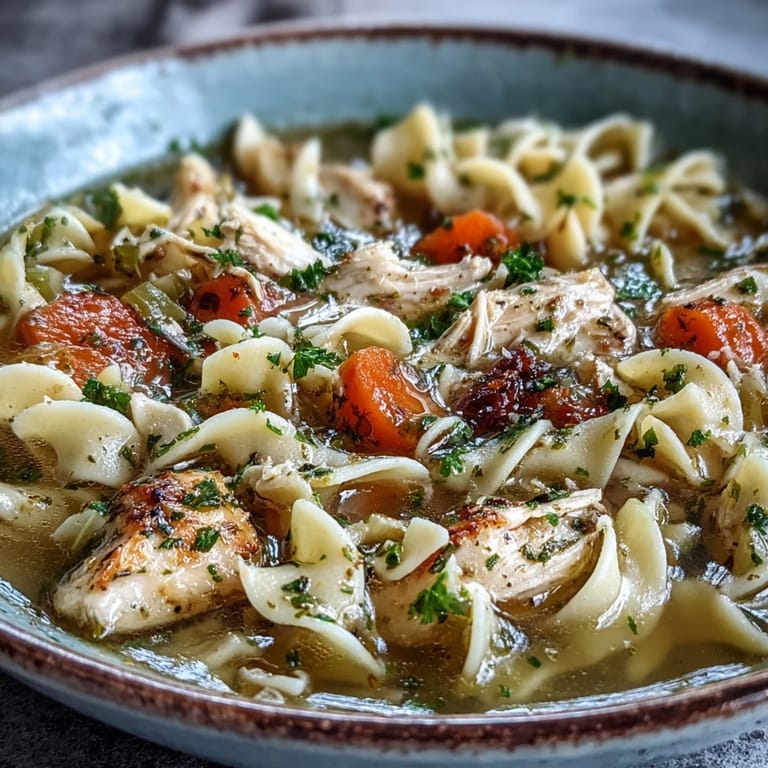
- Stir in the egg noodles and simmer for eight to ten minutes, stirring occasionally so they don't clump. They'll absorb some of the broth as they cook, thickening it just enough.
- Taste and adjust:
- Fish out the bay leaf, then taste a spoonful of broth. Add more salt, pepper, or herbs if it needs it, remembering that you can always add more but you can't take it back.
- Serve with warmth:
- Ladle into bowls and scatter a pinch of fresh parsley on top for color and a hint of brightness.
 Save to Pinterest
 There was a moment last winter when my mother ate this soup after the flu had kept her appetite away for days. She closed her eyes with that first spoonful, and I saw something shift in her expression, something that told me food is sometimes the most honest language we have.
Variations to Keep It Interesting
Once you master the basic version, you can pivot this soup in countless directions without losing its soul. Some nights I add a splash of lemon juice right at the end for brightness, which cuts through the richness and wakes up your palate. Other times I swap the egg noodles for small pasta shapes like ditalini or stars, which changes the mouthfeel without changing the spirit of the dish. You can also add frozen peas or corn in the last few minutes, or stir in fresh spinach right before serving so it wilts into the hot broth.
The Story Behind Bone-In Chicken
If you ever want a deeper, more complex flavor, try using bone-in chicken breasts instead and simmering them for the full fifteen minutes with the vegetables. Once they're tender, remove them to a cutting board, shred them with two forks, and stir the meat back in. The bones release gelatin and minerals into the broth, creating something richer that tastes less like a quick weeknight meal and more like something simmered with intention.
Pairing and Storage Wisdom
Serve this alongside a slice of crusty bread for dipping, or pair it with a crisp Sauvignon Blanc if you want to get fancy about an ordinary Tuesday. The soup keeps beautifully in the refrigerator for three or four days, and actually tastes even better the next day once the flavors have had time to deepen and embrace each other.
- Store it in an airtight container and reheat gently on the stove, adding a splash of broth if it's thickened too much.
- You can freeze this for up to two months, though the noodles may soften slightly upon thawing, so you might add fresh noodles when you reheat.
- If you're making this for someone with dietary restrictions, check your broth label and use gluten-free noodles if needed.
 Save to Pinterest
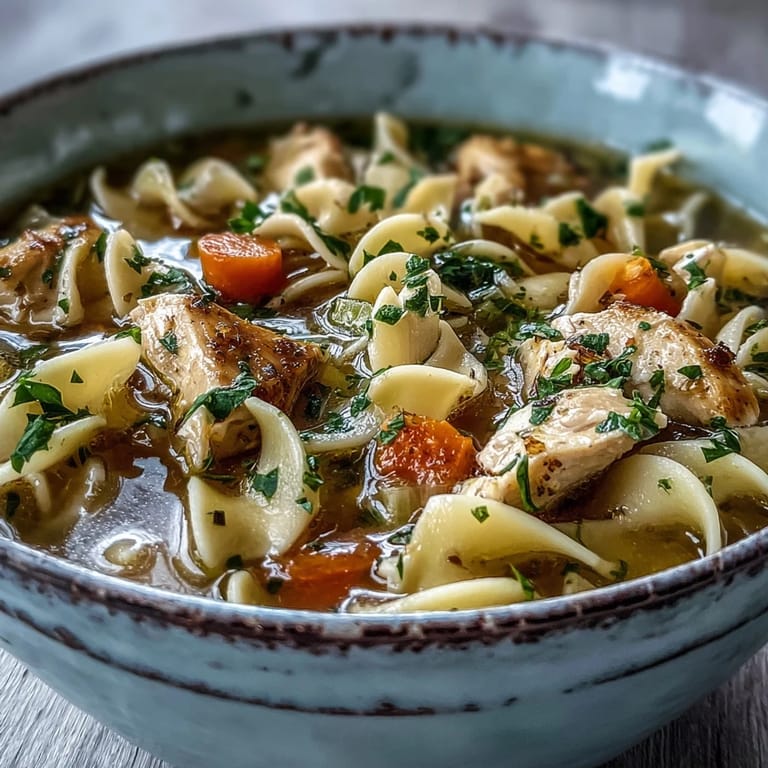
 This soup has a way of becoming something bigger than its ingredients, turning a Tuesday into something worth remembering. Make it for someone you love, and watch how a simple bowl of warmth can say all the things that are sometimes hard to speak out loud.
Recipe FAQs
- → How long does this keep in the refrigerator?
The soup stores well in an airtight container for 3-4 days. The noodles will continue absorbing liquid, so you may need to add extra broth when reheating.
- → Can I freeze this soup?
Yes, freeze for up to 3 months. For best results, slightly undercook the noodles since they'll soften during reheating, or add fresh noodles when serving.
- → What's the best way to shred the chicken?
Use bone-in chicken pieces simmered in the broth, then remove and shred with two forks. This adds more depth to the broth compared to pre-diced breast meat.
- → Can I make this in a slow cooker?
Certainly. Combine all ingredients except noodles and cook on low for 4-6 hours. Add noodles during the last 20-30 minutes until tender.
- → How do I adjust the seasoning?
Taste at the end of cooking. If it needs brightness, add lemon juice. For more depth, try a splash of soy sauce or Worcestershire. Salt and pepper should be adjusted to your preference.
- → What vegetables work well in this soup?
Beyond the classic mirepoix of onions, carrots, and celery, consider adding parsnips, leeks, diced potatoes, or fresh spinach in the last few minutes of cooking.