 Save to Pinterest
 My grandmother used to make this soup on gray afternoons when the house felt too quiet, filling the kitchen with a warmth that had nothing to do with the stove. Years later, I found myself doing the same thing—not out of tradition, but because something about the ritual of building a simple broth and watching chicken soften into tenderness felt like the right answer to a day that needed mending. There's no technique to master here, just ingredients that know how to work together, and a pot that becomes your quiet companion for an hour.
I made this for a friend who'd just moved into a new apartment with nothing but boxes and questions, and watching her face as she tasted it—that moment when comfort food actually comforts—reminded me why I keep this recipe close. She asked for seconds while still holding the first bowl, and that's when I knew this soup does what it promises.
Ingredients
- Bone-in, skinless chicken thighs or breasts (1½ lbs): Thighs give you deeper flavor and stay moist longer, but a mix of both keeps things interesting and balanced.
- Low-sodium chicken broth (8 cups): This is your foundation—the quality of broth matters more than you'd think, so taste it before you buy.
- Yellow onion, carrots, celery (1 large, 3 medium, 2 stalks): This trio is the backbone of flavor; don't skip the onion's time in the pan.
- Garlic cloves (3, minced): Add these after the softer vegetables so they don't turn bitter.
- Bay leaves and dried herbs (2 bay leaves, ½ tsp thyme, ¼ tsp rosemary): These gentle seasonings build depth without overpowering the dish.
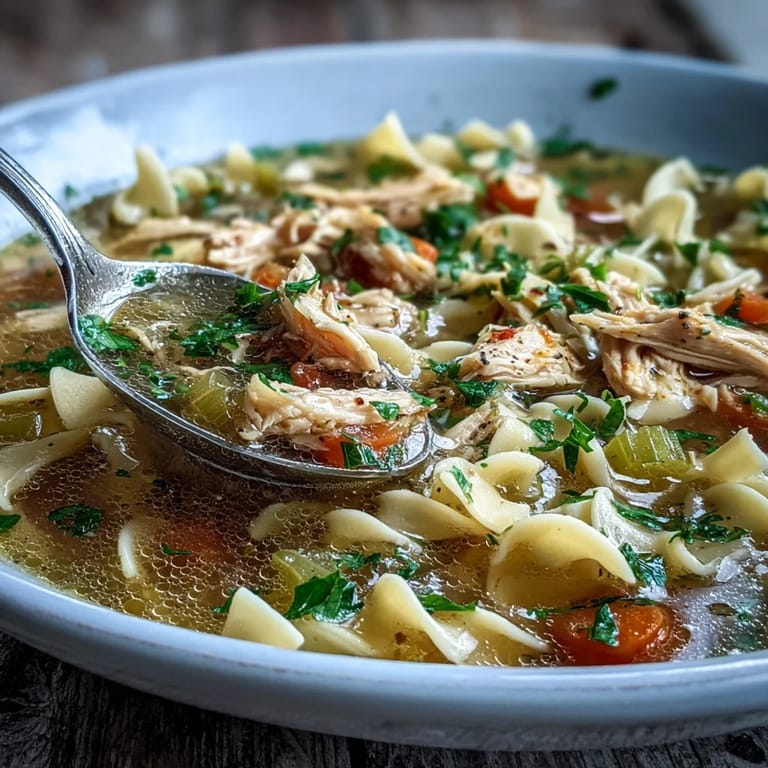
- Wide egg noodles (6 oz): Wide noodles hold the broth better than thin ones and give each spoonful more substance.
- Fresh parsley and lemon juice: The parsley brightens everything at the end; the lemon is optional but it's the secret that makes people ask what you did differently.
- Salt and freshly ground black pepper: Taste as you go—you'll need more than you think.
Tired of Takeout? 🥡
Get 10 meals you can make faster than delivery arrives. Seriously.
One email. No spam. Unsubscribe anytime.
Instructions
- Start with the chicken and broth:
- Place chicken pieces and broth in a large pot and bring to a gentle boil, skimming off the pale foam that rises to the top—this takes just a minute and makes the broth cleaner tasting. You'll hear the change in the water's sound when it reaches that rolling boil.
- Build your flavor base:
- Add the diced onion, carrots, celery, minced garlic, bay leaves, thyme, and rosemary; season with salt and pepper. Lower the heat to a simmer, cover the pot, and let it cook undisturbed for 25 to 30 minutes while you do something else—the kitchen will smell like comfort by the time you check back.
- Shred the chicken:
- Remove the cooked chicken pieces with tongs and let them cool slightly on a cutting board, then use two forks to pull the meat apart into tender shreds, discarding any bones or cartilage. The meat should fall apart with almost no resistance.
- Return and prepare for noodles:
- Put the shredded chicken back into the pot and increase the heat to medium-high, bringing the soup back to a gentle boil. This is when you'll add the noodles, so watch the pot—you want it simmering gently, not violently.
- Cook the noodles:
- Add the wide egg noodles and stir occasionally to keep them from sticking together, cooking for 8 to 10 minutes until they're tender but still have a slight bite. Taste one to be sure—overcooked noodles disappear into mush.
- Finish with brightness:
- Stir in the fresh chopped parsley and lemon juice if using, then taste the whole pot and adjust your salt and pepper. Remove the bay leaves before serving—they've done their job.
 Save to Pinterest
 There was a night when my partner came home sick and wordless, and I made this without asking, without announcing it. By the third spoonful, he looked at me like I'd solved something, and maybe I had—not the sickness, but the loneliness that comes with it. That's when I understood this soup is really about saying 'I've got you' without needing to say anything at all.
The Power of Patience
There's a temptation to rush this soup, to turn up the heat and force the process, but everything good about it happens in the quiet time between your first stir and the moment you taste it. The vegetables soften not because they've been beaten by heat, but because time and gentle warmth have convinced them to give up their flavor to the broth. I learned this the hard way by boiling a pot aggressively and ending up with mushy vegetables and a tinny-tasting broth, then trying again with patience and realizing the difference was everything.
Building Layers of Flavor
Each ingredient here has a role, and they work in sequence—the chicken seasons the broth, the vegetables soften into it, the herbs whisper rather than shout. Adding everything at once might seem efficient, but spacing out the additions means each element announces itself clearly. I used to throw the garlic in with the onions and wonder why it tasted harsh until a cooking friend pointed out that garlic burns if it gets too much time in the heat, and that small timing shift changed how I think about building flavor in any pot.
Simple Variations and Finishing Touches
This soup is forgiving and adaptable, which is part of why it feels right no matter the season or what you have in your pantry. A handful of fresh spinach stirred in at the very end adds color and nutrition without changing the essential character of the dish, while a pinch of chili flakes brings a subtle warmth that some people didn't know they needed. The optional lemon juice is the move that separates a good bowl from a memorable one—it cuts through the richness and makes everything taste brighter and more alive.
- Fresh spinach or other greens can be stirred in during the last two minutes of cooking.
- A dash of hot sauce or chili flakes transforms this from comfort to comfort-with-an-edge.
- Crusty bread is non-negotiable for soaking up every last drop of broth.
 Save to Pinterest
 This is the kind of recipe that gets better the more you make it, not because the instructions change but because your hands learn what the right texture feels like and your nose knows when it's ready. Make it enough times and it becomes less a recipe and more a language between you and the people you're feeding.
Recipe FAQs
- → How long does chicken and noodle soup take to make?
Total time is about 1 hour and 5 minutes, including 20 minutes of prep and 45 minutes of cooking. The broth simmers for 25-30 minutes to develop flavor, then noodles cook for 8-10 minutes until tender.
- → Can I freeze this soup?
For best results, freeze the soup without the noodles. Cook noodles separately when reheating to prevent them from becoming mushy. The broth and chicken base freezes well for up to 3 months.
- → What type of chicken works best?
Bone-in, skinless chicken thighs or breasts are ideal. Thighs add richness and stay tender during simmering. A mix of both provides great flavor and texture. You'll need about 1½ pounds.
- → How do I make this gluten-free?
Simply substitute the wide egg noodles with your favorite gluten-free pasta or rice noodles. Check that your chicken broth is certified gluten-free as well. The cooking time may vary slightly.
- → Can I add other vegetables?
Absolutely. Diced potatoes, green beans, peas, or spinach make excellent additions. Add heartier vegetables like potatoes with the carrots and celery, and quick-cooking greens like spinach during the last few minutes.