 Save to Pinterest
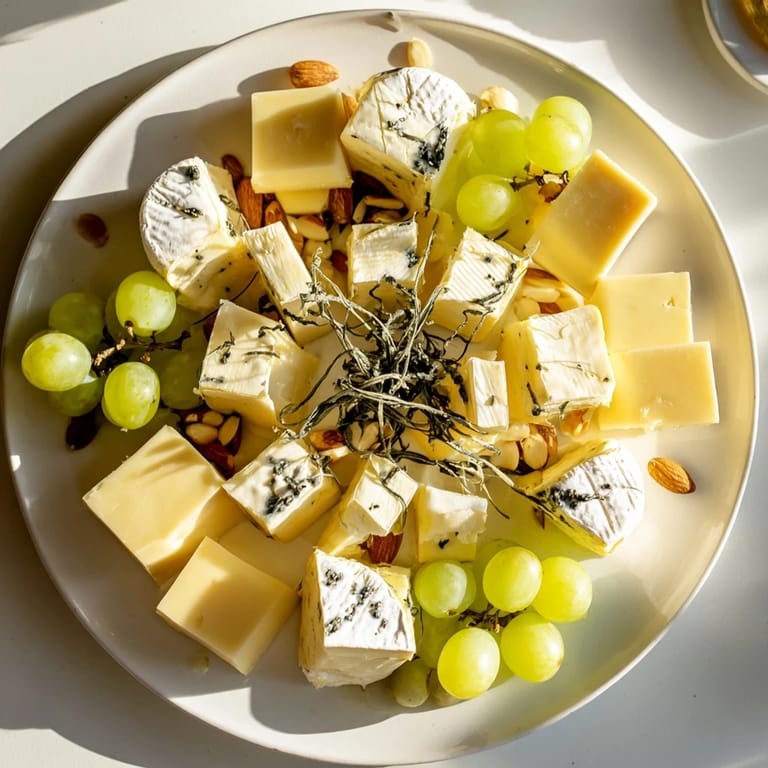
 I'll never forget the first time I created a Winter Wonderland Platter for my sister's engagement party. It was snowing outside, and I wanted to bring that magical, frosty feeling indoors. I spent the afternoon carefully arranging creamy white cheeses, pale almonds, and silvery accents on a sprawling board, and when my sister walked in, her eyes lit up like she'd stepped into a winter fairy tale. That's when I realized appetizer boards aren't just about feeding people—they're about creating moments of wonder before the meal even begins.
I remember my friend Sarah saying she'd never seen a cheese board look so elegant before tasting it. The white chocolate curls caught the light, the sugared almonds gleamed like little jewels, and somehow the simplicity of the presentation made every single bite taste more special than if I'd served them individually. That's the real magic of this platter—it transforms humble ingredients into something that feels like a gift.
Ingredients
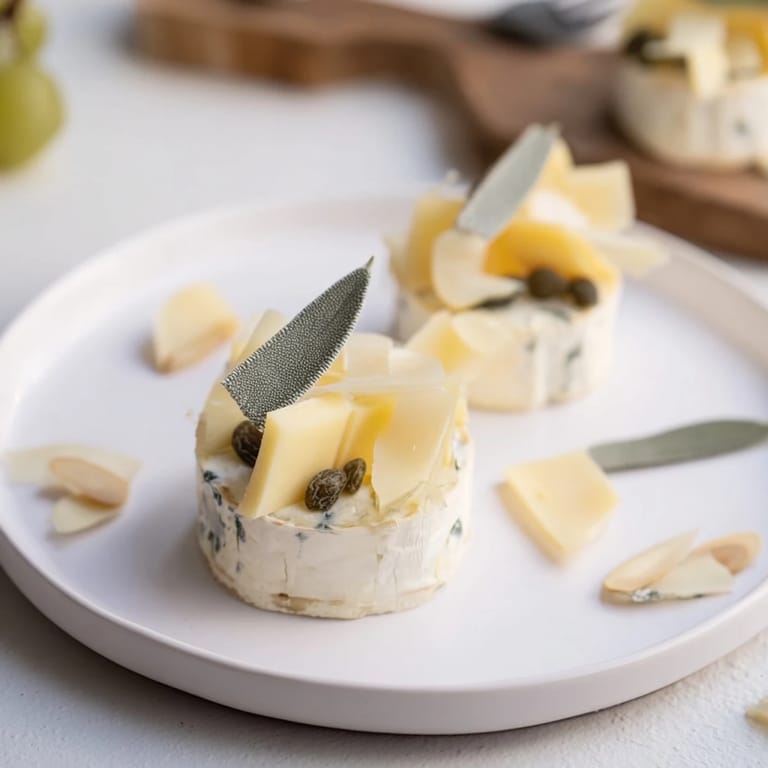
- Fresh goat cheese (200g, as a log or rounds): This is your creamy anchor. The tanginess plays beautifully against sweet elements, and its pure white color is essential to the theme. Pro move: let it sit at room temperature for 20 minutes before serving so guests can actually spread it.
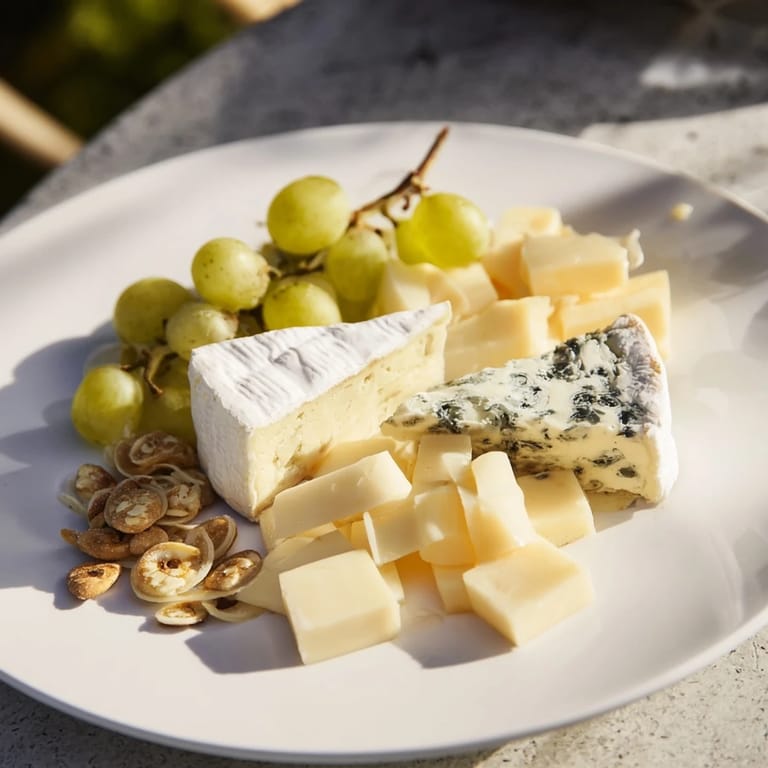
- Brie or Camembert (150g, rind trimmed): Here's a secret—trimming the rind isn't just about aesthetics, it actually gives you more of that luscious, spreadable cheese. These soft cheeses practically melt on crackers.
- Mild white cheddar or mozzarella (100g, cubed): The mild versions keep the board from becoming too sharp. These cubes are perfect for guests who want something they can pop in their mouth without a cracker.
- Blanched almonds (100g): They're naturally pale and have a delicate, buttery flavor. Blanching removes the brown skin, which is why they're perfect for this winter look.
- Macadamia nuts (100g): Rich, almost buttery, and they add textural variety. They're slightly pricier, but that luxe factor shows on the board.
- Dried white mulberries or white raisins (100g): These are your secret weapon for sweetness without breaking the color theme. They provide chewy texture and natural sugars that balance the savory elements.
- Fresh green grapes (1 small bunch): The subtle pop of green breaks up the monochromatic scheme just enough. Their juiciness is refreshing after richer items like nuts and cheese.
- White rice crackers, plain water crackers, and lightly toasted baguette slices: Give people options. Some guests love thin, crispy crackers, others want the substance of bread. Toast the baguette just until it's golden and still has a slight chew.
- Edible silver leaf flakes or metallic dragées (1/4 cup): Non-negotiable for the magic. Use food-grade only—this is where you splurge. A tiny pinch goes a long way.
- White chocolate curls (1/4 cup): Make these yourself by running a vegetable peeler along a block of good white chocolate. They'll be irregular and beautiful, melting slightly on warm cheese.
- Light blue sugared almonds or Jordan almonds (1/4 cup): These add whimsy and that winter color accent. They're decorative but also delicious—hidden little treasures on the board.
- Fresh rosemary sprigs dusted with powdered sugar: This is aromatics meets decoration. When guests lean in, they smell winter. The powdered sugar makes them look frosted.
- Honey or white fig jam (1/4 cup): Your sweet-savory connector. Honey is classic, but fig jam adds sophistication. Serve in a small ramekin so it doesn't get lost among the other items.
- Greek yogurt dip or whipped ricotta (1/4 cup): This is the creamy dip that makes every cracker taste even better. Whipped ricotta is lighter and more elegant; Greek yogurt is tangier and more substantial.
Tired of Takeout? 🥡
Get 10 meals you can make faster than delivery arrives. Seriously.
One email. No spam. Unsubscribe anytime.
Instructions
- Set Your Stage:
- Find your largest, most beautiful serving board or platter. You want one big enough that items don't feel crowded—think of it like a canvas where each element gets to breathe and shine. If you don't have a large board, a wooden cutting board, marble slab, or even a large platter works beautifully. Clear the surface completely so your eye can see the negative space you're about to fill.
- Place Your Cheese Anchors:
- Arrange the cheeses in the center or slightly off-center, like they're the main event. Group different types near each other but separate enough that guests can tell them apart. The goat cheese log, the wedges of brie, and the cubes of white cheddar should feel intentional, not random. Leave a little space between them—this makes the board look curated, not crowded.
- Create Cracker Pathways:
- Now fan out your crackers and bread slices in arcs around the cheeses, like rays of light. Angle them slightly so they're easy to grab. Vary the types so there's visual rhythm—white rice cracker, water cracker, toast, water cracker, toast. This isn't chaos; it's orchestration. Let some crackers slightly overlap for texture and fullness.
- Scatter Your Nuts and Fruits:
- Pour the blanched almonds, macadamia nuts, dried mulberries, and grapes into small bowls or ramekins, then position these around the board at intervals. Think of them as the supporting cast—they should be distributed so no matter where your guests start, something interesting is nearby. The small vessels keep items contained and make them feel intentional rather than just tossed on.
- Add Your Sweet and Creamy Notes:
- Place small ramekins of honey, jam, and yogurt dip where they're accessible from at least two sides of the board. These are your condiments—the things that make crackers taste like little flavor journeys. Honey on a crisp cracker with soft brie is magic.
- Sprinkle Magic:
- Now comes the art. Take your white chocolate curls and scatter them in small clusters across the empty spaces. They should look like snowflakes that gently landed, not like you dumped a handful. Do the same with your light blue sugared almonds—use them as jeweled accents. This is where the board transforms from 'nice' to 'stunning.'
- Frost Your Garnish:
- Dust your rosemary sprigs with powdered sugar and tuck them into gaps or create small sprigs as final touches. The powdered sugar clings best if the rosemary is slightly damp, so a tiny mist of water from a spray bottle helps it stick. These frosted herbs are both beautiful and aromatic.
- Add Shimmer:
- Finally, using small tweezers or your fingertips, carefully place edible silver leaf or dragées as the finishing touch. A few strategically placed on the white chocolate curls, one near some almonds, another nestled next to the brie. They're the finishing sparkle—use restraint, because less is more elegant.
- Serve with Confidence:
- Step back and admire your creation. Everything should be within comfortable reaching distance from all sides. If you've made it more than 20 minutes before serving, cover loosely with plastic wrap to keep everything fresh. Remove the wrap just before guests arrive—that reveal moment is part of the experience.
 Save to Pinterest
 I'll always remember when my mother-in-law, who is incredibly hard to impress, picked up a white chocolate curl that had settled perfectly on top of a cube of brie, added a tiny touch of honey, and looked up with actual tears in her eyes. She said it was like eating a snowflake mixed with luxury. That moment reminded me that this platter isn't really about the ingredients at all—it's about creating an experience where food becomes memory.
The Art of Board Building
Building an appetizer board is like arranging flowers or painting—there's a technique, but there's also intuition. The secret is proportion: roughly one-third should be cheeses, one-third should be crackers and bread, and one-third should be nuts, fruits, and accents. Within that framework, you have complete creative freedom. I've learned that the most beautiful boards have both symmetry and surprise. Symmetry makes them feel intentional; surprise keeps people engaged. A perfectly symmetrical board can feel cold, but a completely random one looks chaotic. Aim for balanced asymmetry—that's where the magic lives.
Flavor Pairing Philosophy
The genius of this board is that every flavor pairing is natural and complementary. Creamy soft cheese with crispy cracker is a classic. Add a tiny dollop of honey and suddenly it tastes like dessert. The macadamia nuts are rich enough to stand alone but pair beautifully with tangy goat cheese. The dried mulberries bring sweetness without being cloying. The white chocolate curls should be a weird addition—chocolate on a savory board—but instead they feel like an elegant finish, especially when they melt slightly on warm cheese. Understanding these pairings helps you adapt the board. If you don't have mulberries, use dried cranberries or dried apricots (they'll be slightly more orange-hued, but that's okay). If macadamia nuts aren't available, use pine nuts or even pistachios. The structure stays the same; only the details change.
Making It Memorable
What transforms a beautiful board into something your guests will remember isn't just the ingredients—it's the intention and the story. When you serve this board, mention that it's winter-themed. Tell them about the frosted rosemary or the edible silver leaf. Help them understand that every element is there for a reason. Invite them to experience it intentionally: start with a cracker and plain cheese, then try it with honey, then add a nut. These little moments of guidance turn casual eating into a tasting experience. People eat with their eyes first, and this board feeds both senses before a single bite is taken.
- Consider playing soft, wintry music in the background—something like instrumental versions of winter classics. It sets the mood without being heavy-handed.
- If you're serving this for a special occasion, you might add small name cards or descriptions of the cheeses. It makes guests feel educated and special.
- Have small napkins readily available, because people will want to use their hands, and that's exactly the right way to eat from this board.
 Save to Pinterest
 This Winter Wonderland Platter is proof that you don't need complicated cooking skills to create something that feels truly special. It's about seeing potential in simple ingredients and arranging them with intention and care.
Recipe FAQs
- → What cheeses work best for this winter platter?
Soft and mild white cheeses like goat cheese, Brie, Camembert, and mild cheddar are ideal for their creamy texture and pale color.
- → How can I make this platter gluten-free?
Use only white rice crackers and gluten-free bread options to ensure it’s safe for gluten-sensitive guests.
- → Are the silver leaf flakes safe to eat?
Yes, use only food-grade edible silver leaf or metallic dragées designed specifically for culinary use to add elegant accents.
- → Can I substitute nuts for allergies?
Yes, replace nuts with seeds or extra dried or fresh fruits to maintain texture and flavor diversity.
- → What drinks pair well with this platter?
Dry sparkling wines or crisp Sauvignon Blanc complement the fresh, creamy, and nutty flavors beautifully.
- → How should I arrange the platter for best presentation?
Place cheeses centrally, fan out crackers and bread around, and space nuts, fruits, and dips evenly with decorative accents for balance.