 Save to Pinterest
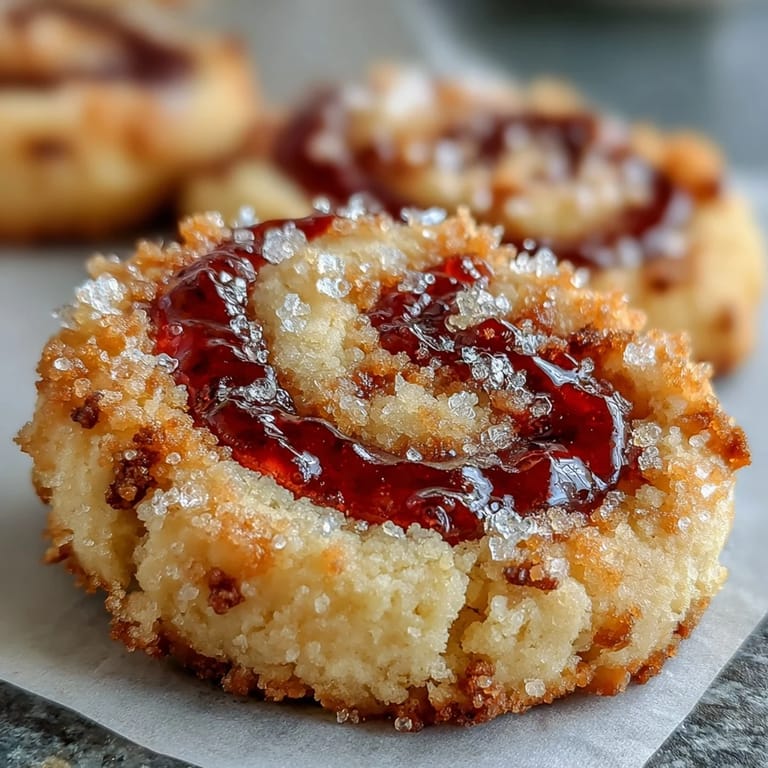
 The smell of butter browning at the edges is what hooked me on shortbread. I was testing a batch late one evening, and the kitchen filled with that warm, toasty scent just as the timer went off. When I pressed my thumb into the dough rounds and dropped in the jam, I half expected them to spread into a mess, but they held their shape beautifully. That first bite, the contrast between the crumbly cookie and the tart fruit, made me realize I had stumbled onto something worth making again and again.
I brought a tin of these to a friend's book club, and within ten minutes the container was empty. One woman asked if I had used a family recipe passed down for generations. I laughed and told her I had invented it on a rainy Tuesday because I had leftover jam in the fridge. She made me promise to write it down, and that evening I typed out the steps on my phone while the memory was still fresh.
Ingredients
- Unsalted butter, softened: This is the backbone of shortbread, and leaving it at room temperature for an hour ensures it creams smoothly without turning greasy.
- Powdered sugar: It dissolves faster than granulated, giving you a finer crumb and a melt in your mouth texture.
- Vanilla extract: A teaspoon might seem small, but it deepens the butteriness and rounds out the sweetness.
- All purpose flour: Measure by spooning it into the cup and leveling off, packing it will make the dough dense and tough.
- Salt: Just a pinch cuts through the richness and makes the raspberry jam taste brighter.
- Raspberry jam or preserves: Choose one with visible seeds for texture, or go seedless if you prefer a smoother swirl.
- Granulated sugar for dusting: This is optional, but a light sprinkle after baking adds a gentle sparkle and a hint of extra sweetness.
Tired of Takeout? 🥡
Get 10 meals you can make faster than delivery arrives. Seriously.
One email. No spam. Unsubscribe anytime.
Instructions
- Preheat and prep:
- Set your oven to 350°F and line two baking sheets with parchment paper. This keeps the bottoms from browning too fast and makes cleanup a breeze.
- Cream the butter and sugar:
- Beat the softened butter and powdered sugar with an electric mixer until the mixture turns pale and fluffy, about two to three minutes. Scrape down the sides of the bowl halfway through so everything blends evenly.
- Add the vanilla:
- Pour in the vanilla extract and mix just until combined. The aroma will hit you immediately and remind you why vanilla is worth the splurge.
- Combine the dry ingredients:
- Whisk the flour and salt together in a separate bowl, then add it to the butter mixture in two or three additions. Mix on low speed until the dough just comes together, it should look crumbly but hold when you press it.
- Shape and chill the dough:
- Turn the dough onto a lightly floured surface and form it into a log about one and a half inches thick. Wrap it tightly in plastic wrap and refrigerate for at least thirty minutes, this firms it up so slicing is clean and easy.
- Slice the cookies:
- Unwrap the chilled log and use a sharp knife to cut it into quarter inch rounds. If the dough cracks, let it sit at room temperature for a minute or two before continuing.
- Create the indentations:
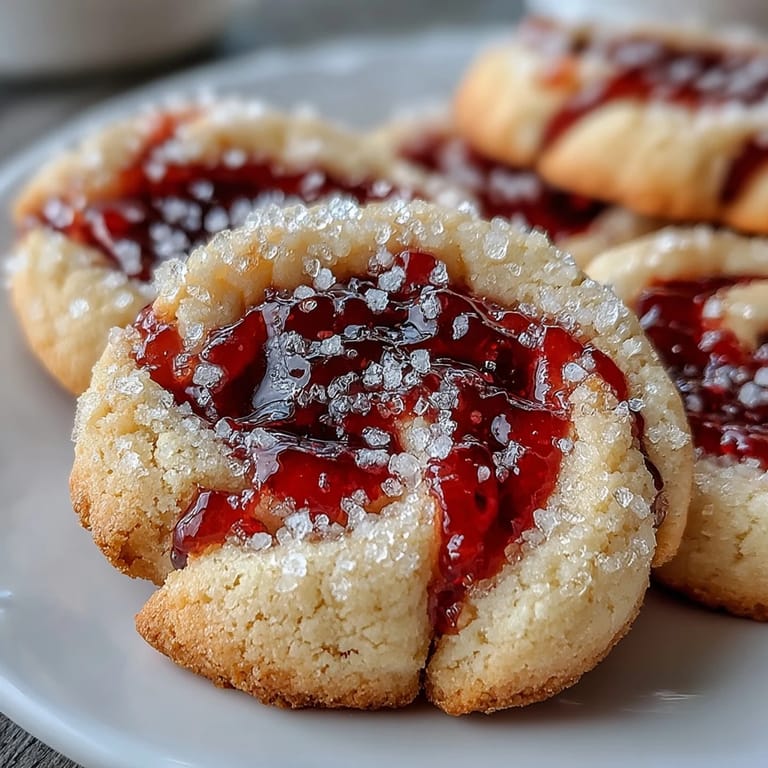
- Arrange the rounds on your prepared baking sheets, spacing them about an inch apart. Press the back of a teaspoon gently into the center of each cookie to make a shallow well.
- Fill with jam:
- Spoon about half a teaspoon of raspberry jam into each indentation. Resist the urge to overfill, the jam will bubble and spread as it bakes.
- Bake until golden:
- Slide the sheets into the oven and bake for twelve to fifteen minutes, watching for light golden edges. The centers will still look soft, but they firm up as they cool.
- Cool in stages:
- Let the cookies rest on the baking sheets for five minutes, then transfer them to a wire rack. This prevents them from breaking and lets the jam set without sticking.
- Dust with sugar:
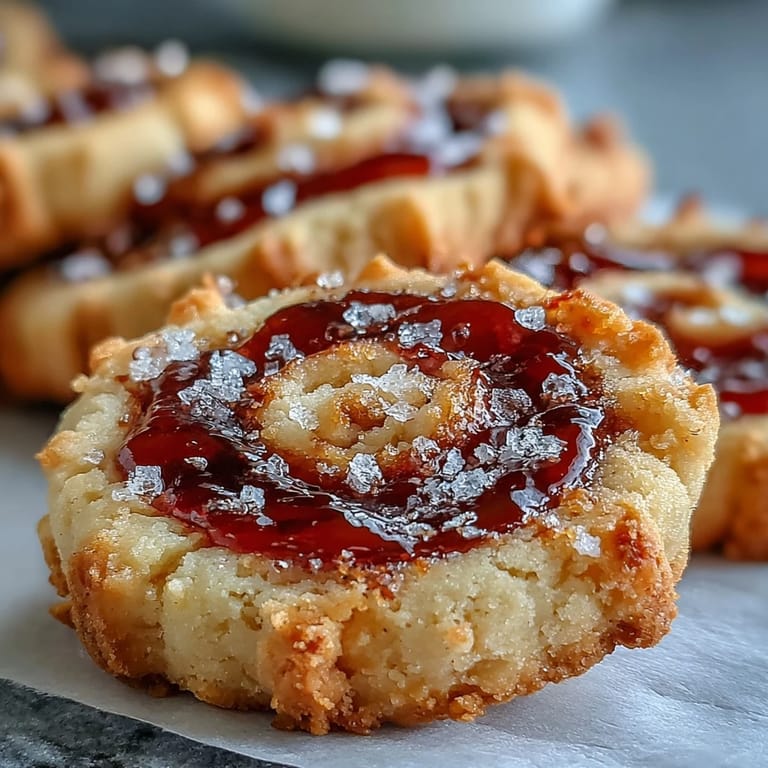
- Once the cookies are completely cool, sprinkle a light dusting of granulated sugar over the tops if you like. It catches the light and adds a delicate crunch.
 Save to Pinterest
 One winter afternoon, I packed a dozen of these into a small box and left them on my neighbor's porch with a handwritten note. She texted me an hour later saying she had eaten three with her coffee and felt like she was sitting in a British tearoom. That message reminded me that baking is never just about the recipe, it is about the moment you create for someone else when they open the box and catch that first whiff of butter and fruit.
Flavor Variations
Swap the raspberry jam for apricot, strawberry, or even a tart lemon curd if you want a citrus kick. I once tried blackberry preserves and the deeper, earthier sweetness paired beautifully with the buttery base. You can also fold a pinch of lemon zest into the dough before chilling, it adds a subtle brightness that complements almost any jam you choose.
Storage and Gifting
These cookies keep for up to a week in an airtight container at room temperature, and they actually taste better the next day when the flavors have had time to meld. If you are gifting them, layer them between sheets of parchment paper in a tin or a sturdy box. I like to tie the box with twine and tuck in a sprig of rosemary or a dried flower, it feels personal without being fussy.
Troubleshooting and Tips
If your dough feels too crumbly after mixing, add a teaspoon of cold water and pulse it a few times until it holds together. On the flip side, if the dough is sticky, dust your hands and the surface with a bit more flour. I learned the hard way that overmixing makes the cookies tough, so stop as soon as the flour disappears into the butter.
- Use a bench scraper to lift and move the dough log without squishing it.
- Rotate your baking sheets halfway through if your oven has hot spots.
- Let the jam come to room temperature before spooning it into the wells, cold jam can cause the dough to crack.
 Save to Pinterest
 Every time I pull a batch of these from the oven, I am reminded that the best recipes are the ones you can make without thinking too hard. They become muscle memory, and that is when baking stops feeling like work and starts feeling like home.
Recipe FAQs
- → How do I prevent the jam from overflowing during baking?
Use only 1/2 teaspoon of jam per cookie and avoid overfilling the indentations. The jam will bubble slightly as it heats, so leaving room prevents messy overflow onto the baking sheet.
- → Can I freeze the dough for later?
Yes, wrap the chilled dough log tightly in plastic wrap and then foil. Freeze for up to 3 months. Thaw overnight in the refrigerator before slicing and baking.
- → What's the best way to get uniform cookies?
Shape your dough log into an even cylinder measuring about 1.5 inches in diameter. Chill until completely firm, then use a sharp knife to slice consistently thick rounds at 1/4 inch each.
- → Why did my shortbread turn out tough instead of tender?
Overworking the dough develops too much gluten, leading to tough textures. Mix the flour into the creamed butter just until combined—no more than 30-60 seconds of mixing time.
- → Can I make these without an electric mixer?
Absolutely. Use a sturdy wooden spoon to cream the butter and sugar by hand, though it will take 4-5 minutes of vigorous mixing to achieve the light, fluffy consistency needed for tender shortbread.
- → How should I store these cookies?
Keep in an airtight container at room temperature for up to 1 week. Place parchment paper between layers to prevent sticking. Avoid refrigeration, which can make the shortbread lose its crisp texture.