 Save to Pinterest
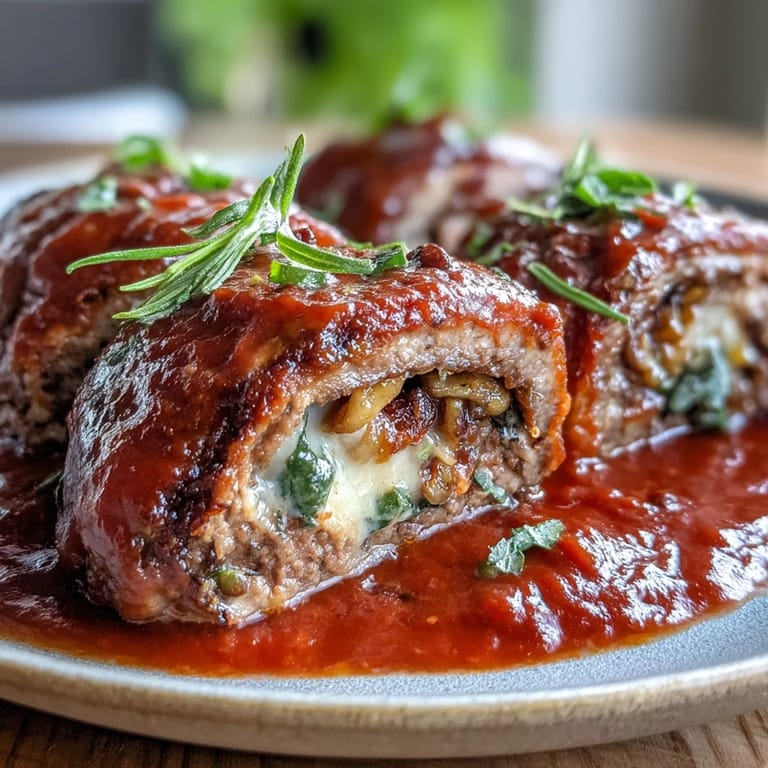
 My neighbor Maria once showed up at my door with a pot so heavy I had to brace myself against the frame. Inside were these tight little bundles swimming in dark red sauce, and the smell made me forget every polite thing I was supposed to say. She pulled one out with tongs, sliced through it, and a tangle of cheese, pine nuts, and raisins spilled onto the plate. That was the day I learned what real braciole tastes like, and why Sicilians never rush it.
The first time I made this for my family, I panicked halfway through because the rolls kept unraveling in the pan. My uncle watched me struggle for a minute, then calmly handed me a spool of kitchen twine and said, tie them like youre wrapping a gift. Once I stopped fighting it and just secured them properly, everything fell into place. Now I always tie them twice, just to be safe.
Ingredients
- Thin slices beef top round or flank steak: The thinner the slice, the easier it rolls, so ask your butcher to cut them about a quarter inch thick or pound them gently yourself until they cooperate.
- Pecorino cheese: This sharp, salty cheese is the backbone of the filling, and using pre-grated stuff just will not give you that same punch of flavor.
- Pine nuts: Toasting them for a few minutes in a dry pan wakes up their buttery sweetness and keeps them from tasting flat inside the roll.
- Raisins: They add little pockets of sweetness that balance the sharpness of the cheese and the richness of the beef.
- Fresh parsley and basil: Do not skip the herbs, they bring brightness to a filling that could otherwise feel heavy.
- Garlic: Minced fine so it melts into the filling and does not create crunchy surprises.
- Breadcrumbs: Just enough to hold the filling together without making it dry or dense.
- Olive oil: Use a good one for searing, it helps build that golden crust that makes the whole dish sing.
- Crushed tomatoes: The sauce should taste bright and a little sweet, so grab a can that lists only tomatoes and salt.
- Dry red wine: Optional, but it adds a layer of depth that makes the sauce taste like it has a secret.
- Dried oregano: A little goes a long way, it should whisper in the background, not shout.
Tired of Takeout? 🥡
Get 10 meals you can make faster than delivery arrives. Seriously.
One email. No spam. Unsubscribe anytime.
Instructions
- Prep the Beef:
- Lay each slice flat on your counter and give it a few gentle whacks with a meat mallet until it is about a quarter inch thick and even all over. Season both sides with salt and pepper, being generous because some of that seasoning will cook off into the sauce.
- Make the Filling:
- In a bowl, toss together the pecorino, toasted pine nuts, raisins, parsley, basil, garlic, and breadcrumbs until everything is evenly mixed. It should look like a rough, chunky mixture that smells like a Sicilian pantry.
- Roll and Tie:
- Spoon the filling onto each slice of beef, leaving a little border around the edges so it does not all squeeze out when you roll. Roll them up tightly, tucking in the sides as you go, then tie with kitchen twine or secure with toothpicks so they hold their shape during cooking.
- Sear the Braciole:
- Heat olive oil in a large skillet over medium-high heat until it shimmers, then add the rolls and sear them on all sides until they are deeply browned, about six to eight minutes total. Do not rush this step, the color you build here becomes the flavor of your sauce.
- Build the Sauce:
- In the same skillet, add a bit more olive oil and sauté the chopped onion until it softens and turns translucent, about three minutes. Stir in the garlic and let it cook for one more minute until fragrant.
- Deglaze and Simmer:
- Pour in the red wine if you are using it, scraping up all the browned bits stuck to the bottom of the pan, and let it bubble down by half. Add the crushed tomatoes, oregano, salt, pepper, and a pinch of sugar if your tomatoes taste sharp, then bring everything to a gentle simmer.
- Braise Low and Slow:
- Nestle the braciole back into the sauce, cover the skillet, and let everything simmer on low heat for an hour and fifteen minutes, turning the rolls every so often. The beef should become so tender it almost falls apart when you poke it with a fork.
- Finish and Serve:
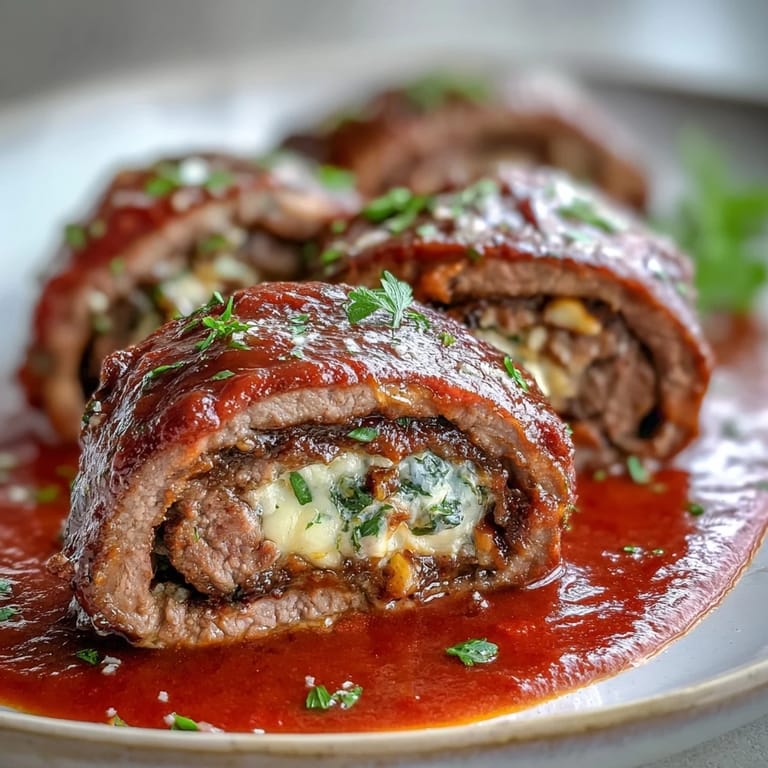
- Lift the braciole out of the sauce, snip off the twine or pull out the toothpicks, and slice each roll into thick rounds. Spoon the rich tomato sauce over the top and serve immediately while everything is hot and glossy.
 Save to Pinterest
 I once brought this to a potluck and watched a grown man scrape the bottom of the pan with a piece of bread, completely unaware that anyone was watching. He looked up, embarrassed, and I just handed him another slice. Sometimes food does not need words, it just needs to be that good.
How to Store and Reheat
Let the braciole cool in the sauce, then transfer everything to an airtight container and refrigerate for up to three days. The flavors actually deepen overnight, so leftovers are a gift. Reheat gently on the stovetop over low heat, adding a splash of water or broth if the sauce has thickened too much. You can also freeze the cooked braciole in sauce for up to two months, just thaw in the fridge overnight before reheating.
What to Serve Alongside
This dish practically begs for something to soak up all that sauce, so I usually serve it over a pile of rigatoni or penne tossed right in the tomato base. Creamy polenta works beautifully too, especially if you want something a little more rustic and comforting. A simple arugula salad dressed with lemon and olive oil cuts through the richness, and crusty bread is non-negotiable for mopping up every last drop. If you are feeling fancy, roast some fennel or zucchini on the side for a bit of sweetness and texture.
Make-Ahead and Substitutions
You can assemble the braciole up to a day ahead, keep them tied and covered in the fridge, then sear and braise them when you are ready to cook. If you cannot find pecorino, a good aged parmesan will work, though the flavor will be a little milder. Swap the pine nuts for chopped walnuts or almonds if that is what you have, and golden raisins or chopped dried apricots can stand in for regular raisins. The wine is optional, but if you skip it, add a splash of balsamic vinegar to the sauce for a bit of that tangy depth.
- Use gluten-free breadcrumbs if you need to keep it celiac-friendly.
- Try adding a chopped hard-boiled egg or a few thin slices of prosciutto to the filling for extra richness.
- If you do not have kitchen twine, toothpicks work just fine, but make sure to count them so you do not lose any in the sauce.
 Save to Pinterest
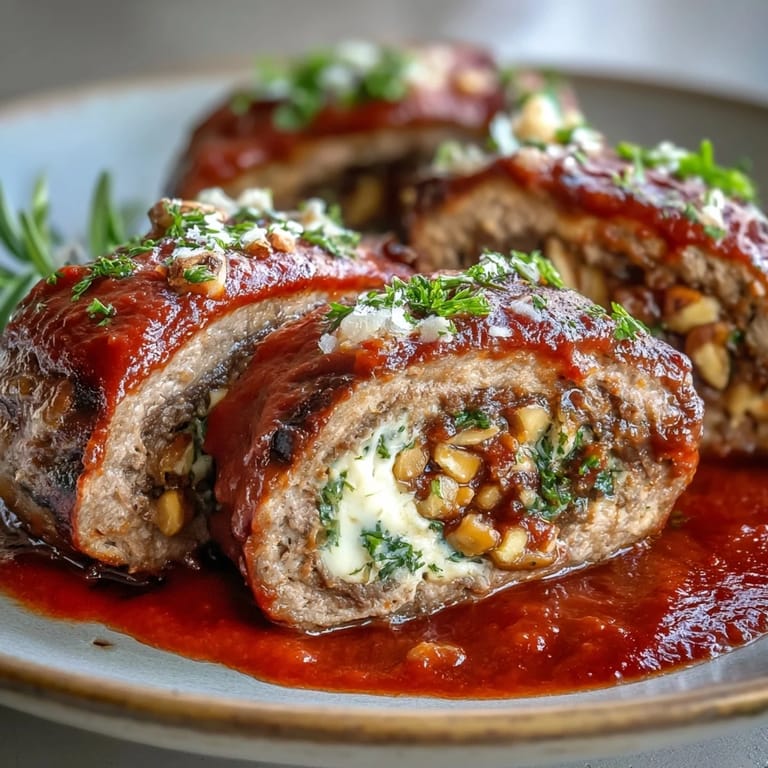
 There is something deeply satisfying about slicing into a braciole and seeing all those layers you tucked in by hand. It is not fancy, but it is the kind of cooking that makes people lean back in their chairs and sigh, and that is worth every minute.
Recipe FAQs
- → Can I use a different cut of beef?
Yes, flank steak or thinly sliced sirloin work well. Just ensure the meat is pounded to even thickness for uniform cooking.
- → How do I prevent the rolls from unraveling?
Secure each roll tightly with kitchen twine or toothpicks before searing. Make sure to tuck in the sides as you roll.
- → Can I make this ahead of time?
Absolutely. Braciole can be assembled a day ahead and refrigerated. The flavors deepen when reheated the next day.
- → What can I substitute for pine nuts?
Chopped walnuts or almonds make excellent substitutes. Toast them lightly for enhanced flavor.
- → Is the red wine necessary?
No, it's optional. The wine adds depth, but you can use beef broth or simply omit it without major impact.
- → What should I serve with braciole?
Traditional pairings include pasta, creamy polenta, or crusty Italian bread to soak up the delicious tomato sauce.