 Save to Pinterest
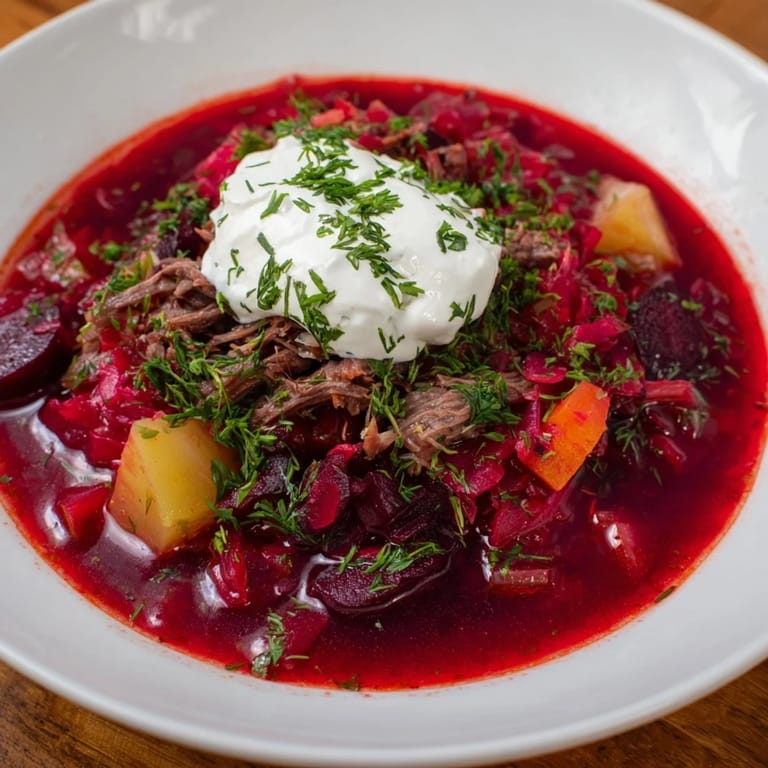
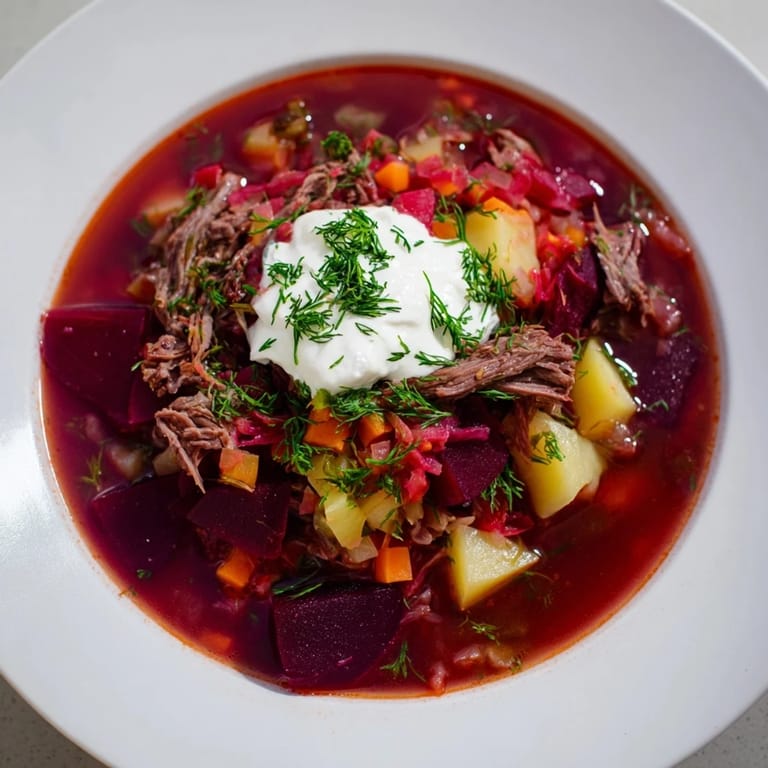
 My grandmother's kitchen always smelled like beets on soup day, that earthy, slightly sweet aroma that meant something warm and fortifying was coming. I was maybe eight when she first let me grate the beets myself, my hands turning deep crimson as I worked, and she laughed at my concentration like I was performing surgery. She'd say the color bleeding into the broth was the soul of the dish coming through, and I believed her completely. That first spoonful, topped with a cloud of sour cream and green dill, felt like tasting her entire winter.
Years later, I made this for a partner who'd had a terrible day, and I watched their whole expression shift from exhausted to something softer the moment they tasted it. They asked for the recipe, which meant they understood what my grandmother had been trying to tell me all along: this soup is a love language. It's the kind of dish that tells someone you're thinking about their bones, their tiredness, their need for something real and nourishing.
Ingredients
- Beef chuck or brisket (400g): These cuts have enough fat and connective tissue to become tender during simmering, creating a rich, silky broth that thinner cuts never achieve.
- Water (1.5 liters): Seems simple, but quality matters here—this is your canvas, so filtered water will give you a cleaner final taste.
- Bay leaves and black peppercorns: These steep in the broth quietly, building flavor without being aggressive; don't skip the skimming step early on, though.
- Beets (3 medium, grated): Grating them raw means they release their color and sweetness quickly into the hot broth, creating that stunning magenta hue.
- Carrots and onion: The onion softens into the broth almost invisibly, while the grated carrot adds subtle sweetness and body.
- Potatoes (2 medium, diced): Cut them into roughly ¾-inch pieces so they don't fall apart before serving, and they'll give the soup substance.
- Cabbage (¼ small head, shredded): This seems like an odd addition until you taste it—it adds a slight mineral quality and texture that grounds the earthiness.
- Tomato paste (2 tablespoons): This deepens the color and adds umami without making the soup taste like tomatoes.
- Sunflower oil (2 tablespoons): It's light enough not to overwhelm the vegetables as you sauté them, and it's traditional.
- Sugar and vinegar: These aren't about making it sweet or sour; together they brighten and balance the earthiness, so taste as you go.
- Sour cream and fresh dill: These are not optional—the sour cream cools the heat of the hot soup and adds a tangy richness, while dill is the final punctuation mark.
Tired of Takeout? 🥡
Get 10 meals you can make faster than delivery arrives. Seriously.
One email. No spam. Unsubscribe anytime.
Instructions
- Start your broth, patiently:
- Drop your beef into cold water with bay leaves, peppercorns, and salt, then bring it all to a boil. Once it's rolling, you'll see foam rising to the surface—skim this off for the first few minutes because it's impurities that will make the broth cloudy. Then lower the heat to a gentle simmer where you see just a few bubbles breaking the surface, and let it alone for 45 minutes.
- Build the flavor base while beef rests:
- Heat your oil in a skillet until it shimmers slightly, then add the chopped onion and listen for that gentle sizzle. When the onion turns translucent and soft, add your grated carrots and beets—the kitchen will suddenly smell alive and complex. After 5 minutes, stir in tomato paste, sugar, and vinegar, then keep cooking until everything is tender and the raw edge of the tomato paste has cooked away.
- Combine and layer:
- Pull the beef out of its broth and set it aside on a plate. Strain the broth through a fine sieve if you want it crystal clear, though some people love the rustic look of unsrained broth. Return it to the pot at a simmer and add your diced potatoes, which will need about 10 minutes to become tender.
- Bring it all together:
- Once potatoes are almost done, add the shredded cabbage and the entire sautéed vegetable mixture from your skillet. Simmer everything together for another 10 minutes so the flavors start talking to each other. Shred or cube your beef (it should pull apart easily if it's cooked enough), return it to the pot, add minced garlic, taste for salt and pepper, and give it 5 more minutes of gentle cooking.
- Let it rest:
- This is the step people rush through, but don't—remove from heat and let the pot sit undisturbed for 15 to 20 minutes. The flavors will deepen and the soup will taste noticeably better than the moment it finished cooking.
 Save to Pinterest
 I learned the hardest lesson about this soup during a dinner party when I tried to rush the resting step and served it immediately—it was good, but it wasn't what it wanted to be, and my grandmother would have known. Now I make it earlier in the day or the day before, and that patience is rewarded every single time with a soup that tastes like it knows exactly who it is.
The Beet Question: Raw or Cooked First
The traditional Ukrainian method sautés grated raw beets with the other aromatics, not because it's easier, but because this way they release their color and sweetness into hot oil before hitting the broth. If you cook the beets separately, they stay more contained and you lose some of that deep magenta saturation. I've tried it both ways, and the raw-then-sautéed method wins every time—the beet flavor becomes part of the fabric of the soup rather than a separate element.
Making It Your Own
This soup has room for your own touch, and that's part of its beauty. Some people add a splash of lemon juice or apple cider vinegar at the end for brightness, and I've had versions with a touch of horseradish that added an unexpected sharpness. I once added a handful of fresh spinach in the last minute because I had it on hand, and it wasn't traditional, but my dinner guests didn't complain. The structure stays the same, but you can adjust the seasonings and additions to match your mood or what's in your kitchen.
Serving and Storing
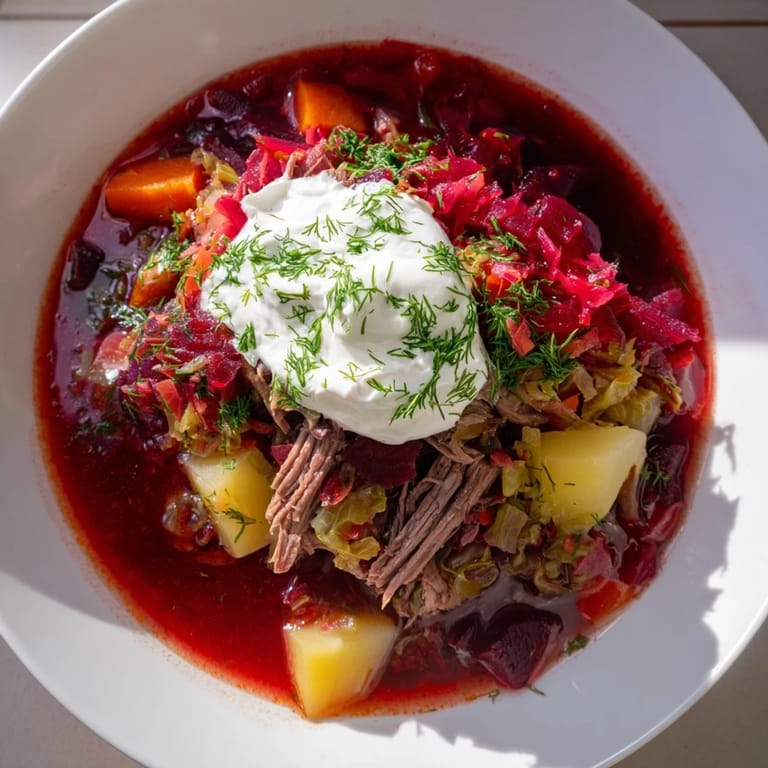
Borscht actually improves over time, so make it on a quiet evening and enjoy it hot that night, then look forward to even better bowls tomorrow and the day after. It keeps well in the fridge for about four days, and it also freezes beautifully for up to two months—just hold off on adding the sour cream until you're ready to serve. Serve it in deep bowls with a generous spoonful of sour cream, torn fresh dill or parsley, and thick slices of dark rye bread if you can find it, or those garlic-studded Ukrainian pampushky rolls if you're feeling ambitious.
- Reheat gently on the stove rather than in the microwave so the flavors don't scatter.
- If it thickens too much after sitting in the fridge, just add a splash of water or broth and it will loosen right up.
- This is the soup to make when you want to feel taken care of, or when you want someone else to feel that way.
 Save to Pinterest
 This soup is a hug in a bowl, the kind of thing that makes ordinary evenings feel a little warmer and reminds us that some of the best meals are the ones that have been loved into existence by people before us. Make it, serve it, and watch how it changes the room.
Recipe FAQs
- → What cut of beef works best for this borscht?
Beef chuck or brisket are ideal for their marbling and tenderness after slow simmering, which enriches the broth.
- → How can I make the broth more flavorful?
Simmer the beef with bay leaves, peppercorns, and salt, and allow it to cook slowly to develop a rich and aromatic base.
- → Can the sour cream be substituted or omitted?
Sour cream adds creaminess and tang; alternatives like yogurt or crème fraîche work well, or it can be skipped for a lighter finish.
- → What vegetables contribute to the authentic taste?
Beets, carrots, cabbage, potatoes, and onions create the signature sweet-earthy flavor and hearty texture of this dish.
- → How can the dish be adapted for vegetarians?
Omit beef and use vegetable broth instead; the sautéed vegetables and vinegar maintain the characteristic depth and brightness.
- → Is it better fresh or rested overnight?
Allowing the soup to rest for several hours or overnight enhances flavor melding and richness before serving.