 Save to Pinterest
 I'll never forget the moment I decided to transform a simple grazing board into something theatrical and unforgettable. It was mid-November, and I was preparing for a holiday dinner party when I found myself captivated by The Nutcracker Suite playing softly in the background. As I arranged cheeses and charcuterie, I realized I could create a edible masterpiece that captured the elegance, drama, and jewel-toned magic of that beloved ballet. What started as a casual appetizer became an architectural adventure, and watching my guests gasp when they saw this towering, color-blocked creation made me understand that food could be pure theater.
I still remember my neighbor leaning back with a glass of sparkling wine, genuinely stunned by the board's presence on my dining table. The way the light caught the jeweled pomegranate seeds, how the white chocolate bark gleamed like snow, and the deep purple of the blue cheese—it wasn't just food anymore. It was a conversation starter, a moment of connection, a reason for everyone to slow down and appreciate beauty on a plate.
Ingredients
- Brie: The creamy white foundation that feels luxurious on the tongue; keep it cool until the last moment so it stays perfect
- Aged Cheddar: This golden block brings both color and a sharp, sophisticated edge—it's what makes people say 'wow, these cheeses are incredible'
- Blue Cheese: Here's where you're brave; this intense, marbled beauty doesn't apologize for being bold, and it commands respect on any board
- Gouda: The warm, caramel-toned cheese that bridges flavors beautifully and adds that welcoming sweetness
- Cranberry Goat Cheese: This is the star that catches light and creates that ruby-red moment; it's tangy, creamy, and shows you put thought into color
- Prosciutto: Thin, delicate, and rose-colored; the way it drapes creates movement and elegance on the board
- Salami and Soppressata: These add richness and deeper reds that create visual contrast; buy them sliced but not paper-thin so they hold their shape
- Red and Green Grapes: Fresh, cool, and jewel-like; they fill negative space while adding refreshment between rich elements
- Blueberries, Strawberries, and Pomegranate Seeds: These are your jewels—they catch light and make the whole board sparkle with ruby and sapphire tones
- Dried Apricots: They add warmth and a chewy sweetness that bridges cheese and chocolate beautifully
- Marcona Almonds, Pistachios, and Candied Pecans: Each brings texture and their own color story; candied pecans are especially important because they taste like celebration
- Mixed Olives: Briny and grounding; they remind people this isn't all sweetness and richness
- Crackers and Baguette: The humble carriers that make everything accessible; they're the stage for the stars
- White and Dark Chocolate Bark, Macarons, and Petit Fours: These are the finale, the sweet surrender at the end of the flavor journey
- Rosemary and Edible Flowers: These garnishes transform the board from beautiful to enchanting; they whisper 'someone cared about every detail'
Tired of Takeout? 🥡
Get 10 meals you can make faster than delivery arrives. Seriously.
One email. No spam. Unsubscribe anytime.
Instructions
- Choose Your Stage:
- Find a large, sturdy board or gather multiple cake stands and pedestals. This is your foundation, and it needs to be solid enough to hold the weight of your culinary dream. If you're stacking, place risers—even overturned bowls work beautifully—to create dramatic height. Step back and imagine the final silhouette.
- Build From the Ground Up:
- Start at the base tier with the neutrals: arrange crackers in a casual cluster, fan your baguette slices with care, and scatter nuts in small bowls or directly on the board. These aren't the stars, but they're the foundation that makes everything else sing. Think of it like setting a stage.
- Color Block Like an Artist:
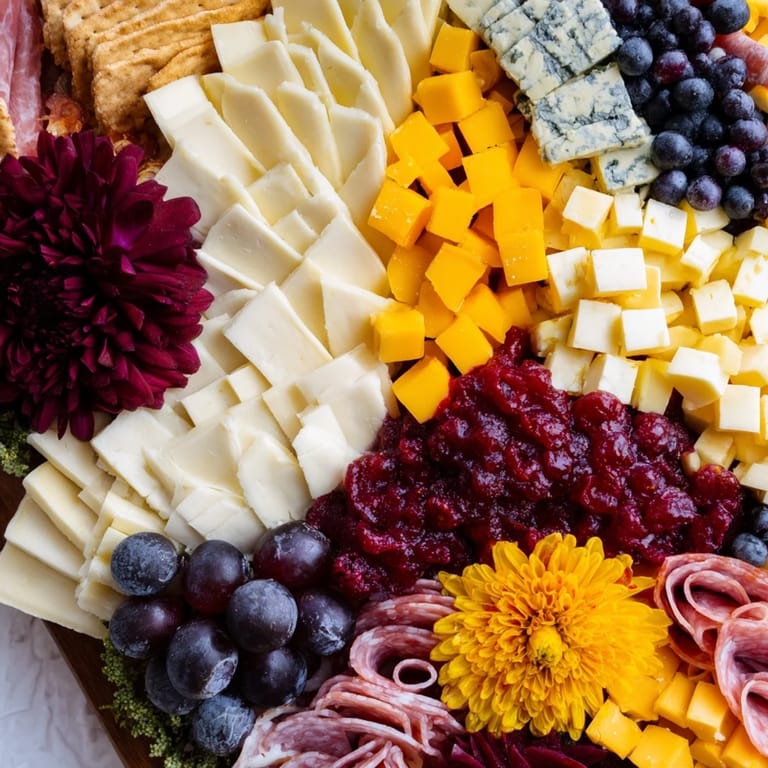
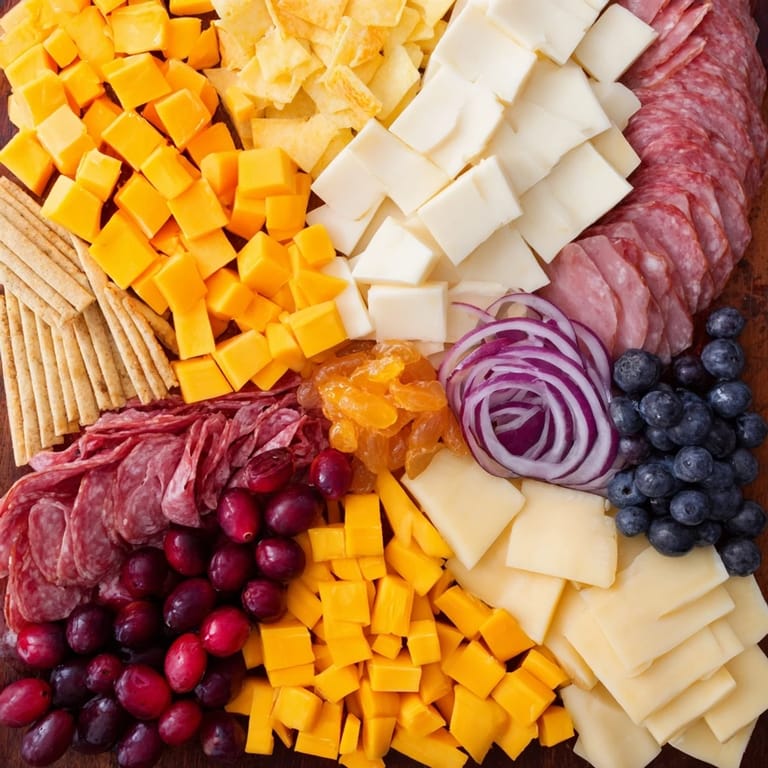
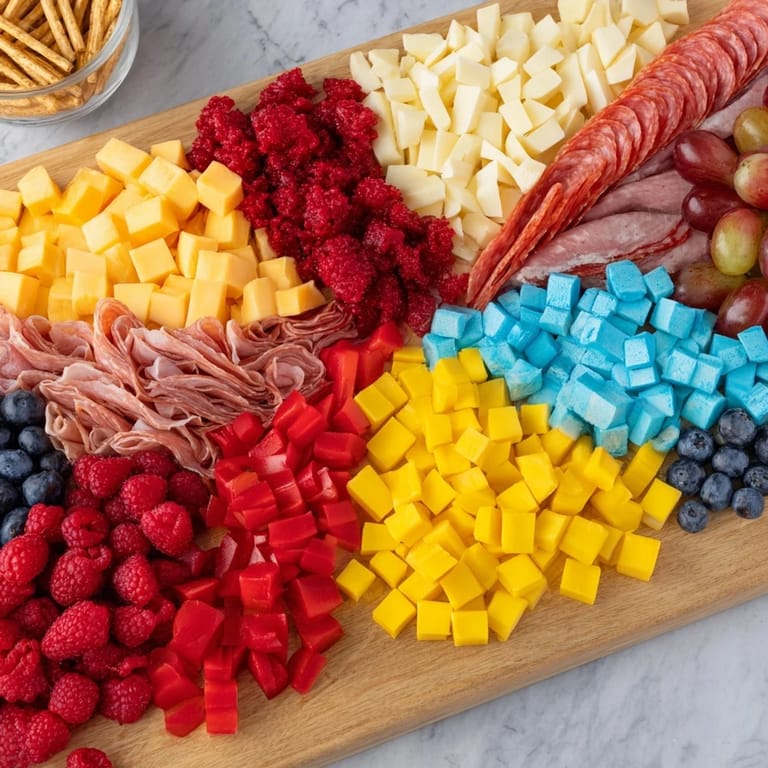
- Now here's where the magic happens. Organize each tier by color, grouping cheeses into distinct blocks as if you're painting with food. Place the white brie, golden cheddar, blue cheese, orange gouda, and cranberry goat cheese so each color story is clear and intentional. Don't let them blur together—each should feel like its own statement.
- Cut and Arrange Cheeses With Purpose:
- Cut some cheeses into wedges to show their interior colors and create visual texture. Others, like the gouda, can stay in larger blocks to show strength and substance. Arrange them as if you're curating a gallery, leaving breathing room between pieces.
- Drape the Charcuterie:
- Fold and drape prosciutto with elegance—let it create ruffles and waves. Position your salami and soppressata nearby, maintaining clear color boundaries. These meats should look like they're dancing beside the cheeses, not competing with them.
- Fill the Spaces With Jewels:
- This is the moment where grapes, berries, apricots, and pomegranate seeds transform the board from nice to stunning. Layer them in clusters by color, filling gaps and creating visual rhythm. Let red grapes pool together, group blueberries in their own corner, and scatter pomegranate seeds like tiny rubies.
- Layer Nuts, Olives, and Sweets:
- Add candied pecans, pistachios, and mixed olives in complementary color groups. Now place your chocolate bark, macarons, and petit fours in positions of honor—usually toward one corner or top tier where they'll be noticed. These are the sweet finale, so treat them like the finale they are.
- Finish With Flourish:
- Tuck fresh rosemary sprigs throughout for pops of green that tie everything together. Scatter edible flowers strategically—they catch light and create moments of surprise. Step back, adjust, move things slightly until it feels balanced and theatrical.
- Present With Confidence:
- Check that every tier is stable and accessible. Make sure nothing's going to tumble when your first guest reaches for something. Then serve immediately and watch the magic happen.
 Save to Pinterest
 I think what moved me most was seeing my grandmother study the board for a full minute before touching anything. She'd lived through decades of simple, functional meals, and here was her granddaughter saying, with pastries and pomegranate seeds, that celebration and beauty were worth the effort. That's when I understood: this board wasn't about impressive ingredients or perfect plating. It was about saying 'you matter enough for me to make something beautiful.'
The Architecture of Drama
The secret to a board that stops people in their tracks isn't the ingredients—it's the structure. When you layer your presentation vertically instead of flat, something shifts in how people perceive it. Suddenly it's not just a snack spread; it's an installation, a moment of theater. I learned this when I watched a catering professional build boards for a wedding, and she taught me that height is confidence, and confidence is what makes people believe they're experiencing something special. Use cake stands, pedestals, even stacked cutting boards. The height creates visual interest, makes every ingredient more visible, and gives your guests a reason to move around the table instead of just reaching across one flat surface.
Color Theory You'll Actually Use
The Nutcracker inspiration isn't just romantic—it's practical color wisdom. When you organize by color instead of by ingredient type, something magical happens. Your eye travels smoothly, your brain feels satisfied by the harmony, and guests instinctively understand the landscape. I started thinking about boards this way after visiting a fruit and vegetable market in Barcelona where everything was arranged by hue, creating these hypnotic waves of color. Now I approach every board like I'm painting a picture where every section has its own mood. The ruby reds (pomegranate, cranberry cheese, strawberries), the emerald greens (grapes, pistachios, olives), the golden ambers (apricots, candied pecans)—they're not random; they're a conversation in color. This approach also naturally guides people toward balance because they're less likely to fill their plate with only one color, and suddenly they're having a more interesting flavor experience without you having to explain anything.
Hosting Wisdom From the Kitchen
There's something about a board like this that changes the energy of a gathering. People slow down. They talk longer. They make combinations they wouldn't have thought of alone. I've noticed that when appetizers are laid out like an interactive art installation rather than a platter to plow through, the whole event feels more intentional and connected. Build your board 30 minutes before guests arrive so everything is settled and stable but still fresh. Keep chocolate away from direct heat or sunlight, and if you're in a warm space, consider chilling your serving pieces in the freezer first. Have small plates available but don't make them obvious—let guests pick at things with their hands at first; it feels more celebratory that way. And here's what I've learned about Nutcracker-themed entertaining specifically: people are more generous, more playful, more willing to try something new when they feel like they're part of a story.
- Prep your board in stages throughout the day to avoid stress; cheeses and nuts can be arranged hours ahead, fruits and delicates added closer to serving
- Keep backup ingredients hidden in the kitchen so you can quickly replenish popular items without the board looking depleted
- Position your board somewhere it can be seen as people arrive—first impressions matter, and you want that gasp moment
 Save to Pinterest
 Every time I make this board, I'm reminded that the most memorable meals aren't the ones with the fanciest recipes—they're the ones made with intention and served with love. The Nutcracker Suite will always be playing softly in the background when I build one of these, and guests will always leave saying it was too beautiful to eat. That's exactly the point.
Recipe FAQs
- → How do I assemble the Nutcracker Suite grazing board?
Start by choosing a sturdy board or stacking multiple tiers using cake stands. Arrange neutral base items like crackers and nuts first, then group cheeses, charcuterie, fruits, and sweets by color in separate sections for striking visual appeal.
- → Can I make a vegetarian version of this grazing board?
Yes, omit all meats and increase the variety of cheeses, marinated vegetables, and roasted nuts to maintain abundance and balance without compromising flavor or presentation.
- → What garnishes enhance the board's presentation?
Sprigs of fresh rosemary and edible flowers add festive greenery and pops of color, enhancing the board’s elegant and seasonal look.
- → How should I select cheeses and charcuterie for this board?
Choose cheeses and charcuterie that offer a range of colors and textures. Use cheeses like brie, cheddar, blue cheese, gouda, and cranberry goat cheese, paired with prosciutto, salami, and soppressata for variety and richness.
- → What tips ensure the board stays fresh and appealing during serving?
Assemble shortly before serving, keep cheeses wrapped until use, and arrange items securely on tiers to maintain stability. Offer small tongs or forks for easy picking to keep the display neat.