 Save to Pinterest
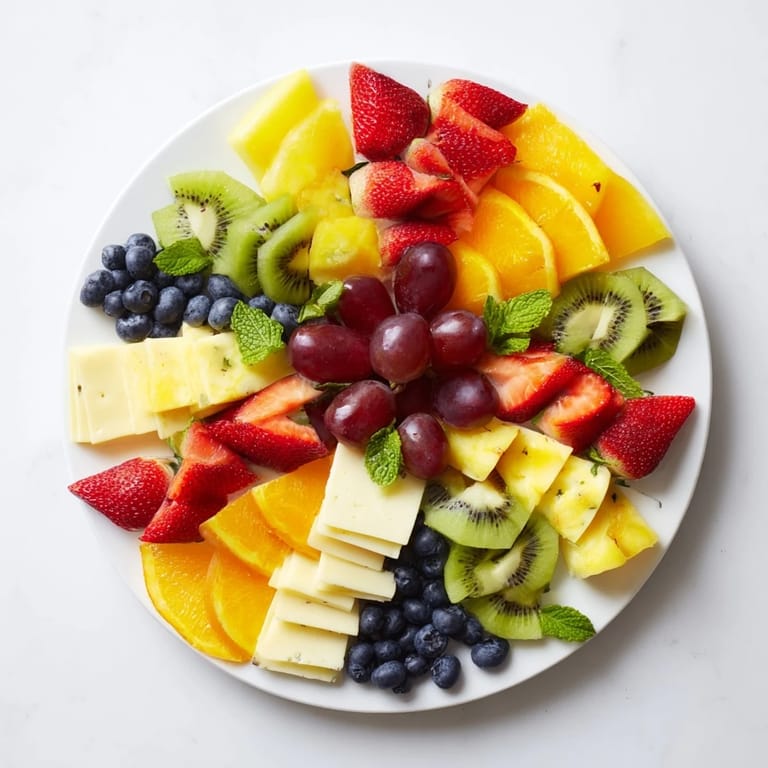
 The first time I arranged a platter like this, I was stressed about impressing guests who were arriving in an hour. I'd spent the morning worrying about whether the appetizers would feel fancy enough, until I grabbed whatever colorful fruits and cheeses I had and started placing them in circles. Something clicked when the third ring took shape, and suddenly what felt scattered became intentional, almost meditative. My friend walked in mid-arrangement and said, "Wait, did you plan this?" I hadn't, but that moment made me realize that the best-looking platters sometimes come from just trusting your eye and letting the colors guide you.
I made this for a small dinner party last spring when everyone kept canceling, and I almost didn't bother putting it together. But I'd already bought the fruit, so I thought, why not arrange it anyway? Those friends who showed up couldn't stop talking about how thoughtful it felt, and I realized that even when you're cooking for fewer people than planned, the care shows. Now I make it whenever I need a reminder that beautiful things don't require an audience to be worth creating.
Ingredients
- Seedless red grapes: These stay firm and glossy, so they don't get sad or wrinkled as the platter sits out.
- Fresh strawberries: Halve them so you see that gorgeous red interior, and add them last so they don't weep liquid onto everything else.
- Kiwi: The jewel-like green and seeds create visual drama; slice them just before serving so the color stays bright and doesn't dull.
- Pineapple: Cut into small wedges rather than chunks so they mirror the shape of everything else and feel intentional.
- Blueberries: These are your secret filler, the ones that tuck into gaps and make the whole thing feel cohesive rather than sparse.
- Orange: Segments add a sunny warmth and something slightly different texture-wise from the other fruits.
- Aged cheddar: The sharpness cuts through the sweetness of the fruit, and triangular wedges slot perfectly between fruit pieces.
- Manchego: Thin, delicate slices add an elegant sophistication and a slightly nutty note that changes the whole flavor story.
- Brie: Soft and creamy, these little wedges become almost melty against the fruit and create textural contrast.
- Goat cheese: The tanginess and crumbly texture give people another reason to keep coming back, round slices are less formal and feel more approachable.
- Fresh mint: More than just garnish, a few leaves scattered across the platter add aroma and remind people this is intentional, thoughtful food.
Tired of Takeout? 🥡
Get 10 meals you can make faster than delivery arrives. Seriously.
One email. No spam. Unsubscribe anytime.
Instructions
- Wash and prep your fruit:
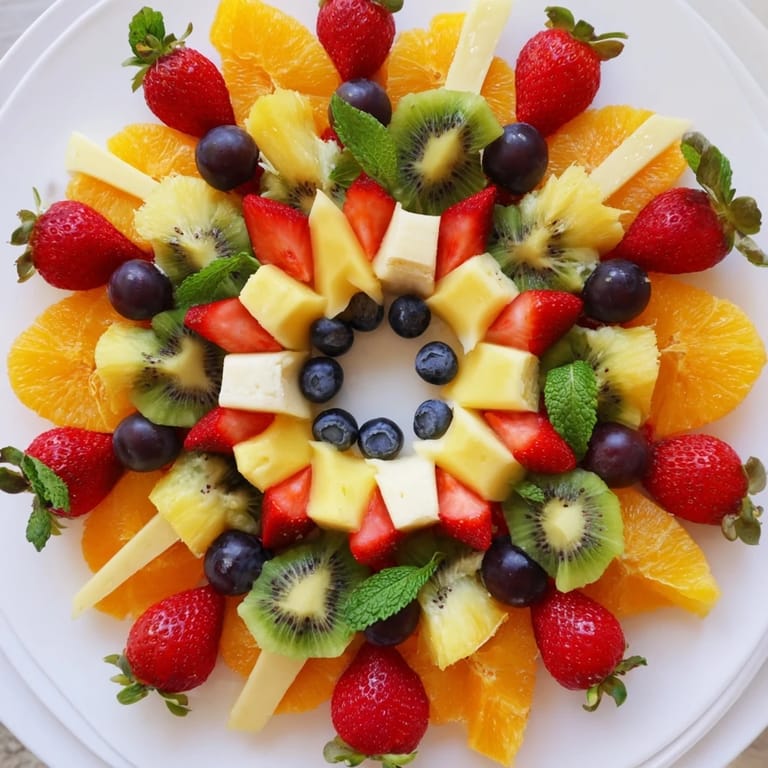
- Get everything clean and cut into matching sizes so the pattern feels deliberate. When all the pieces are roughly the same shape, they slot together like they were meant to.
- Slice your cheeses into wedges and rounds:
- Use a sharp knife and wipe it clean between cuts so you don't drag flavors around. Take your time here because uniform pieces are what make the kaleidoscope actually work.
- Start at the outer edge with your first fruit:
- Pick the color you want to lead with and place a single type of fruit in a circle around the platter's edge. This is your anchor, your visual starting line.
- Alternate fruit and cheese in repeating wedges:
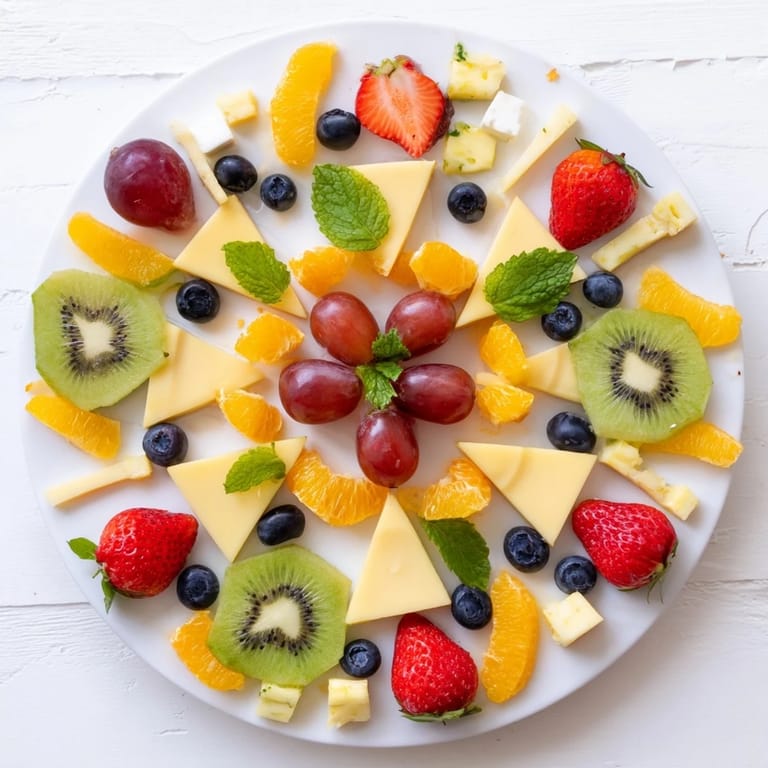
- Move inward in concentric circles, switching between fruit and cheese each time. Step back every few pieces to make sure the pattern feels balanced and the colors aren't clustering awkwardly.
- Fill the center gaps with smaller fruits:
- Blueberries and extra grapes are your friends here; tuck them into empty spaces to strengthen the pattern and hide any hesitation marks. This is where the platter goes from almost there to actually stunning.
- Add mint as a final flourish:
- Scatter a few fresh leaves across the arrangement for color, aroma, and the visual signal that someone cared. Even just five or six leaves make a difference.
 Save to Pinterest
 What surprised me most about making this platter is how meditative the whole process became. The repetition of placing fruit, then cheese, then fruit again created this rhythm that quieted my mind in a way that cooking usually doesn't. By the time I finished, I felt as calm as the platter looked, and that feeling stayed with me even after everyone ate their way through it.
The Geometry of Beautiful Food
There's something about creating a pattern that makes people pause before eating. On a regular platter, people grab what looks good and move on. On a kaleidoscope platter, they actually look first, which means they're already in a different headspace before the first bite. That shift from just feeding yourself to witnessing something intentional changes everything about how the food tastes and how the moment feels.
Making It Work for Your Crowd
This platter adapts instantly to whatever fruits and cheeses are at your market today, so it never feels boring even if you make it twice a month. Swap in peaches for strawberries in summer, pomegranate seeds and persimmons in fall, or stick with what's cheapest and already in your fridge. The pattern stays true even if the colors change, which is how you know you've nailed a recipe.
When to Serve This and Why It Works
This platter shows up best when you're trying to make a simple gathering feel special without fussing in the kitchen all day. It's your opening move at a party, your answer to "what should I bring," and your secret weapon for Tuesday-night confidence. Pair it with sparkling wine or a light rosé and watch people linger longer, eat slower, and actually talk to each other instead of just refueling.
- Make it in the morning and cover it loosely until guests arrive so the fruit stays fresh but the colors don't fade.
- If you're transporting it, skip the mint until you arrive and place your platter on the center of the table, not on the side, so it gets the attention it deserves.
- Serve at room temperature; cold food is fine, but letting it warm up just slightly for an hour actually makes the fruit taste better and the cheese taste less muted.
 Save to Pinterest
 There's a quiet confidence that comes with setting down a platter that made you think while making it, and this one gives that feeling every single time. It's the kind of recipe that reminds you that the most impressive food isn't always the most complicated.
Recipe FAQs
- → How do I achieve the kaleidoscope effect?
Arrange the fruit and cheese wedges alternately in concentric circles with consistent shapes and vibrant colors to create symmetrical, repeating patterns.
- → Can I substitute any fruits or cheeses?
Yes, seasonal fruits or preferred cheeses can be used to maintain color variety and texture contrast, enhancing the overall presentation.
- → What is the best way to prepare the fruits?
Wash, peel, and cut fruits into uniform wedges or segments to ensure a harmonious appearance and ease of arrangement.
- → How long can this platter be stored before serving?
Cover and refrigerate the platter until ready to serve, ideally within a few hours to preserve freshness and texture.
- → Are there suggestions to add a savory touch?
Consider adding olives or roasted nuts into gaps to introduce a savory dimension and enhance flavor balance.