 Save to Pinterest
 I discovered this recipe by accident one winter when my partner brought home a jar of gochujang from the Korean market and I was desperately trying to use up the last of some beautiful salmon fillets before they went bad. I'd never worked with that chili paste before, but something about the way it smelled—funky and deep and a little spicy—made me think orange would complement it. That first batch was a gamble, but when the glaze started to caramelize under the broiler and the whole kitchen filled with this sweet-savory aroma, I knew I'd stumbled onto something special.
I made this for my parents last spring, and my mom—who usually picks at fish—went back for seconds. She kept asking what was in the glaze, convinced I'd ordered it from somewhere fancy. Watching her eat with actual enthusiasm instead of polite hesitation was worth every minute I spent squeezing fresh oranges.
Ingredients
- Salmon fillets (4, about 150g each, skin-on): Skin-on keeps the fish moist and gives you a crispy surface when broiled, which is honestly the best part.
- Gochujang (2 tablespoons): This Korean chili paste is funky and complex, not just straight heat—it's what makes the whole dish taste layered and intentional.
- Fresh orange juice (1/4 cup): Freshly squeezed matters here because bottled tastes flat against the fermented depth of the gochujang.
- Soy sauce (2 tablespoons): Use a good quality brand you actually like drinking, because it's a main flavor player, not just salt.
- Honey (2 tablespoons): This sweetens the glaze and helps it caramelize, turning sticky and glossy under high heat.
- Rice vinegar (1 tablespoon): The acidity keeps everything from being one-note and makes the flavors pop.
- Fresh ginger (1 teaspoon, grated): Grate it right before using—pre-grated loses its brightness and punch.
- Garlic (1 clove, minced): One clove is enough; you want to taste the salmon, not just get hit with garlic.
- Sesame oil (1 teaspoon): A little goes a long way, and it adds a toasted nuttiness that ties everything together.
- Jasmine rice (1 1/2 cups) and water (3 cups): Jasmine is silky and slightly sweet, which plays beautifully against the spicy glaze.
- Butter (2 tablespoons): This makes the rice luxurious and gives you something to absorb all that glaze.
- Salt (1/2 teaspoon for rice): Season as you go; you can always add more.
- Scallions (3, thinly sliced): Slice them fresh right before serving so they stay bright and crisp.
- Toasted sesame seeds and orange zest (optional): These add textural contrast and visual pop if you want to show off a little.
Tired of Takeout? 🥡
Get 10 meals you can make faster than delivery arrives. Seriously.
One email. No spam. Unsubscribe anytime.
Instructions
- Make the glaze:
- In a medium bowl, whisk gochujang, orange juice, soy sauce, honey, rice vinegar, ginger, garlic, and sesame oil until smooth and glossy. The mixture should smell incredible and look like liquid amber.
- Marinate the salmon:
- Pat your salmon fillets dry with a paper towel—this is the single most important step for crispy skin. Lay them in a shallow dish, spoon 2 tablespoons of glaze over each one, and flip to coat everything. While they sit for 10 minutes, start your rice.
- Cook the rice:
- Rinse jasmine rice under cold water, stirring gently with your fingers until the water runs mostly clear. In a saucepan, combine rice, 3 cups water, butter, and salt, then bring to a boil. Once boiling, reduce heat to the lowest setting, cover, and don't peek for 15 minutes—steam does the work now.
- Prepare the baking sheet:
- Preheat your broiler to high and line a baking sheet with foil, then lightly oil it so the skin doesn't stick. Position your oven rack so it's about 5 to 7 inches from the heat source.
- Broil the salmon:
- Place salmon skin-side down on the sheet and brush with more glaze. Broil for 3 to 4 minutes, then brush again with the remaining glaze and broil another 2 to 3 minutes until the edges caramelize and the thickest part flakes gently with a fork. Don't walk away—broilers are fast and unforgiving.
- Finish the glaze:
- While salmon cooks, pour any leftover glaze into a small saucepan and simmer over medium heat for 2 to 3 minutes until it thickens slightly and clings to a spoon. This concentrated version is what you drizzle over everything at the end.
- Plate and garnish:
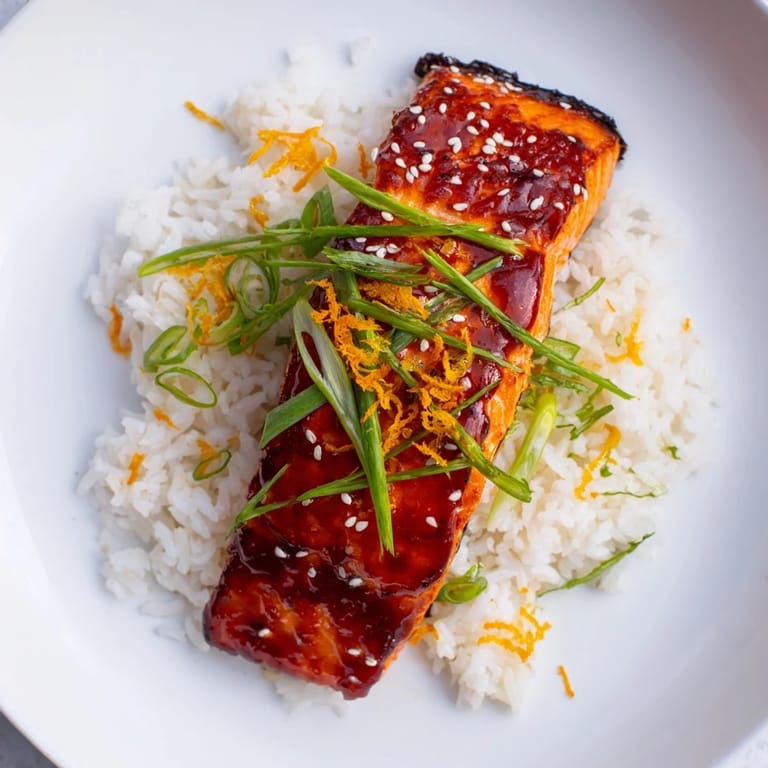
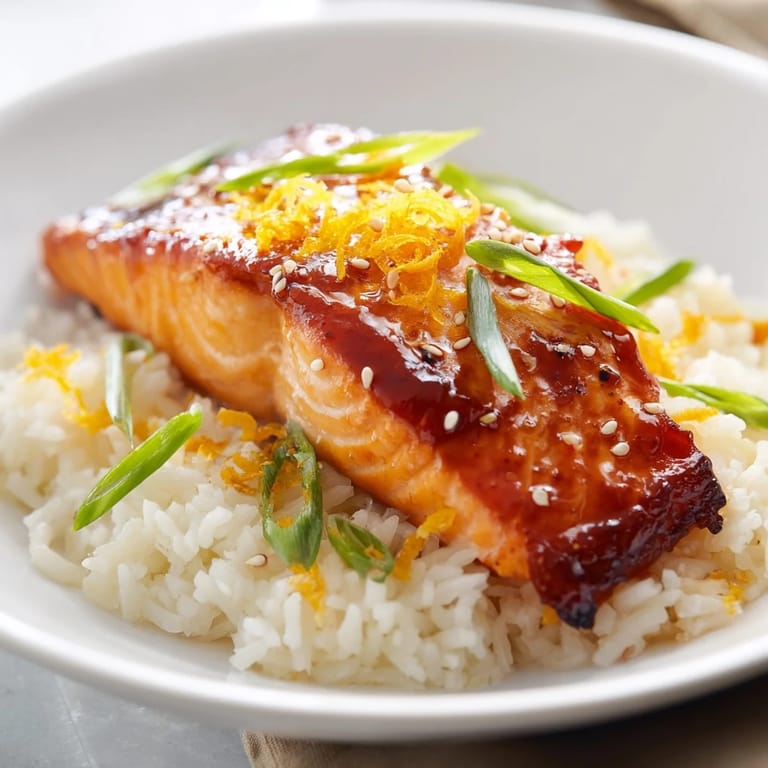
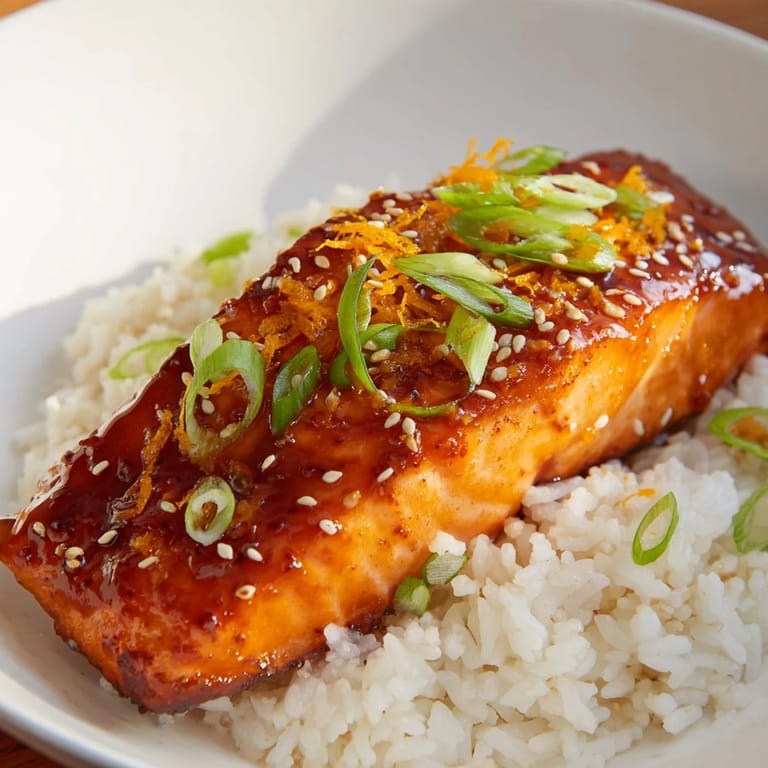
- Fluff the rice with a fork (it should be tender but with a little resistance), divide it among bowls, and top each with a salmon fillet. Drizzle the thickened glaze over everything and scatter with fresh scallions, sesame seeds if you have them, and a light shower of orange zest.
 Save to Pinterest
 The first time I made this dish for someone I was trying to impress, I was so nervous about overcooking the salmon that I stood in front of the broiler the whole time like I was diffusing a bomb. But something shifted when I stopped treating it like a test and just cooked it with the same care I'd use for myself—and that's when I realized good food comes from not being afraid to feed people something you actually love.
Why This Flavor Combination Works
The genius of pairing gochujang with orange is that sweet citrus cuts through the fermented funk and heat, while honey keeps the spice from becoming aggressive. Soy sauce and rice vinegar add umami and brightness, creating a glaze that tastes complex without requiring complicated technique. It's less about adding more ingredients and more about letting each one do its job.
Timing and Temperature Matter More Than You Think
I learned this the hard way by overcooking salmon twice before I started using a thermometer. Fish that looks done on the outside is often overdone inside, which turns it dry and sad. The sweet spot for medium salmon is an internal temperature of 52 to 54°C (125 to 130°F), which sounds precise but is actually very forgiving once you know what to look for—the thickest part should still have a tiny bit of translucence in the very center.
How to Build Around This Base
This recipe is flexible enough that you can make it work with what you have on hand, but knowing which swaps preserve the balance matters. Brown rice or quinoa will work instead of jasmine, though the texture will be earthier and less luxurious. If you can't find gochujang, a mixture of sriracha and miso paste gets you close—not identical, but still delicious.
- Add a small pinch of chili flakes to the glaze if you like more visible heat and texture.
- A splash of lime juice instead of some orange juice creates a more tropical, less sweet version.
- Serve alongside steamed bok choy or a quick cucumber salad to add freshness and cut through the richness.
 Save to Pinterest
 This dish has become my go-to when I want to cook something that tastes special without spending all evening in the kitchen. There's something satisfying about feeding people food that makes them slow down and actually taste it.
Recipe FAQs
- → How is the orange glaze made?
A mix of gochujang, fresh orange juice, soy sauce, honey, rice vinegar, ginger, garlic, and sesame oil creates the tangy-sweet glaze.
- → What type of rice is best for this dish?
Jasmine rice is recommended for its fluffy texture and aromatic quality, enhanced with butter and a pinch of salt.
- → How do I achieve the caramelized finish on the salmon?
Broil the marinated salmon skin-side down, brushing with glaze midway for a caramelized, flavorful crust.
- → Can I substitute any ingredients for dietary preferences?
Brown rice or quinoa can replace jasmine rice for a healthier option; adjust cooking times accordingly.
- → What garnishes complement this dish?
Fresh scallions, toasted sesame seeds, and a light sprinkle of orange zest enhance aroma and presentation.