 Save to Pinterest
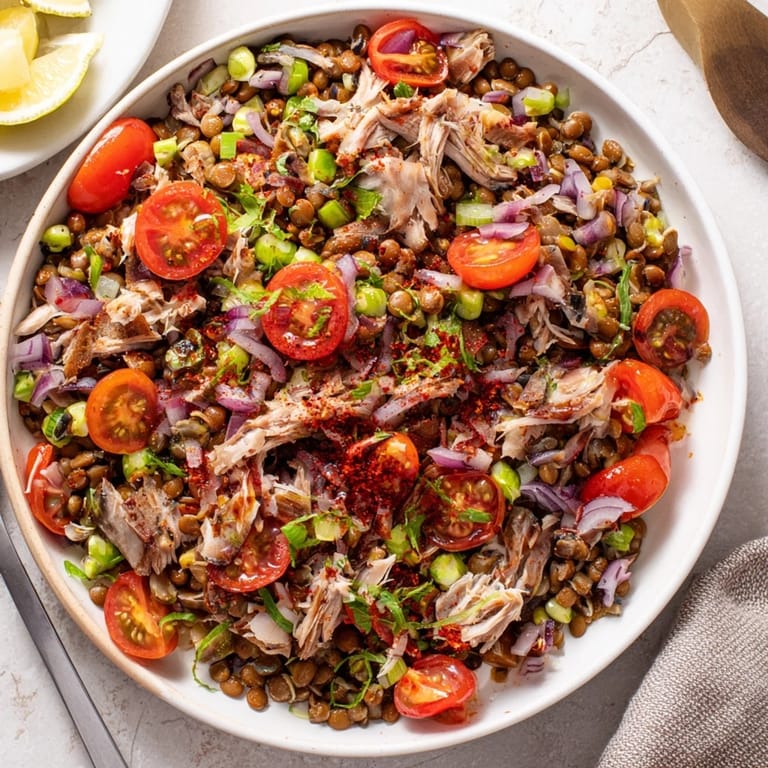
 There's something about opening a tin of good tuna that makes everything feel a little more intentional. I stumbled onto this salad during one of those evenings when I needed dinner fast but didn't want to compromise on substance—no sad desk lunch vibes. The combination of creamy chickpeas and flaky tuna just clicked, especially when I added that sharp bite of red onion and the brightness of fresh lemon. It became my go-to when friends asked what I was eating, and now it's become theirs too.
I made this for my partner on a random Tuesday, just to have something different on hand, and he asked if I could make it again the next day. That's when I knew it had staying power. The funny part was watching him layer it onto sourdough like it was something precious, when really it's just smart, honest food that doesn't pretend to be more complicated than it is.
Ingredients
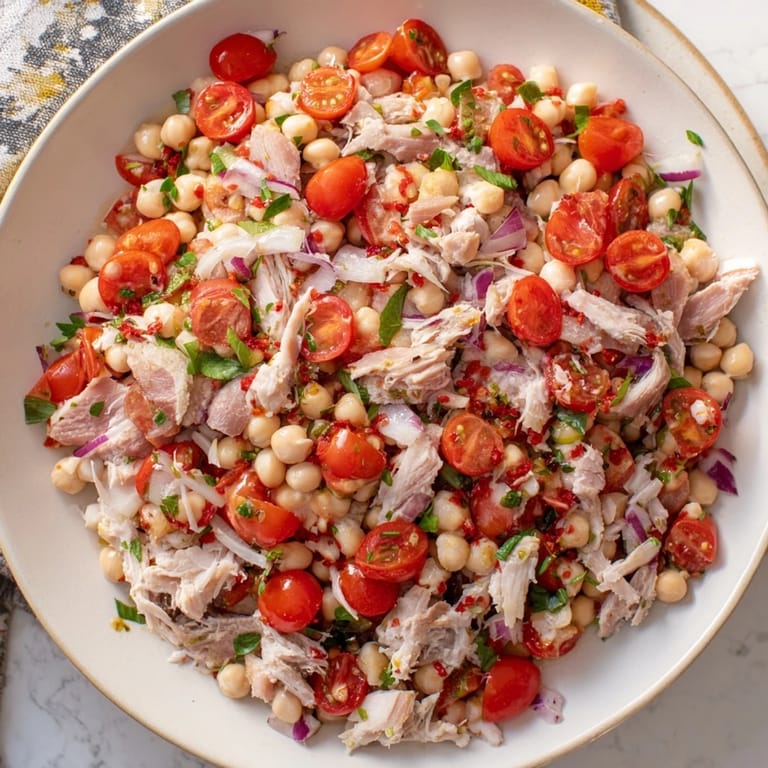
- Quality tuna in olive oil (1 can, 5 oz): The oil is part of the magic here—don't drain it completely if your tin is swimming in the good stuff, it adds richness the dressing doesn't need to compensate for.
- Chickpeas (1 can, 15 oz): Rinsing them matters because it removes that starchy liquid that makes everything gummy, and you want each bean to stay distinct and creamy.
- Red onion (1/4 small): Fine dice is key; you want the bite without the chunks that make people flinch.
- Cherry tomatoes (1/2 cup): Halving them keeps the salad from becoming soup and gives you little bursts of sweetness.
- Fresh parsley (1/4 cup): Not just for looks—it's the green note that ties everything together and makes the whole thing feel alive.
- Extra-virgin olive oil (3 tbsp): This is where your money matters; cheaper oil tastes cheap here.
- Fresh lemon juice (1 tbsp): Squeeze it yourself if you can; bottled is okay in a pinch, but fresh is noticeably brighter.
- Dijon mustard (1 tsp): The emulsifier that makes the dressing cling to everything instead of pooling at the bottom.
- Sea salt and freshly ground black pepper: Taste as you go because the tuna and chickpeas already bring salt to the party.
- Smoked paprika (1/4 tsp, optional): A whisper of this adds a depth that makes people ask what the secret ingredient is.
- Lemon zest (from 1/2 lemon): The final touch that says you actually care.
Tired of Takeout? 🥡
Get 10 meals you can make faster than delivery arrives. Seriously.
One email. No spam. Unsubscribe anytime.
Instructions
- Build Your Base:
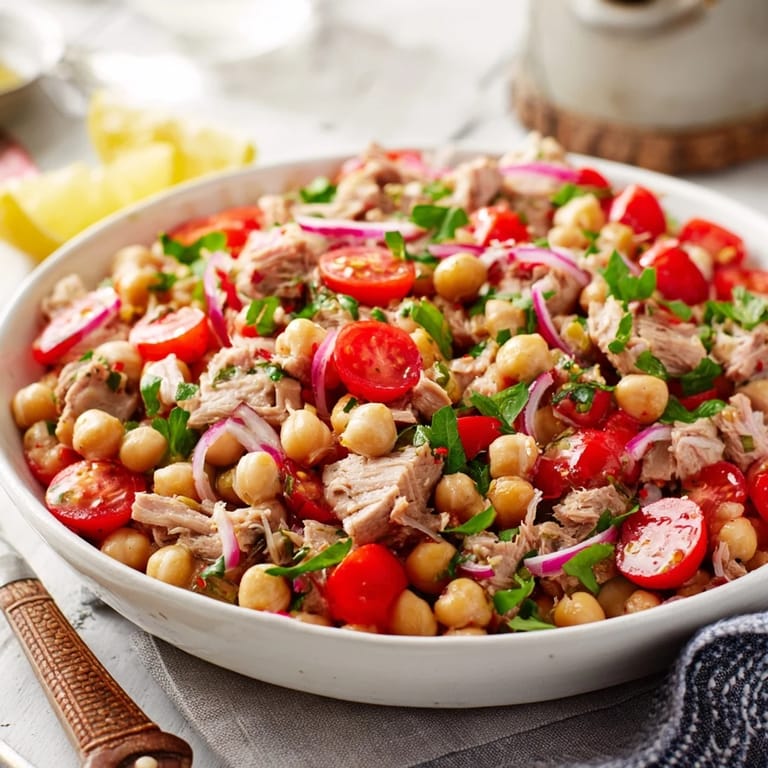
- Drain your chickpeas and tuna, then toss them into a large bowl with the finely diced red onion, halved cherry tomatoes, and chopped parsley. This is your canvas—take a second to look at it and make sure everything feels balanced in size.
- Make the Dressing:
- In a smaller bowl, whisk together the olive oil, lemon juice, Dijon mustard, salt, pepper, and smoked paprika until it looks slightly thickened and emulsified. You should hear it come together when you taste it.
- Bring It Together:
- Pour the dressing over your salad and toss gently, which means use your hands or two spoons and be patient—you want everything coated without crushing the chickpeas. The goal is texture, not mush.
- Taste and Adjust:
- This is non-negotiable; every tuna tin and lemon is different, so trust your palate. Add salt or lemon as needed to make it feel alive on your tongue.
- Finish and Serve:
- Scatter lemon zest and extra parsley on top, then eat it right away or let it sit for 30 minutes if you want the flavors to settle deeper into each other. Both work.
 Save to Pinterest
 The moment I knew this was more than just lunch came when my friend brought leftovers to a picnic and everyone wanted the recipe. It wasn't fancy or complicated, but it was generous—the kind of food that makes people feel taken care of without any fuss.
How to Serve It
This salad is flexible enough to work on its own if you're eating light, but it really shines when you layer it onto something. Toasted sourdough is my favorite because the crunch plays off the creaminess, though a bed of arugula or mixed greens turns it into something that feels more intentional. Crusty bread alongside works too if you want to be a little more casual about it. The best version is the one that gets eaten without hesitation.
Storage and Make-Ahead
You can prep everything separately and let it hang out in your fridge for a day or two—keep the dressing in its own container so nothing gets soggy. When you're ready to eat, just toss it together and it tastes like you just made it. This is the kind of recipe that's actually better with a little planning because it takes the pressure off dinnertime.
Variations and Swaps
Once you understand how this salad works, you can play with it. Capers add a briny punch if you like that kind of thing, or a handful of sliced olives if you want something richer. A pinch of chili flakes brings heat without overwhelming everything else, and shallot or green onion can replace red onion if raw red onion feels too sharp for your taste. The structure stays the same; you're just tweaking the personality.
- Add capers, sliced olives, or chili flakes for extra flavor without changing the foundation.
- Swap red onion for shallot or green onion if you prefer something gentler.
- White beans work if you don't have chickpeas, though they're a bit softer in texture.
 Save to Pinterest
 This recipe is proof that the best meals often come from working with what you have on hand and not overthinking it. It's the kind of food that reminds you why cooking doesn't have to be complicated to be satisfying.
Recipe FAQs
- → Can I use fresh tuna instead of canned?
Fresh tuna can be used but it requires cooking before combining. The canned tuna offers convenience and a flaky texture ideal for this dish.
- → What can I substitute for red onion?
Shallots or green onions provide a milder taste while maintaining the aromatic crunch in the salad.
- → Is it better to chill the salad before serving?
Chilling for 30 minutes allows flavors to meld, enhancing the taste, but it can also be enjoyed immediately.
- → Can smoked paprika be omitted?
Yes, smoked paprika is optional, added for subtle smoky depth but the salad remains flavorful without it.
- → What breads pair well with this salad?
Toasted sourdough, crusty baguette, or leafy greens complement the textures and flavors perfectly.