 Save to Pinterest
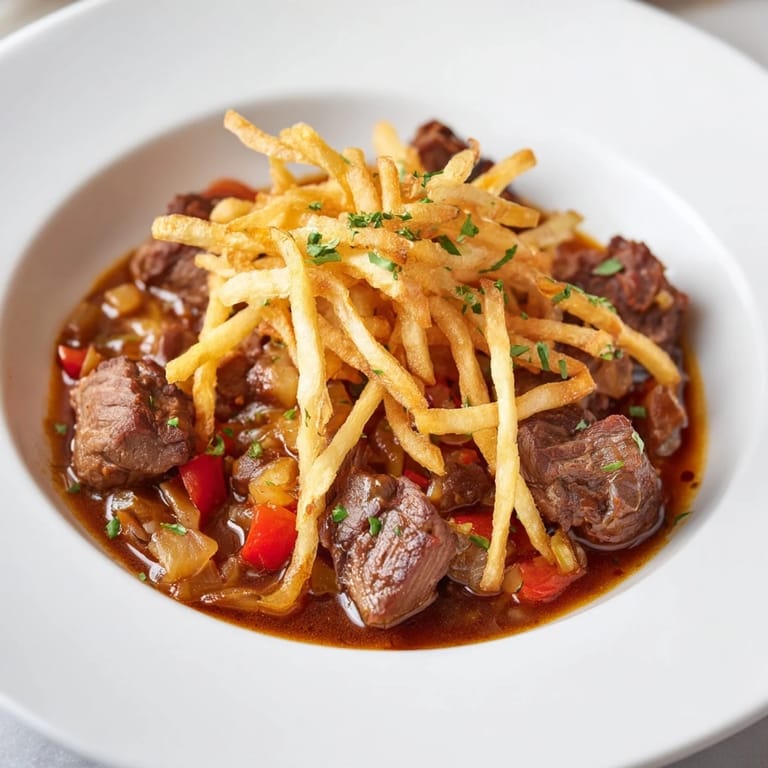
 My first real encounter with Czech goulash happened on a grey November afternoon at a small restaurant in Prague, where the waitress set down a steaming bowl and I watched the paprika-stained sauce cling to impossibly tender beef. Years later, I attempted it at home out of pure stubbornness, convinced I could replicate that brick-red richness and the way the crispy potato strips shattered between my teeth. That first try taught me patience—literally two hours of simmering—but also that some dishes demand time the way others demand technique. The combination of sweet Hungarian paprika, caraway, and marjoram transforms simple beef chuck into something that tastes like it's been centuries in the making. Now it's become my go-to when I want to impress people or simply feed myself something that feels like a warm hug.
I served this to my partner's family the first time I made it, nervously watching their faces as they took the first spoonful. His grandmother, who'd grown up in Moravia, took a single bite and nodded—just barely, but it was enough. She asked for the recipe, which meant everything coming from her kitchen, and somehow that small validation made the two-hour wait feel like nothing.
Ingredients
- Beef chuck, 800 g cut into 2.5 cm cubes: Chuck has the fat and connective tissue that becomes silky gelatin during long cooking, so don't be tempted by leaner cuts.
- Vegetable oil, 2 tbsp plus 500 ml for frying: Use neutral oil that won't compete with the paprika's warmth.
- Large onions, 2 finely chopped: These melt into the sauce and create its foundation, so take time to caramelize them properly.
- Garlic, 3 cloves minced: Add it after the onions turn golden, or it'll burn and taste bitter.
- Sweet Hungarian paprika, 2 tbsp: This is non-negotiable quality-wise—good paprika is the soul of the dish, so invest in a reputable brand.
- Caraway seeds, 1 tsp: Toast them lightly if they smell faint, as this awakens their earthy, almost rye-bread character.
- Marjoram, 1 tsp: Dried marjoram works beautifully here; fresh will be too sharp for the long cook.
- Salt, 1 tsp and to taste: Start with this amount and adjust after simmering, as flavors concentrate.
- Black pepper, ½ tsp: Freshly ground makes a noticeable difference.
- Tomato paste, 2 tbsp: This adds umami depth and a subtle tanginess that balances the paprika.
- Beef broth, 750 ml: Use quality broth; it's the liquid that becomes your sauce, so it matters.
- Bell pepper, 1 diced: Red or yellow peppers add sweetness that rounds out the spice.
- All-purpose flour, 1 tbsp or gluten-free: This dusts the meat and thickens the sauce slightly as it cooks.
- Bay leaf, 1: Remove it before serving or risk an unpleasant surprise in a spoonful.
- Large potatoes, 4 peeled: Waxy potatoes hold their shape better when fried than starchy ones.
Tired of Takeout? 🥡
Get 10 meals you can make faster than delivery arrives. Seriously.
One email. No spam. Unsubscribe anytime.
Instructions
- Build your flavor base:
- Heat the oil in a heavy pot over medium heat and add your chopped onions. Let them cook slowly, stirring occasionally, until they turn golden and sweet—about 8 minutes. You'll notice the kitchen starting to smell homey and inviting.
- Wake up the spices:
- Stir in the minced garlic, caraway seeds, and paprika, cooking for just 1 minute while stirring constantly. This is critical: paprika burns easily and tastes acrid once it does, so watch it closely and you'll be rewarded with a fragrant, toasted aroma.
- Brown the beef:
- Add your beef cubes and let them sit undisturbed for a moment before stirring, giving them a chance to develop a golden crust on all sides. This takes about 5 minutes and creates the depth of flavor that makes the whole dish sing.
- Season and thicken:
- Stir in the tomato paste, marjoram, salt, pepper, and bay leaf, then sprinkle the flour over the meat and stir everything together. The flour will coat the meat and help thicken the sauce as it simmers.
- Simmer into tenderness:
- Pour in the beef broth, bring it to a boil, then reduce the heat to low, cover the pot, and let it simmer for 1.5 to 2 hours, stirring occasionally. The beef should be fork-tender and the sauce should be rich and slightly thickened. Taste it toward the end and adjust the seasoning—salt and pepper become muted during long cooking.
- Prepare the potatoes:
- While the goulash simmers, cut your peeled potatoes into thin matchsticks using a mandoline or a sharp knife. Precision here helps them fry evenly.
- Rinse and dry thoroughly:
- Place the potato strips in a bowl of cold water to rinse away excess starch, then pat them completely dry with a clean towel. Moisture is the enemy of crispiness, so don't skip this step.
- Fry to golden perfection:
- Heat your oil to 180°C (350°F) in a deep pan and fry the potatoes in batches so they're not crowded. They'll turn golden and crispy in 3 to 4 minutes; drain them on paper towels and season with salt immediately while warm.
- Final touches:
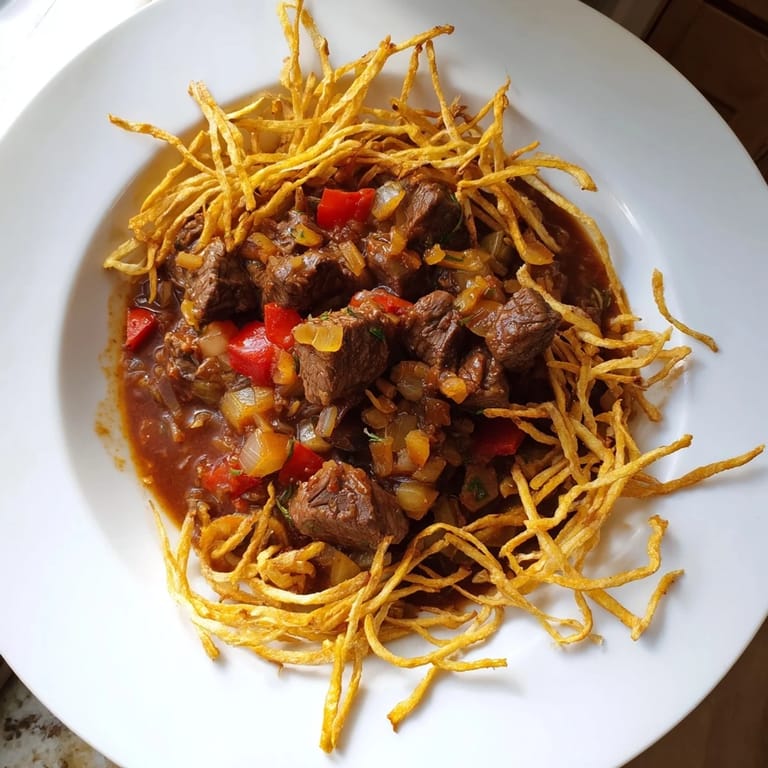
- Remove the bay leaf from the goulash and take a final taste, adjusting seasoning as needed. Serve the hot goulash in bowls, topped generously with the crispy potato strips so they stay crunchy until the spoon hits the bowl.
 Save to Pinterest
 I remember my partner's mother asking for the recipe with such genuine warmth that I felt like I'd been accepted into something bigger than just cooking. That moment reminded me that food is really about showing up for people, and this goulash—with all its time and care—is a love letter written in beef and paprika.
The Magic of Paprika
Hungarian paprika isn't just a spice; it's the entire personality of this dish. Sweet paprika gives warmth and depth without heat, while the bright red color tells your guests something special is coming. I learned this the hard way after buying generic supermarket paprika once, and the goulash tasted flat and one-dimensional. Now I always buy it from specialty shops or trusted sources, and the difference is immediate—the sauce becomes richer, more complex, and genuinely craveable.
Timing and Patience
Two hours seems long, but this is when the beef transforms from muscle into something melting and tender. The slow simmer also allows the sauce to concentrate and all the spices to marry together into something cohesive. I used to think I could rush it by increasing the heat, but the meat would remain tough and the flavors wouldn't develop properly. Now I set a timer, pour a drink, and let the oven and pot do the work together.
Potato Strips as Textural Gold
The crispy potato strips aren't just a side—they're essential. They provide crunch against the soft beef and sauce, and that contrast is what makes you keep eating long after you're full. The first time I made them, I didn't dry them properly and they came out greasy and limp, which taught me a painful lesson about moisture and heat. Now I treat the drying step like a ritual, and every strip emerges shatteringly crisp from the hot oil.
- Mandolines cut potatoes faster and more uniformly than knives, which means even frying.
- Soaking the cut potatoes in cold water for even 10 minutes helps remove starch and improves crispiness.
- Frying in batches prevents the temperature from dropping, which keeps each batch as crispy as the first.
 Save to Pinterest
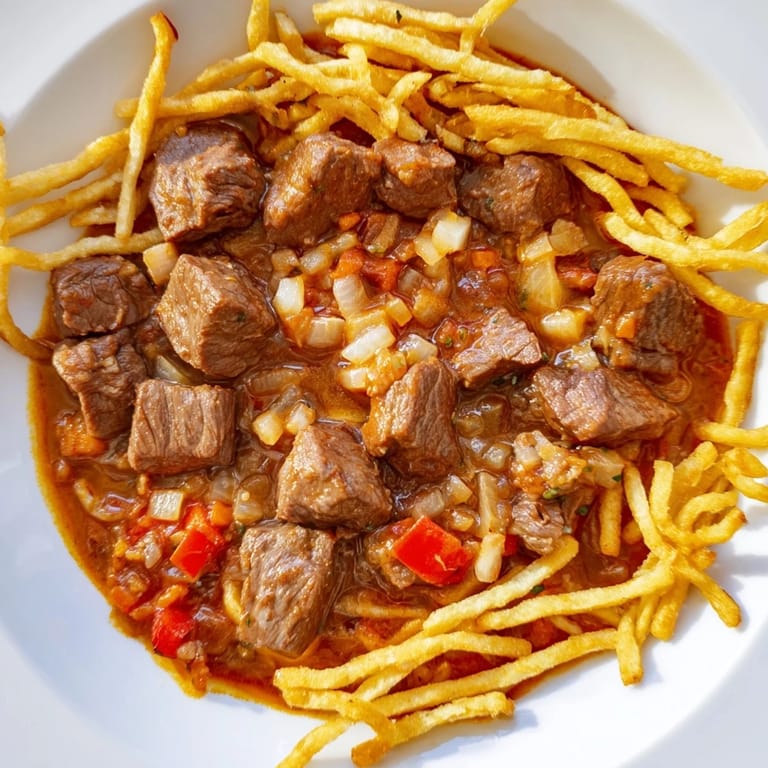
 This goulash has become my answer to almost every question about what to cook when it matters. It's the kind of dish that tastes like home, whether that home is Prague or your own kitchen.
Recipe FAQs
- → What cut of beef is best for the goulash?
Beef chuck cut into cubes works best due to its balance of meat and connective tissue, which becomes tender and flavorful during slow cooking.
- → How do you achieve the rich paprika flavor without bitterness?
Cook the paprika briefly with onions and garlic over medium heat without burning to release its aroma and avoid bitterness.
- → What is the purpose of caraway seeds in the dish?
Caraway seeds add a subtle, warm, and slightly sweet flavor that complements the paprika and enhances authenticity.
- → How should the potato strips be prepared for frying?
Peel and cut potatoes into thin matchsticks, rinse in cold water, dry thoroughly, then fry in hot oil until golden and crispy.
- → Can this dish be adapted for gluten-free diets?
Yes, using gluten-free flour instead of all-purpose flour ensures the sauce thickens without gluten.