 Save to Pinterest
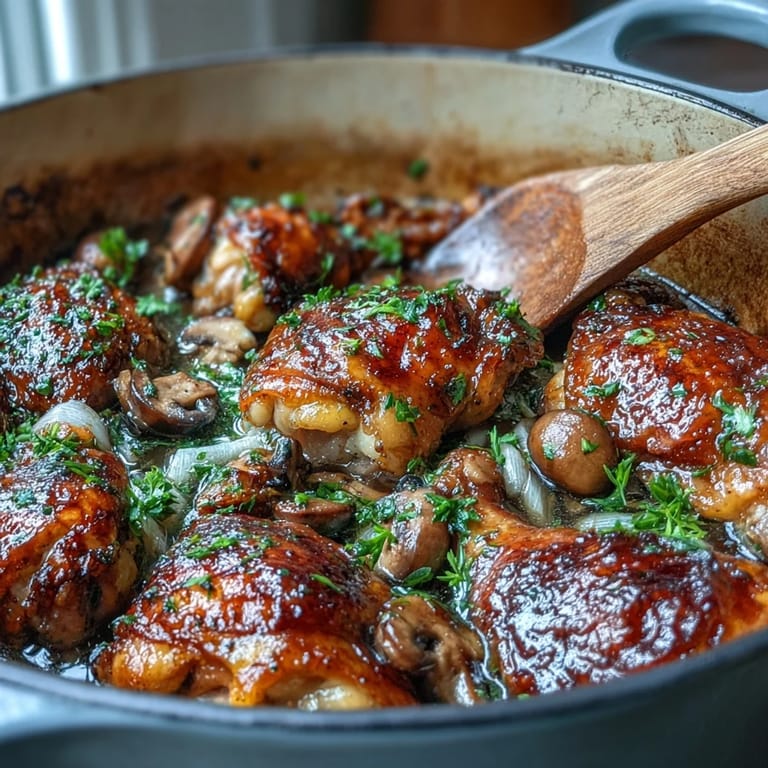
 My neighbor Marie handed me a bottle of rosé one spring afternoon, insisting I use it for something other than sipping on the patio. I'd never thought of rosé as a cooking wine until she mentioned her grandmother's version of coq au vin, lighter and softer than the Burgundy-soaked original. That evening, I browned chicken in my heaviest pot and let the blush-colored wine bubble up around the pieces, filling the kitchen with something floral and unexpected. The cream swirled in at the end like silk, and I understood why Marie had been so insistent.
I made this for a small dinner party once, and my friend Sam, who usually gravitates toward steak, went back for seconds of the chicken. He kept dragging bread through the sauce, quiet and focused, until his plate was clean. Later he asked if I'd opened a fancy bottle for the dish, and I admitted it was a twelve-dollar rosé from the corner shop. He laughed, amazed that something so humble could taste so refined.
Ingredients
- 1.5 kg bone-in, skin-on chicken pieces: Thighs and drumsticks stay moist during the long braise and soak up the sauce beautifully, dark meat is your friend here.
- 500 ml dry rosé wine: Choose something you'd enjoy drinking, not cooking wine from a dusty shelf, the flavor concentrates as it simmers.
- 2 tbsp olive oil: This helps achieve a deep golden sear on the chicken, which builds the base flavor for everything that follows.
- 1 medium onion, finely chopped: Sweet and mild, it melts into the background and thickens the sauce naturally.
- 2 garlic cloves, minced: Just enough to add warmth without overpowering the delicate wine.
- 2 carrots, peeled and sliced: They soften into tender coins and add a hint of natural sweetness.
- 200 g mushrooms, quartered: Cremini have more flavor than button, but either works, they soak up the wine like little sponges.
- 1 small leek, sliced: The white and light green parts bring a gentle onion flavor that's softer and more refined.
- 2 tbsp tomato paste: A small amount deepens the color and adds a touch of umami richness.
- 1 tbsp all-purpose flour: Optional, but it helps the sauce cling to the chicken instead of pooling thin at the bottom.
- 200 ml heavy cream: This is what transforms the dish from rustic to elegant, tempering the acidity and rounding out every flavor.
- 1 bay leaf, 4 sprigs thyme, 1 sprig rosemary: Classic French aromatics that perfume the pot as it simmers, fish them out before serving.
- Salt and black pepper: Season the chicken generously at the start, then adjust the sauce at the end once the flavors have concentrated.
- 2 tbsp fresh parsley, chopped: A bright green finish that cuts through the richness and makes the dish look alive.
Tired of Takeout? 🥡
Get 10 meals you can make faster than delivery arrives. Seriously.
One email. No spam. Unsubscribe anytime.
Instructions
- Season and prep the chicken:
- Pat each piece completely dry with paper towels so the skin crisps instead of steams, then season both sides with salt and pepper. Moisture is the enemy of a good sear.
- Brown the chicken in batches:
- Heat olive oil in a large Dutch oven over medium-high heat until it shimmers, then lay in the chicken skin-side down without crowding the pot. Let each batch sizzle undisturbed for about 5 minutes until deep golden, then flip and brown the other side before transferring to a plate.
- Sauté the aromatics:
- In the same pot with all those lovely browned bits, add the onions, carrots, and leek, stirring occasionally until they soften and start to color, about 4 to 5 minutes. Toss in the mushrooms and cook another 3 minutes until they release their moisture and begin to brown.
- Build the flavor base:
- Stir in the garlic and let it cook for 1 minute until fragrant, then add the tomato paste and cook another minute, stirring constantly so it caramelizes slightly and loses its raw edge.
- Thicken with flour:
- If you're using flour, sprinkle it over the vegetables and stir well to coat everything evenly. This step helps the sauce thicken later without needing a slurry.
- Deglaze with rosé:
- Pour in the rosé wine and scrape the bottom of the pot with a wooden spoon, loosening all the caramelized bits that hold so much flavor. Nestle the browned chicken back into the pot along with any juices, then tuck in the bay leaf, thyme, and rosemary.
- Simmer until tender:
- Bring everything to a gentle simmer, cover the pot, and reduce the heat to low. Let it cook undisturbed for 45 minutes, letting the wine work its magic on the chicken until the meat is fall-off-the-bone tender.
- Finish with cream:
- Remove the herb sprigs and bay leaf, then stir in the heavy cream and let the sauce simmer uncovered for 5 to 10 minutes until it thickens to a silky, glossy consistency. Taste and adjust the salt and pepper as needed.
- Garnish and serve:
- Spoon the chicken and sauce onto plates or a serving platter, then scatter fresh parsley over the top for color and a bright herbal note.
 Save to Pinterest
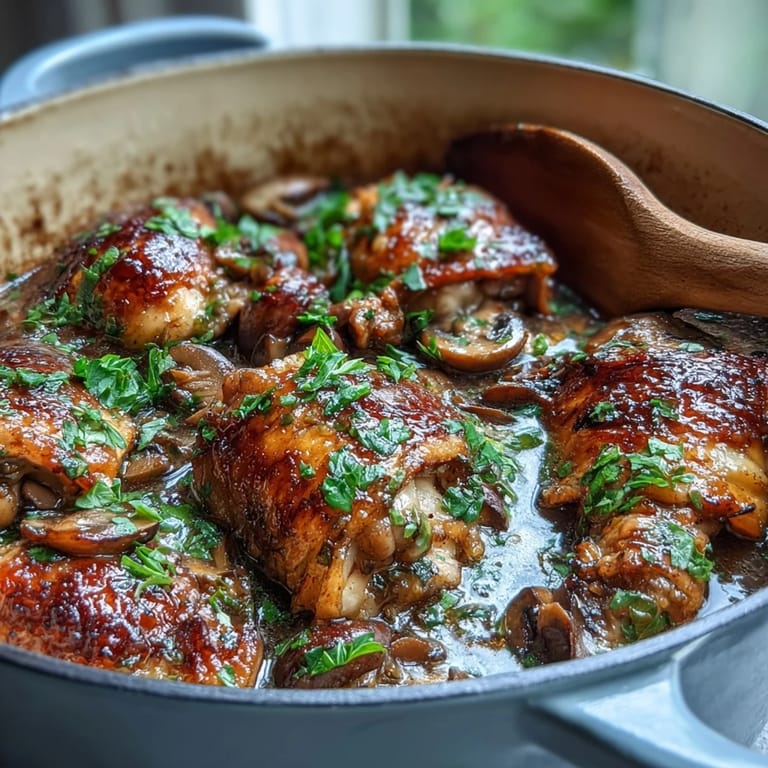
 One cold evening, I served this with a pile of buttered potatoes and watched my partner soak up every last bit of sauce with a piece of bread. We didn't talk much, just the clink of forks and the occasional hum of approval. It's the kind of dish that makes you slow down and pay attention, the kind that turns a regular Tuesday into something worth remembering.
Choosing the Right Wine
A dry rosé is essential here, nothing sweet or fruity in a dessert-wine way. Look for something crisp and mineral, the kind you'd pair with grilled fish or a summer salad. I've used Provençal rosés and Spanish rosados with equal success, the key is balance, not sweetness. If you're unsure, ask at the wine shop for a dry rosé under fifteen dollars and you'll be fine.
Serving Suggestions
This dish begs for something to soak up the sauce. Buttered boiled potatoes are classic and simple, but creamy mashed potatoes or even wide egg noodles work beautifully. I've also served it over rice when I wanted something lighter, and a crusty baguette on the side is non-negotiable. A crisp green salad with a sharp vinaigrette cuts through the richness and makes the meal feel complete.
Make-Ahead and Storage Tips
This is one of those dishes that tastes even better the next day after the flavors have had time to settle and deepen. Let it cool completely, then store it in an airtight container in the fridge for up to three days. Reheat gently on the stovetop over low heat, adding a splash of cream or stock if the sauce has thickened too much.
- You can brown the chicken and prep the vegetables a few hours ahead, then finish the braise when you're ready to cook.
- Freeze the finished dish without the cream for up to two months, then thaw, reheat, and stir in fresh cream before serving.
- If reheating from the fridge, do it slowly and stir occasionally so the cream doesn't separate or curdle.
 Save to Pinterest
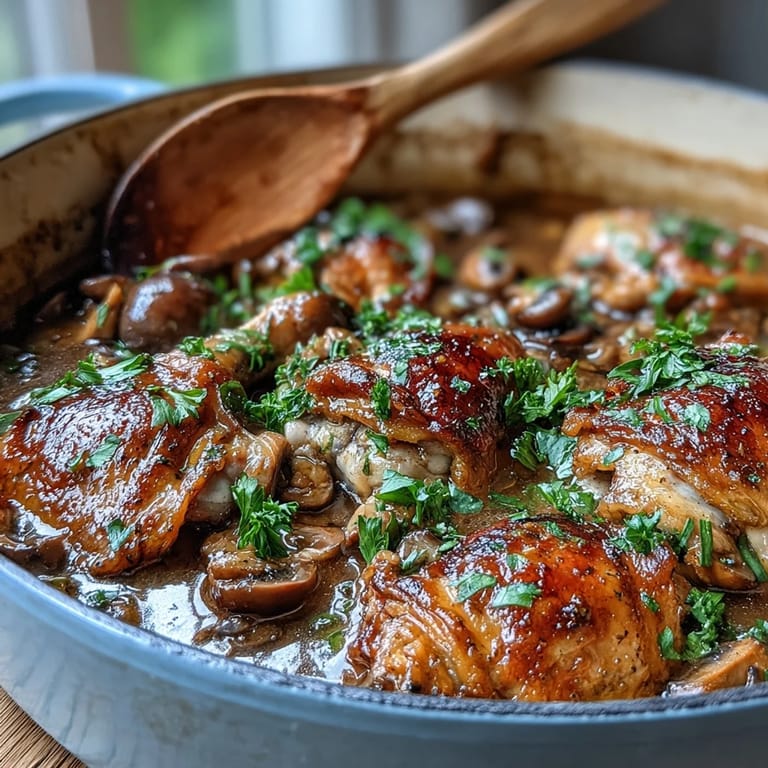
 This dish has become my go-to when I want to feel like I'm cooking something special without the pressure of perfection. It's forgiving, beautiful, and always makes the kitchen smell like a bistro in the French countryside.
Recipe FAQs
- → Can I use chicken breasts instead of thighs and drumsticks?
While you can use chicken breasts, thighs and drumsticks are recommended because they remain tender and juicy during the longer braising time. Breasts may become dry if overcooked.
- → What type of rosé wine works best?
Choose a dry rosé wine with good acidity. Avoid sweet or fruity rosés. A Provence-style rosé or dry Spanish rosado works beautifully for braising.
- → Can I make this dish ahead of time?
Yes, coq au vin actually tastes better the next day as flavors meld. Prepare through step 8, cool completely, refrigerate, and gently reheat before serving.
- → How can I thicken the sauce if it's too thin?
Simmer uncovered for a few extra minutes to reduce the sauce naturally. Alternatively, mix a teaspoon of cornstarch with cold water and stir into the simmering sauce.
- → What should I serve alongside this dish?
Classic accompaniments include buttered new potatoes, creamy mashed potatoes, crusty French bread for soaking up the sauce, or simple white rice. Steamed green beans also pair wonderfully.
- → Can I substitute the heavy cream?
Yes, you can use crème fraîche for tanginess, half-and-half for a lighter option, or full-fat coconut cream for a dairy-free version, though flavor will vary slightly.