 Save to Pinterest
 There's something about the smell of salmon hitting a hot pan that makes me slow down, even on the busiest evenings. Years ago, I was in a tiny Tokyo apartment kitchen, watching my neighbor's teenage daughter prepare dinner with such ease that I felt compelled to ask for help. She taught me that teriyaki isn't about fancy techniques or rare ingredients—it's about letting a few simple things work together to create something that tastes like care. This bowl became my go-to answer whenever I needed to feed people something that felt both special and achievable.
I made this for my sister after she mentioned dreading meal prep, and watching her face when that first forkful hit her mouth—the brightness of the glaze, the flake of the salmon—reminded me why cooking for people matters. She asked for the recipe before she even finished the bowl, and now it's her answer to the question of what's for dinner.
Ingredients
- Salmon fillets: Choose ones that smell fresh and have a slight sheen; the 150 g size keeps cooking time short and lets the glaze coat evenly.
- Soy sauce: Your foundation here, so don't skimp on quality—a good soy sauce has depth that transforms the entire sauce.
- Mirin: This sweet rice wine is what gives teriyaki its glossy, caramelized look; skip it only if you're comfortable losing that particular magic.
- Brown sugar: Balances the saltiness and adds richness that white sugar can't quite match.
- Rice vinegar: A splash of this keeps the sauce from becoming cloying and adds a quiet brightness.
- Sesame oil: A teaspoon is enough; too much and it overpowers, but the right amount makes people ask what's different.
- Garlic and ginger: Minced fresh versions matter—they wake up the entire sauce and give it backbone.
- Cornstarch slurry: This is your secret thickener; it turns the liquid into something that clings to the salmon rather than pooling on the plate.
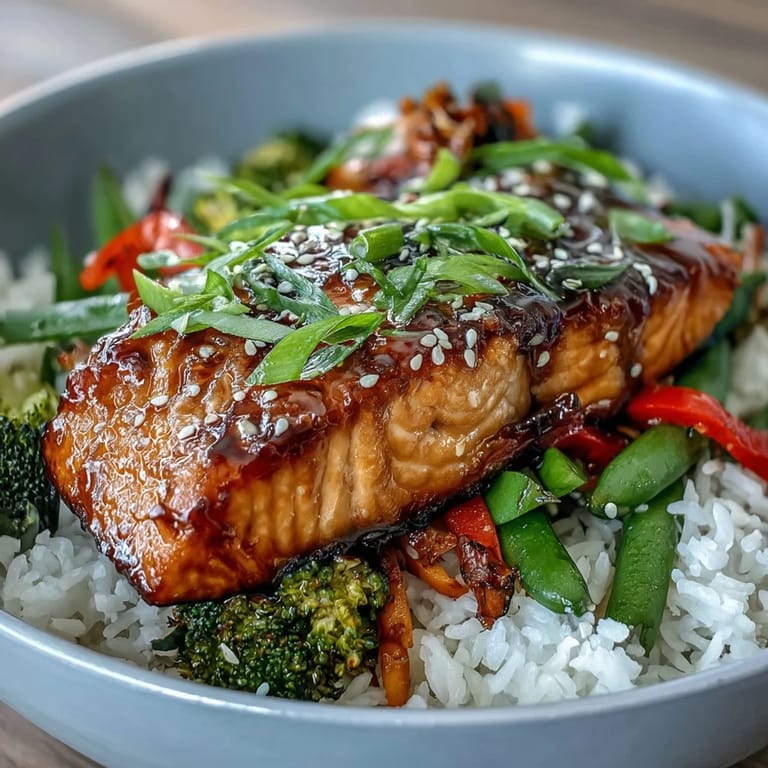
- Bell pepper, carrot, broccoli, and sugar snap peas: Varied colors and textures mean every bite has interest; choose vegetables that are firm and bright when you buy them.
- Jasmine or sushi rice: Jasmine rice has a subtle floral note that pairs beautifully with teriyaki, though sushi rice works too.
- Sesame seeds and spring onions: These aren't optional if you want the bowl to look as good as it tastes.
Tired of Takeout? 🥡
Get 10 meals you can make faster than delivery arrives. Seriously.
One email. No spam. Unsubscribe anytime.
Instructions
- Prepare the Rice:
- Rinse the rice under cold water, watching the water go from cloudy to clear—this removes excess starch and helps each grain stay separate. Combine with water in a saucepan, bring to a boil, then reduce heat, cover, and simmer for 15 minutes until the liquid is absorbed, then let it rest covered for 5 minutes so the grains finish cooking gently.
- Build the Teriyaki Sauce:
- While rice cooks, combine soy sauce, mirin, brown sugar, rice vinegar, sesame oil, minced garlic, and grated ginger in a small saucepan over medium heat. Stir until the sugar dissolves and the mixture turns amber and fragrant, then add the cornstarch slurry and cook for 1–2 minutes until it thickens enough to coat the back of a spoon.
- Sear the Salmon:
- Season salmon fillets with salt and pepper on both sides. Heat a splash of oil in a nonstick skillet over medium-high heat until it shimmers, then place salmon skin-side down and don't move it for 3–4 minutes—this creates that golden crust. Flip gently and cook for another 2–3 minutes until the flesh is just cooked through and a fork flakes it easily.
- Glaze and Finish:
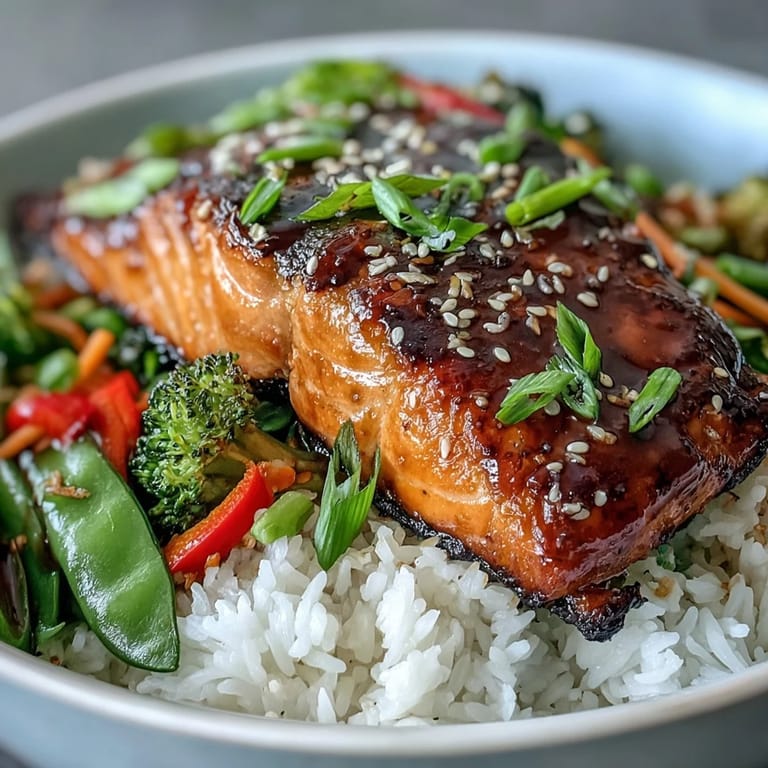
- Brush the cooked salmon generously with teriyaki sauce, letting it pool slightly on top, and cook for 1 minute more so the glaze caramelizes. The salmon should look glossy and appetizing when you remove it from heat.
- Stir-Fry the Vegetables:
- In a wok or large skillet, heat vegetable oil over high heat until it's almost smoking, then add bell pepper and carrot and cook for 1–2 minutes before adding broccoli and sugar snap peas. Keep everything moving so each piece gets charred edges while staying crisp inside, about 3–4 minutes total.
- Assemble the Bowls:
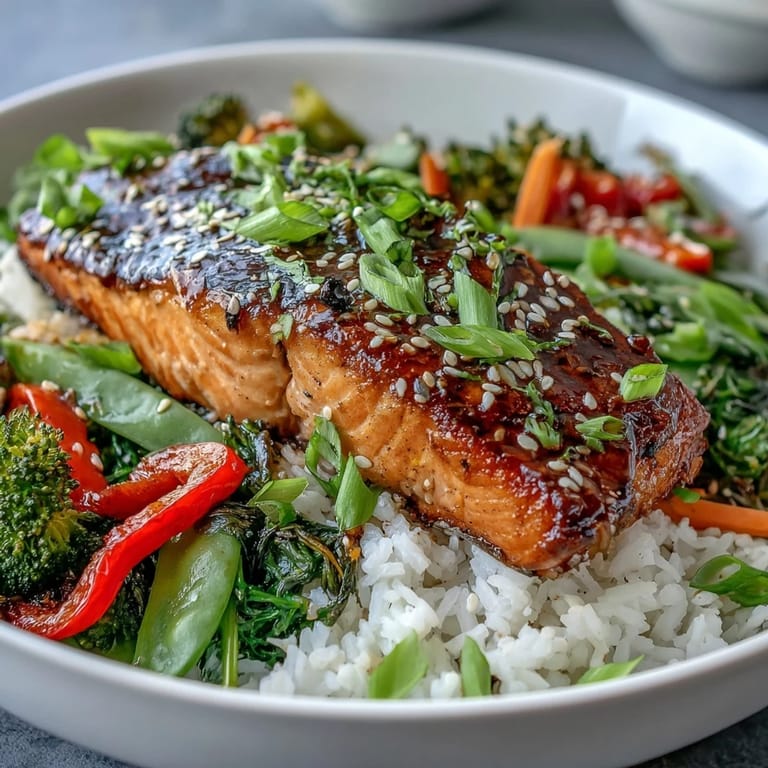
- Divide warm rice between bowls, top with stir-fried vegetables, then place a piece of glazed salmon on top. Drizzle extra teriyaki sauce around everything and finish with a sprinkle of sesame seeds and sliced spring onions so each bowl looks as vibrant as it tastes.
 Save to Pinterest
 There was a night when I made this for friends who were going through changes, and somehow a simple bowl of salmon and rice became the thing we all needed—something warm and nourishing that didn't require explanation. Food has that power sometimes, to say what we can't quite put into words.
The Secret to Glossy Teriyaki
The cornstarch slurry is what separates teriyaki that drips off the salmon from teriyaki that clings to every bite like a glaze. I learned this the hard way, making a sauce that pooled uselessly on the plate, and once I understood that thickening step, the entire dish transformed. It takes barely a minute longer but makes the difference between good and memorable.
Vegetables That Stay Crisp
The key to vegetables that don't turn to mush is high heat and constant motion. I used to crowd the pan or turn the heat down to medium, thinking I was being gentle, and ended up with limp broccoli instead of that satisfying snap. Now I trust the high heat and keep my wok or skillet moving, and the vegetables emerge with charred edges and tender centers all at once.
Making It Your Own
Once you understand the balance of this sauce—salty, sweet, tangy, aromatic—you can play with it freely. Swap vegetables for whatever is at the farmer's market or lurking in your crisper drawer, or try marinating the salmon in half the teriyaki sauce for 15 minutes before cooking for an extra layer of flavor.
- Zucchini, mushrooms, or baby corn work beautifully in place of the vegetables listed if that's what you have.
- A crisp white wine like Sauvignon Blanc is the perfect pour alongside this, cutting through the richness of the salmon.
- Leftover sauce keeps in a jar in the refrigerator for up to a week and works on chicken, tofu, or even roasted vegetables.
 Save to Pinterest
 This bowl has become my quiet favorite—not flashy, but reliable and deeply satisfying. Every time I make it, I remember that small Tokyo kitchen and how cooking doesn't need to be complicated to nourish both hunger and spirit.
Recipe FAQs
- → Can I use other types of fish?
Yes, this works well with other fatty fish like rainbow trout, mackerel, or sea bass. Thinner fillets may need less cooking time, while thicker cuts might require an extra minute or two.
- → Is the teriyaki sauce very sweet?
The sauce balances sweetness from brown sugar and mirin with the salty depth of soy sauce and tangy rice vinegar. You can reduce the brown sugar to 1 tablespoon for a less sweet glaze.
- → Can I make this ahead?
The teriyaki sauce can be made up to a week in advance and stored refrigerated. Rice and vegetables reheat well, though salmon is best cooked fresh for optimal texture.
- → What vegetables work best?
Red bell pepper, carrots, broccoli, and sugar snap peas provide great color and crunch. Try zucchini, mushrooms, baby corn, snow peas, or bok choy depending on what's in season.
- → Is this gluten-free?
The standard version includes soy sauce which contains wheat. Simply substitute tamari or coconut aminos to make the entire bowl gluten-free while maintaining the same flavor profile.
- → Can I grill the salmon instead?
Absolutely. Grill salmon over medium-high heat for about 4 minutes per side, brushing with teriyaki sauce during the last minute of cooking. The smoky char complements the glaze beautifully.