 Save to Pinterest
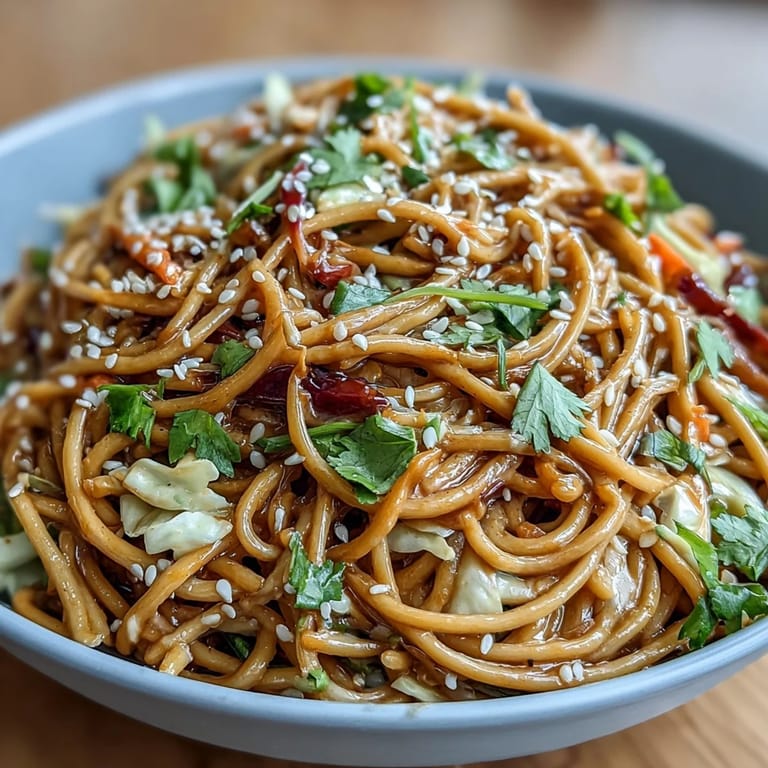
 I discovered this salad on a sweltering afternoon when my kitchen felt too hot for cooking anything serious. A friend had left a jar of peanut butter on my counter, and I found myself staring at it alongside some soba noodles and whatever vegetables were hiding in my crisper drawer. Twenty minutes later, I had something so vibrant and satisfying that I've made it dozens of times since, each version slightly different depending on what's in season or what I'm craving.
My partner took one bite and immediately asked if I could make it again the next day. I've since learned that this salad has a way of converting people who think they don't like their vegetables, and it's become the dish I bring to potlucks when I want to actually impress someone without spending hours in the kitchen.
Ingredients
- Soba noodles: The nutty backbone of this dish, and honestly, the texture matters more than you'd think—look for ones that have a slight chew rather than turning mushy the second they hit water.
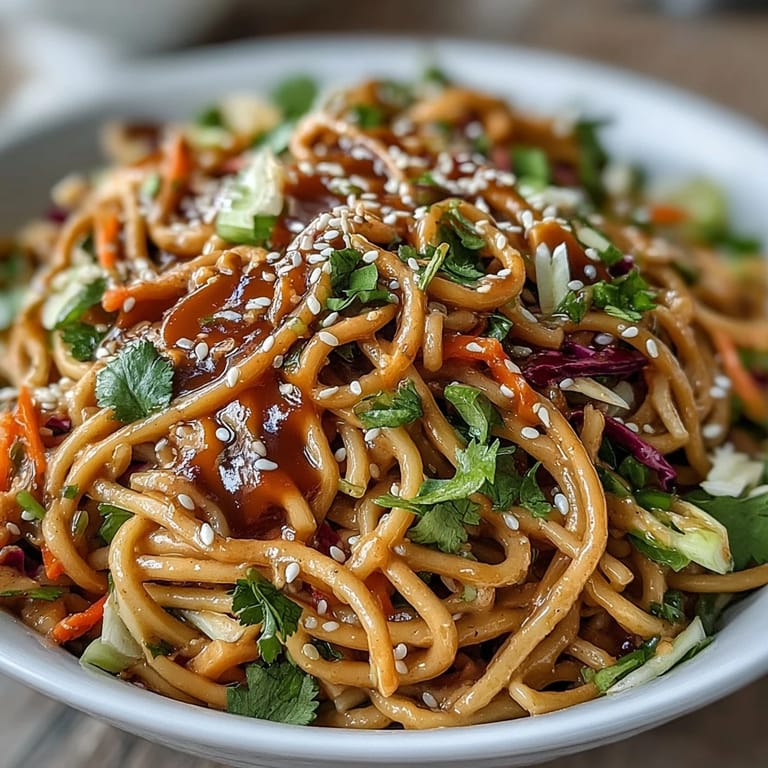
- Red and green cabbage: These stay crisp and provide a refreshing contrast that keeps every bite interesting, plus the colors are just beautiful together.
- Carrot: Julienned thin so it adds sweetness without overwhelming the other flavors, and the natural sugars brighten the whole plate.
- Red bell pepper: I use red instead of green because it's sweeter and more forgiving if you're not perfectly precise with your slicing.
- Scallions and cilantro: Fresh herbs are what separate this from being just another noodle situation—don't skip them.
- Natural peanut butter: Room temperature peanut butter whisks in smoothly without lumps, so scoop it out about ten minutes before you start cooking.
- Soy sauce: The umami anchor, though I always have tamari on hand for friends who need gluten-free, and honestly, it tastes just as good.
- Rice vinegar: Its gentle acidity balances the richness of the peanut butter without being harsh or overpowering.
- Maple syrup: A touch of sweetness that rounds out the spicy heat, and yes, it makes a noticeable difference compared to other sweeteners.
- Toasted sesame oil: Use the real stuff—the dark, aromatic kind—because the grocery store's pale version won't carry the same depth.
- Sriracha: Start with one teaspoon and work your way up; I've learned that everyone's spice tolerance is wildly different, and it's easier to add more than to dial back.
- Garlic and ginger: Fresh and minced fine so they distribute evenly throughout the dressing and don't overpower individual bites.
- Warm water: This is your adjustment tool—add it slowly and you'll nail the perfect dressing consistency every time.
Tired of Takeout? 🥡
Get 10 meals you can make faster than delivery arrives. Seriously.
One email. No spam. Unsubscribe anytime.
Instructions
- Boil and chill your noodles:
- Bring a large pot of water to a boil and cook the soba according to the package timing, but check them a minute early because overcooked soba becomes gluey. Drain them into a colander and run cold water over them while tossing gently, which stops the cooking and rinses away any starch.
- Build your slaw:
- In a large bowl, combine all the raw vegetables and cilantro, which is the moment everything starts to look like something worth eating. Don't overthink the sizing; rough consistency is way more forgiving than perfect uniformity.
- Whisk the peanut magic:
- In a medium bowl, combine the peanut butter, soy sauce, rice vinegar, maple syrup, sesame oil, sriracha, garlic, and ginger. Whisk until mostly smooth, then add warm water one tablespoon at a time until the dressing moves smoothly from a spoon and coats the back without pooling.
- Bring it all together:
- Add your chilled noodles to the slaw bowl, pour the dressing over everything, and toss with your hands or two spoons until every noodle and vegetable strand has a coating of that spicy peanut goodness. This is the satisfying part where you know you've nailed it.
- Serve and garnish:
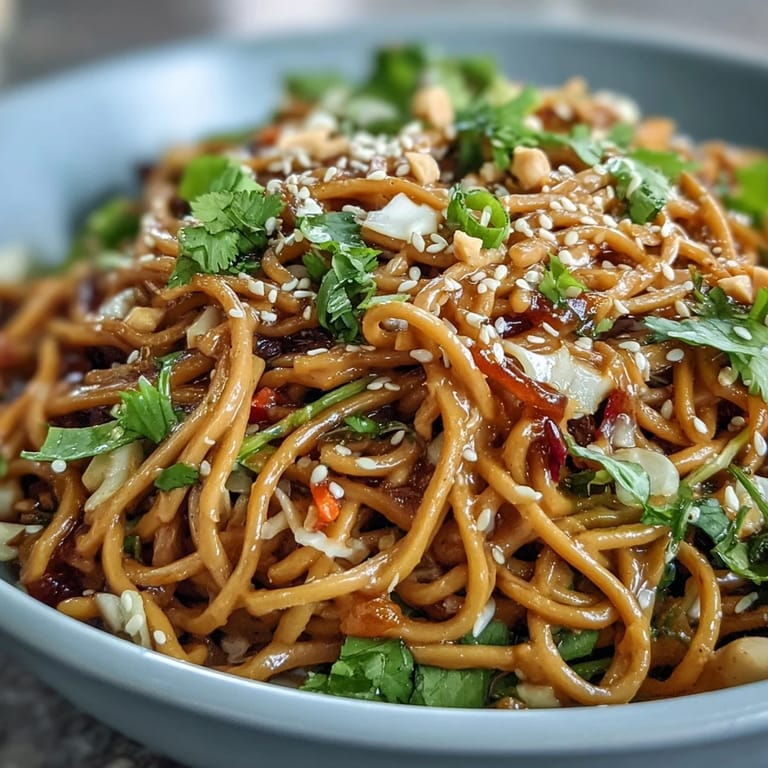
- Divide among bowls and scatter chopped peanuts, sesame seeds, and lime wedges on top. Serve immediately if you like warm noodles with cool slaw, or chill for thirty minutes if you want everything cold and refreshing.
 Save to Pinterest
 There was a moment when I served this to someone who'd been vegan for a few months and wasn't sure if they were missing out on anything. Watching their expression change from skeptical to genuinely delighted reminded me that the best meals aren't about complexity—they're about flavors that just understand each other.
The Dressing is Everything
I used to think peanut butter dressings were one-note, heavy things, but that was before I understood the power of balancing acid, heat, and a touch of sweetness. The moment the sriracha hits the mix, you get this living, breathing sauce that tastes different every time you lift a spoonful. It's thick enough to coat but fluid enough to be elegant, and honestly, if you nail the dressing, the rest of the salad does half the work for you.
Make It Your Own
This salad is forgiving in a way that makes it feel like you're improvising rather than following instructions. Swap the bell pepper for cucumber if that's what you have, double the cilantro if you're cilantro-obsessed, or throw in some sliced avocado right before serving if you want to push it into richer territory. I've added crispy tofu, scattered edamame across the top, and even experiment with different vinegars depending on my mood.
Storage and Next-Day Magic
This salad is one of those rare dishes that actually tastes better after it's been sitting in the fridge overnight because the slaw softens slightly and the dressing has time to mingle with every vegetable. I often make a double batch on Sunday and portion it into containers, which means I have lunch sorted for days. Just keep the lime wedges separate until you're ready to eat, and if it seems dry when you open the container, a splash of warm water revives the dressing beautifully.
- Store in an airtight container for up to two days, though I've never managed to keep it around that long.
- Don't add the garnishes until you're about to eat, because sesame seeds lose their crunch and peanuts get a bit soft.
- If you're meal prepping, make the dressing and vegetables separately and combine them the morning you want to eat, which keeps everything at peak crispness.
 Save to Pinterest
 This salad has become my answer to the question of what to make when you want something that feels both healthy and indulgent, light and satisfying. It's the kind of dish that reminds me why I love cooking in the first place.
Recipe FAQs
- → How do I cook soba noodles properly?
Boil soba noodles according to package instructions, then drain and rinse under cold water to stop cooking and remove excess starch for the best texture.
- → Can I make the spicy peanut dressing milder?
Yes, adjust the sriracha quantity to control the heat or omit it for a milder, nutty flavor.
- → What are good garnishes for this dish?
Chopped roasted peanuts, sesame seeds, and lime wedges add crunch, nuttiness, and a fresh citrus finish.
- → Is this dish suitable for gluten-free diets?
Use gluten-free soba noodles and tamari instead of soy sauce to keep the dish gluten-free.
- → How can I add protein to this meal?
Incorporate baked tofu or cooked edamame for extra plant-based protein without altering the dish's flavor profile.
- → How long can I store this dish?
It keeps well refrigerated for up to two days, though the crispness of the slaw is best fresh.