 Save to Pinterest
 I still remember the first time I served champagne toasts at a dinner party, when a friend arrived with a bottle of prosecco and I suddenly realized I had everything in my kitchen to create something truly celebratory. That night, as guests clinked glasses and bit into those golden, bubbly bites, I watched their faces light up—and I knew I'd discovered something special. These little toasts became my go-to whenever I wanted to create a moment that felt both luxurious and effortless, as if I'd been preparing them all along.
I served these at my sister's engagement party last spring, and I watched people gravitate back to the platter again and again, drawn by the shimmer and the way each bite burst with fizz. That's when I realized these toasts had become my signature—the thing people now expect and ask me to bring to celebrations.
Ingredients
- Creamy white cheese (Brie or Camembert), 120 g: The rind matters less than you'd think—remove it for a cleaner presentation, and let it soften at room temperature so it spreads like silk. This is your luxury layer, the one that makes people feel special.
- Fresh goat cheese (chèvre), 60 g: The tangy base that prevents everything from being too rich. I learned to soften this first so spreading doesn't tear your delicate toast.
- Seedless green grapes, 18: Choose the firmest ones you can find—they'll hold their shape better when soaked and won't slip off the toast.
- Prosecco or Champagne, 120 ml: This is where the magic happens. The bubbles infuse the grapes with effervescence and sweetness that lingers on your palate.
- Thin slices white baguette or gluten-free bread, 12: Lightly toasted is the key—you want structure that won't crumble, not something hard and unyielding. The thinner the slice, the more elegant the bite.
- Edible gold dust or glitter: This isn't just decoration. It's the visual promise that something special is about to happen when you pick up that toast.
- Honey, 1 tbsp (optional): A whisper of sweetness that ties everything together when you drizzle it just before serving.
- Flaky sea salt, pinch (optional): The contrast that makes you taste everything more vividly—use it sparingly, just enough to make people wonder what that subtle finishing touch is.
Tired of Takeout? 🥡
Get 10 meals you can make faster than delivery arrives. Seriously.
One email. No spam. Unsubscribe anytime.
Instructions
- Prepare Your Fizzy Grapes:
- Pour that prosecco over your grapes in a small bowl and let them sit for at least fifteen minutes. You'll watch them absorb the bubbles, becoming slightly translucent and sweet. When you drain them, pat them completely dry—any excess moisture will make your cheese soggy.
- Toast with Purpose:
- Slice your baguette thin and run each piece through the toaster just once, or into a warm oven for a few minutes. You're looking for that gentle crunch, still warm to the touch but cooled enough that it won't wilt the cheese. This step takes just a moment but changes everything about how the toast holds up.
- Lay Your Foundation:
- Spread that soft goat cheese first—it's your anchor, your flavor base. A thin layer is enough; you're not trying to hide the bread, just create a bed for what comes next.
- Add Your Luxury Layer:
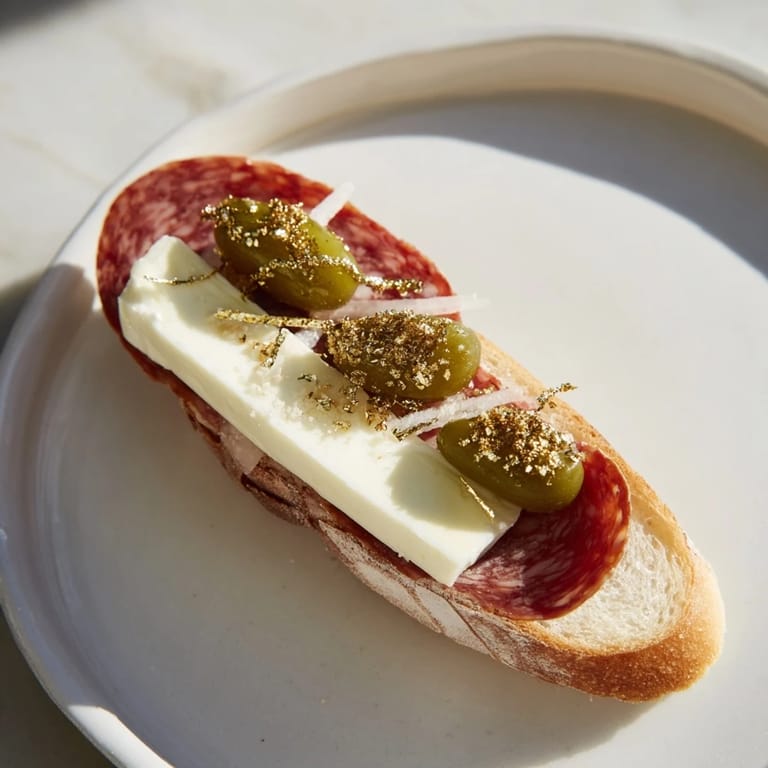
- Now comes the Brie or Camembert, sliced thin and draped gently over the goat cheese. The warmth of the toast will make it even creamier, creating a double-cheese situation that's absolutely decadent.
- Crown with Prosecco Grapes:
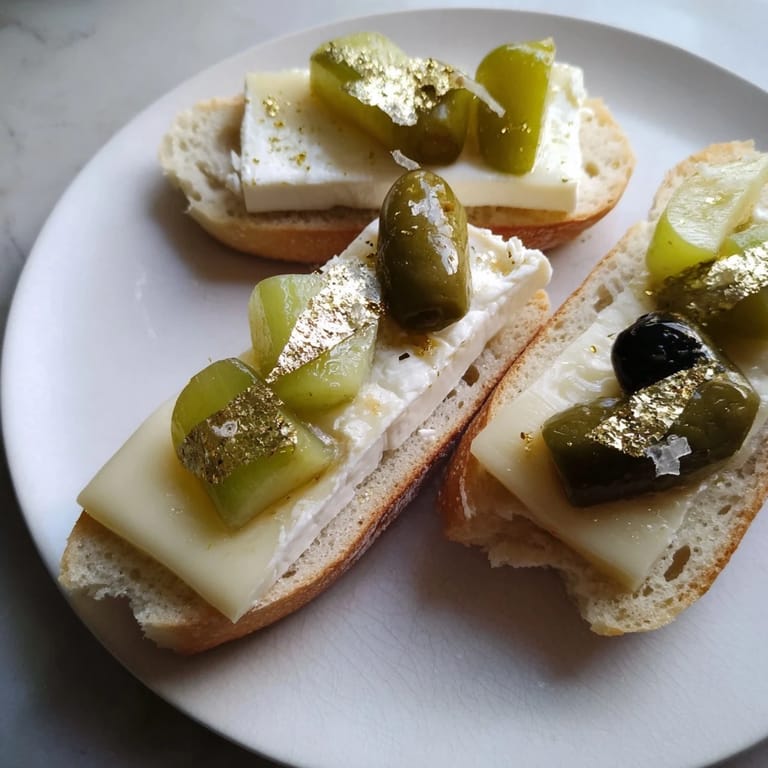
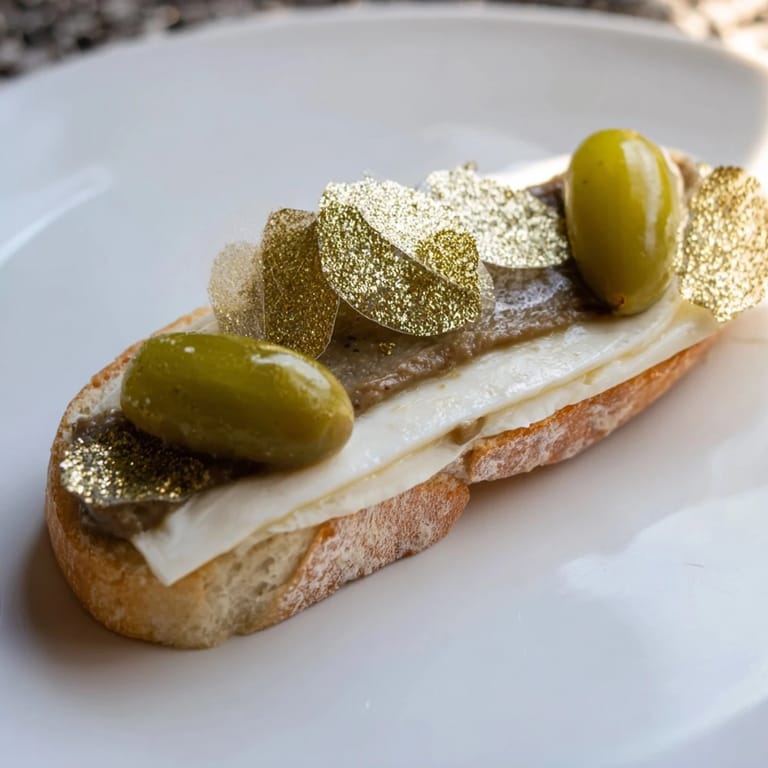
- Place one or two of your jewel-like grapes on top of each toast, pressing them gently into the cheese so they won't roll away. This is where you're building that visual appeal.
- Add Your Sparkle:
- Lightly dust with edible gold. A gentle hand here—you want shimmer, not coverage. Hold the toast over the platter and let the gold settle naturally.
- Final Touches:
- If using honey, drizzle just a thread of it over the top. Finish with the tiniest pinch of sea salt. These final two steps are optional but they're the ones that make people ask for your recipe.
- Serve with Intention:
- Arrange your toasts on a platter just before guests arrive. They're best served within minutes of assembly, when everything is still fresh and the bread hasn't absorbed any moisture.
 Save to Pinterest
 There was one evening when my mother-in-law took a bite of one of these toasts and closed her eyes for a moment—just a quiet moment of appreciation. She didn't say much, just smiled and reached for another. That's when I understood these weren't just appetizers; they were tiny vessels of joy, little edible celebrations that turned ordinary moments into something worth remembering.
The Art of the Cheese Selection
The beauty of this recipe is that it celebrates cheese in all its forms. I've experimented with different varieties over the years, and I've learned that the type of white cheese you choose sets the entire tone. Brie is silky and subtle, disappearing into elegance. Camembert has more personality, with a deeper earthiness that plays beautifully against the bright prosecco. Some nights I use mascarpone or ricotta for something lighter, creating a different experience entirely while staying true to the spirit of the dish. The goat cheese is the constant—that tangy note that keeps everything from becoming too rich or one-dimensional. What matters most is that you taste each cheese at room temperature before you build your toasts, so you know exactly what personality you're bringing to the party.
Making It Your Own
Once you understand the formula—soft cheese base, crisp bread, sophisticated topping—you realize how many directions you can take this. I've served these with champagne-soaked blackberries instead of grapes on autumn evenings. I've added a whisper of fresh herbs like tarragon or dill when I wanted something more savory. I've even created a non-alcoholic version for a family gathering where that mattered, using sparkling white grape juice instead of prosecco, and it was just as celebratory. The magic isn't in following the recipe exactly; it's in understanding why each element is there and giving yourself permission to play within that structure.
Timing and Presentation
These toasts are a study in the importance of just-before-serving assembly. The moment your bread hits that cheese, a quiet clock starts ticking—you have maybe ten to fifteen minutes before the bread begins to absorb moisture and lose its structural integrity. This isn't a limitation; it's actually liberating. It means you can prep everything ahead—toast your bread, arrange your cheeses, soak your grapes—and then in those final moments before your guests arrive, you simply come together and assemble. The whole process takes maybe five minutes. It's like a small theatrical performance where you're the director, and the platter is your stage. I've learned to arrange them in a pattern that's visually interesting, alternating the direction of the grapes or varying where the gold dust lands. The effort is minimal, but the impact—that moment when someone's eyes light up as they reach for their first toast—is absolutely worth it.
- Have everything prepped and at room temperature before you start final assembly to keep the process smooth and stress-free.
- If you're making these more than an hour ahead, keep the components separate and assemble just before your guests sit down.
- A serving platter that complements the elegance of these toasts—maybe slate, or a piece of pale marble—makes the whole presentation feel even more special.
 Save to Pinterest
 These champagne toasts have become my answer to the question of how to celebrate well without exhaustion. They remind me that elegance doesn't require hours of work—it just requires intention, good ingredients, and a willingness to create a moment worth remembering for the people you care about.
Recipe FAQs
- → How long should grapes soak in prosecco?
Grapes should soak for at least 15 minutes to absorb the prosecco flavor fully while maintaining their texture.
- → Can I substitute the cheeses used here?
Yes, mascarpone or ricotta can replace goat cheese for a milder taste, and Brie or Camembert can be swapped for similar creamy whites.
- → Is it necessary to toast the bread slices?
Lightly toasting the bread provides a firm base and adds a subtle crunch that complements the creamy cheeses.
- → How do I add the edible gold dust?
Gently sprinkle the edible gold dust over the assembled toasts just before serving for a shimmering, elegant presentation.
- → Can this be made suitable for gluten-free diets?
Use gluten-free bread slices to accommodate gluten-free diets without compromising the flavors.
- → Is honey necessary for the toasts?
Honey is optional and can be drizzled for added sweetness, balancing the tangy cheeses and prosecco-soaked grapes.