 Save to Pinterest
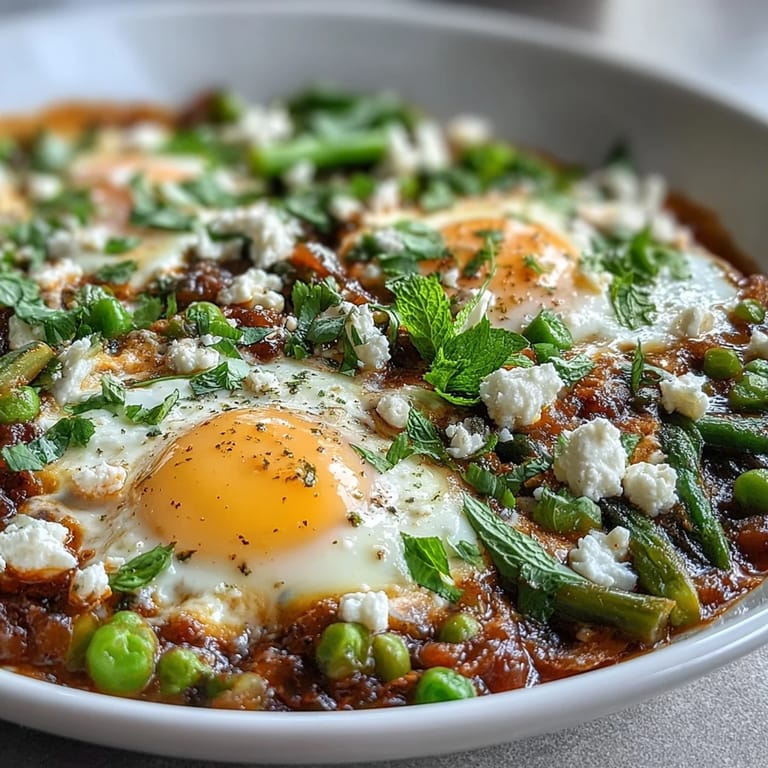
 Spring arrived the morning my neighbor brought over a handful of fresh broad beans still in their pods, and I suddenly understood why this vegetable had inspired so many Mediterranean cooks. I'd bought peas at the market that same week, and the combination sparked an idea: a shakshuka that felt green and alive instead of the heavy tomato versions I'd made before. That first attempt, with eggs nestled into a vibrant sauce, turned into something I couldn't stop making.
I made this for four friends on a Thursday evening when I realized I'd forgotten to plan dinner, and it became the kind of meal where everyone pulled their chairs closer and asked for seconds. There's something about a shared pan and soft yolks that transforms a weeknight into something special, and within a month, it had become my go-to when I wanted to impress without stress.
Ingredients
- Olive oil: Use good oil here since it's one of the few fats in the dish, and it carries the flavor of everything that follows.
- Medium onion, finely chopped: The foundation that takes on a soft sweetness as it cooks, so don't rush this step.
- Garlic cloves, minced: Two cloves keeps things subtle rather than aggressive, though add more if garlic is your love language.
- Red bell pepper, diced: It adds natural sweetness and color, though orange or yellow work beautifully too.
- Asparagus, trimmed and cut into 2 cm pieces: Fresh asparagus is ideal, but frozen is honest and reliable when spring isn't cooperating.
- Fresh or frozen peas: Frozen peas are genuinely excellent here and often taste fresher than fresh ones that have traveled.
- Fresh or frozen broad beans, shelled: The star ingredient that gives this dish its personality and tender texture.
- Canned chopped tomatoes or passata: Canned tomatoes are consistent year-round, while passata creates a silkier sauce if you prefer that.
- Tomato paste: Two tablespoons deepens the flavor without making the sauce taste metallic or concentrated.
- Ground cumin: One teaspoon is warm and grounding, the spice that makes you want to linger over breakfast.
- Smoked paprika: This is what gives the sauce its subtle depth and that almost smoky whisper of flavor.
- Ground coriander: Half a teaspoon adds a brightness that you won't identify but will absolutely notice if it's missing.
- Chili flakes: Optional but recommended, even half a teaspoon lifts the entire dish.
- Salt and black pepper: Season as you go, tasting and adjusting until the sauce tastes alive.
- Large eggs: Four to six depending on appetite, and the fresher the better since they're barely cooked.
- Fresh parsley or mint, chopped: Mint feels more summery and herbaceous, while parsley is slightly earthier, so choose based on your mood.
- Feta cheese, crumbled: Optional but it adds a tangy contrast that makes everything taste brighter.
- Lemon wedges: Essential for finishing, as a squeeze of acid pulls all the flavors into focus.
Tired of Takeout? 🥡
Get 10 meals you can make faster than delivery arrives. Seriously.
One email. No spam. Unsubscribe anytime.
Instructions
- Heat the oil and soften the base:
- Pour olive oil into your largest skillet and let it warm for a moment before adding chopped onion. Cook slowly for 4 to 5 minutes, stirring occasionally, until the onion turns translucent and slightly golden at the edges.
- Build the flavor foundation:
- Add minced garlic and diced bell pepper, stirring constantly for about 2 minutes until the pepper begins to soften and the garlic perfumes the pan. Don't let the garlic brown, or it will taste bitter.
- Toast the spices:
- Sprinkle in cumin, smoked paprika, ground coriander, and chili flakes if using, stirring constantly for about 1 minute until the spices release their aroma and coat everything with fragrant oil. You'll smell the moment this happens.
- Create the sauce base:
- Stir in tomato paste and coat everything in the oil, then pour in canned tomatoes with a pinch of salt and pepper. Simmer uncovered for 10 minutes, stirring every couple of minutes, until the sauce thickens slightly and loses its raw tomato edge.
- Add the spring vegetables:
- Stir in asparagus, peas, and broad beans, then cover the pan and reduce heat slightly. Cook for 7 to 8 minutes until the vegetables are just tender, then taste and adjust seasoning since the vegetables will release their own liquid.
- Nestle in the eggs:
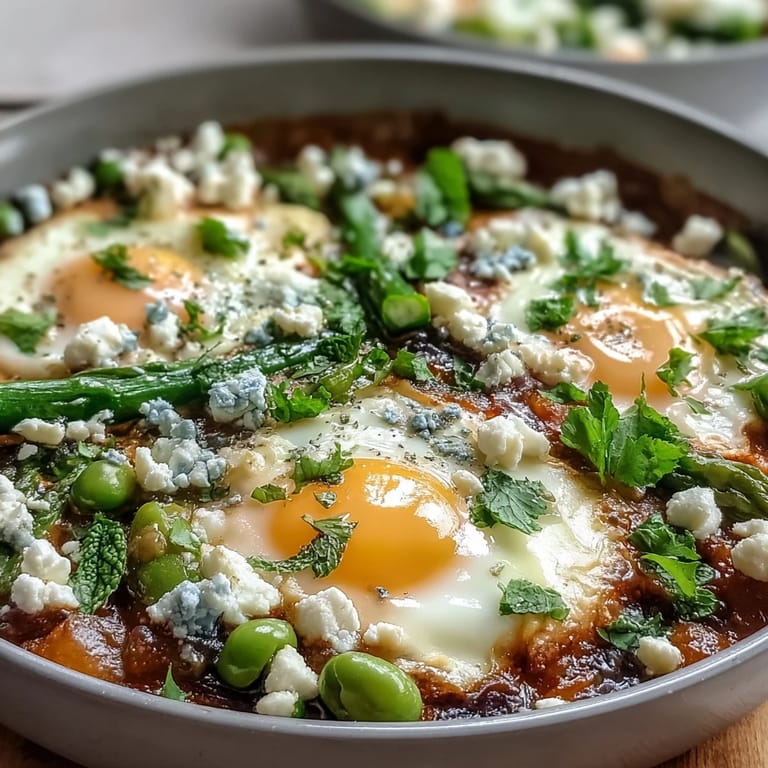
- Using the back of a spoon, gently create small wells in the sauce, spacing them so each egg has its own little nest. Crack eggs into each well, cover the pan loosely, and cook over gentle heat for 5 to 7 minutes until the whites are set and opaque but yolks still jiggle slightly when you nudge the pan.
- Finish and serve:
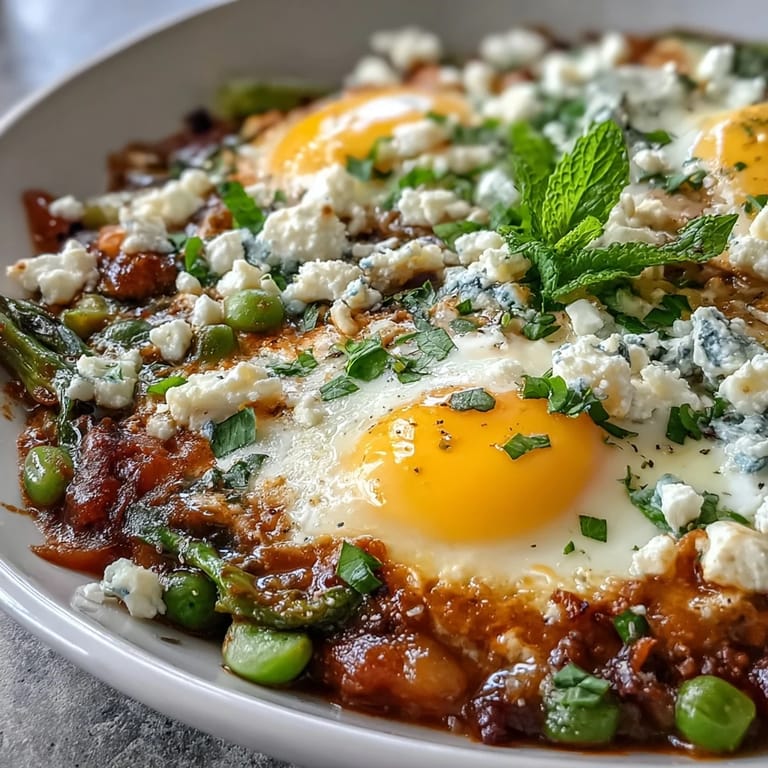
- Remove from heat, scatter chopped parsley or mint across the top, add crumbled feta if using, and serve immediately with lemon wedges and warm bread for soaking up every drop of sauce.
 Save to Pinterest
 There was an evening when my daughter helped me make this, and she became absolutely transfixed by the moment the eggs turned from clear to white in the steaming sauce. Watching her experience that small kitchen magic reminded me why this dish matters.
Why Spring Vegetables Matter Here
Peas and broad beans are brief visitors to the market, arriving with a sense of occasion that makes you want to celebrate them immediately. When you cook them gently in a spiced sauce rather than boiling them plain, they taste like themselves but elevated, their natural sweetness amplified by the warmth of cumin and the tanginess of tomatoes. This dish is built to honor those vegetables without overwhelming them, which is exactly why it tastes like spring on a plate.
The Magic of Shakshuka
Shakshuka is one of those dishes that works for any meal and any mood, equally at home for breakfast with strong coffee or dinner with wine. The formula is flexible enough that you can make it with whatever vegetables are in your crisper, but the principle stays the same: a well-spiced sauce that tastes even better with a runny egg yolk breaking into it. I've learned that the best shakshuka is the one you actually make rather than planning to make, which is why keeping canned tomatoes and spices in the pantry feels like insurance against uninspired dinners.
Making It Your Own
This recipe is genuinely flexible, and I've learned that the best version is the one you build based on what you have and what you're craving. The core spice blend is forgiving enough to take substitutions and additions without losing its character, so treat it as a foundation rather than a rigid instruction. If you want to make it vegan, simply leave out the eggs and feta, and add drained canned chickpeas for substance and protein that the sauce will cradle just as lovingly.
- Try adding a handful of fresh spinach or diced zucchini in the last few minutes of cooking for extra greens without extra effort.
- For more heat, increase the chili flakes to a full teaspoon or add a fresh chili sliced thin and fried with the onions.
- Serve with warm pita, flatbread, or sourdough, because bread is essential for catching the last drops of sauce.
 Save to Pinterest
 This is the kind of dish that reminds you why cooking for people matters, and why taking fifteen minutes to start dinner right feels like self-care. Make it, share it, and watch how people slow down around the table.
Recipe FAQs
- → Can I use frozen vegetables instead of fresh?
Absolutely. Frozen peas and broad beans work perfectly in this dish—just add them directly from frozen. They may need an extra minute or two to cook through, but the flavor remains excellent.
- → How do I know when the eggs are done?
The whites should be completely set and opaque, while the yolks remain jiggle and runny when you gently shake the pan. This usually takes 5–7 minutes. Cover the pan to help them cook evenly.
- → What can I serve with this?
Warm crusty bread, pita, or flatbread is essential for soaking up the flavorful sauce. A simple green salad with lemon dressing balances the richness perfectly.
- → Can I make it ahead?
The vegetable sauce reheats beautifully and can be made up to two days ahead. Add the fresh herbs just before serving. Cook the eggs fresh when you're ready to eat for the best texture.
- → How can I make it vegan?
Simply omit the eggs and feta. Add a can of drained chickpeas or white beans for protein, and serve with extra crusty bread to make it more substantial.
- → Can I adjust the spice level?
Certainly. Reduce or omit the chili flakes for a milder version. For more heat, add extra chili flakes, a chopped fresh chili, or a pinch of cayenne pepper along with the spices.