 Save to Pinterest
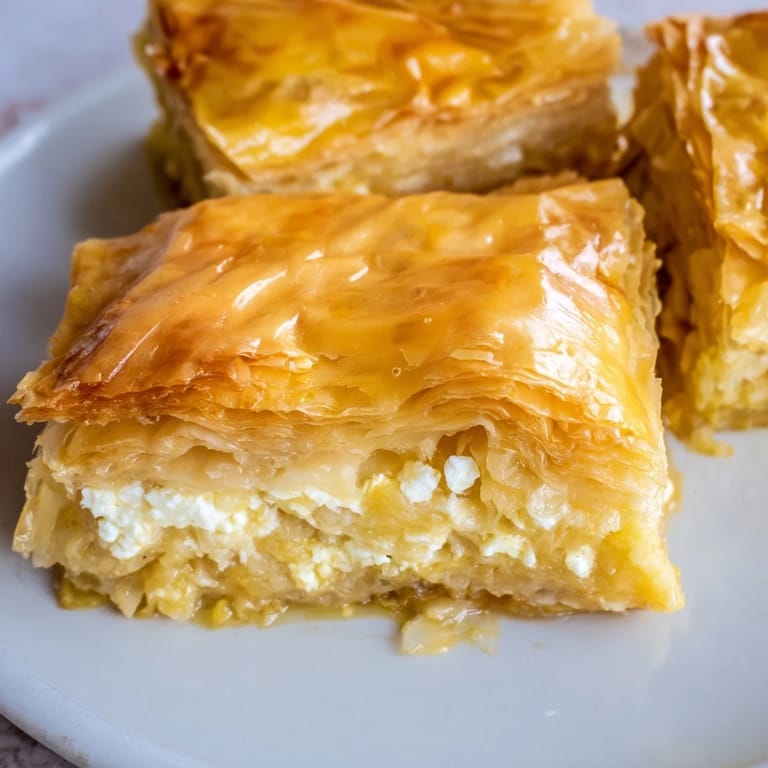
 The first time I watched my neighbor pull a golden gibanica from her oven, I understood why this pastry has survived centuries in Balkan kitchens. Steam rose from the crispy layers, and the smell of feta mixing with butter made everything else fade away. She cut me a warm square, and I bit into those shattered phyllo sheets giving way to a creamy, salty cheese filling that tasted like comfort tastes. Years later, I finally learned the technique from her daughter, and now this is the dish I make when I want people to feel genuinely welcomed.
I made this for my book club once, nervous about whether phyllo dough would cooperate, and instead of apologizing for imperfections, everyone just kept reaching for another slice. Someone's grandmother recognized it from her childhood, and suddenly we were all learning about different versions—how her family added more yogurt, how someone else's used all cottage cheese. That night turned into three hours of stories about food from places we'd never been but felt connected to through family tables.
Ingredients
- Cottage cheese: The backbone of the filling—it stays soft and slightly grainy, which is exactly what you want, so don't swap it for ricotta unless you're comfortable with a denser result.
- Feta cheese: Crumble it by hand if you have time; the irregular pieces distribute flavor better than pre-crumbled versions, which can be overly dry.
- Eggs: They act as both binder and richness, so use large ones and don't skip them even if you're reducing other ingredients.
- Yogurt: Plain yogurt adds tang and moisture; using Greek yogurt will make the filling thicker, which changes the texture slightly.
- Sparkling water: This is the secret—carbonation keeps the filling airy and light, almost custardy when baked.
- Phyllo dough: Keep it covered with a damp towel while you work or it'll dry out and crack before you even layer it.
- Sunflower oil: The traditional choice in Balkan cooking; it won't overpower the cheese like olive oil might.
Tired of Takeout? 🥡
Get 10 meals you can make faster than delivery arrives. Seriously.
One email. No spam. Unsubscribe anytime.
Instructions
- Prepare your workspace and preheat:
- Get your oven to 180°C and grease that baking dish well—this is not the time to assume oil will be enough. Take the phyllo out now if it's been frozen; it needs at least 30 minutes to thaw or it tears like tissue paper.
- Mix the filling:
- Combine your cheeses, eggs, yogurt, oil, and sparkling water in a bowl and whisk until it's smooth but still has some texture—you're not making a purée. Season conservatively at first; you can always add more salt.
- Begin the layering ritual:
- Lay one sheet of phyllo down, brush it lightly with oil (not drowning it), then repeat with two more sheets, building a sturdy foundation that won't tear when you spread the filling.
- Build your layers:
- Spread 3 to 4 tablespoons of filling across the phyllo, then add 2 to 3 more phyllo sheets, brushing each with oil, and spread more filling. Keep going until both your filling and phyllo are nearly finished, then crown it all with two final phyllo sheets brushed generously with oil.
- Cut before baking:
- Use a sharp knife to score the top into squares or diamonds—this prevents shattering when you try to cut it hot, and it looks intentional rather than accidental.
- Bake until golden:
- Bake for 35 to 40 minutes until the top is deep golden and crisp, rotating the pan halfway if your oven cooks unevenly. The edges should look almost caramelized.
- Rest and serve:
- Let it sit for 10 minutes so the layers set slightly, then serve it warm or at room temperature—both are wonderful.
 Save to Pinterest
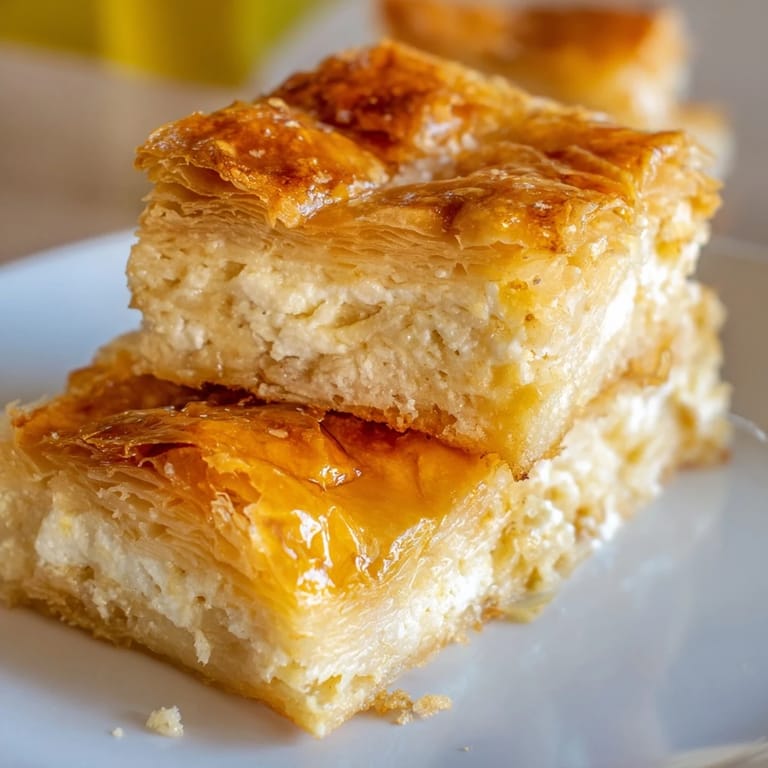
 I remember my friend texting me a photo of the gibanica she'd made from my instructions, standing proud on her kitchen counter with sunlight hitting those golden layers just right. She wrote back that her kids, who usually push vegetables away, asked for seconds of this, and suddenly she understood how food becomes memory, how a recipe becomes family ritual.
The Phyllo Technique
Working with phyllo the first time feels delicate, like you might break something precious, but the truth is phyllo is forgiving once you accept its one rule: it hates drying out. Keep it under a damp towel, work quickly but not frantically, and brush each sheet with just enough oil to add flavor without making it swim. After your second or third gibanica, your hands learn the rhythm, and phyllo stops being intimidating and becomes meditative.
Building Flavor Layers
The genius of gibanica is how the filling and the phyllo have this conversation—the cheese stays creamy and slightly yogurt-tangy, while the pastry develops this shattered, almost nutty crispness from baking. Some people add sour cream to the filling for extra richness, and while that's delicious, I prefer letting the feta speak for itself, bright and salty against the mellow cottage cheese. Trust the simplicity; it's been working for generations.
Serving and Storage Wisdom
Gibanica is one of those dishes that improves with a little time—serve it warm from the oven, or let it cool to room temperature and enjoy it with the same satisfaction. Leftover pieces keep beautifully in the fridge for three or four days, and while reheating works, I often just eat them cold straight from the container, standing in front of the open fridge like I'm stealing something delicious. If you're feeding a crowd, make two pans; it disappears.
- Pair each slice with fresh tomato and cucumber salad, or even a dollop of sour cream on the side if you want extra richness.
- Store covered in the fridge, and reheat gently in a low oven so the phyllo stays crispy rather than steaming into softness.
- Freeze baked gibanica well-wrapped for up to a month, then thaw overnight before reheating.
 Save to Pinterest
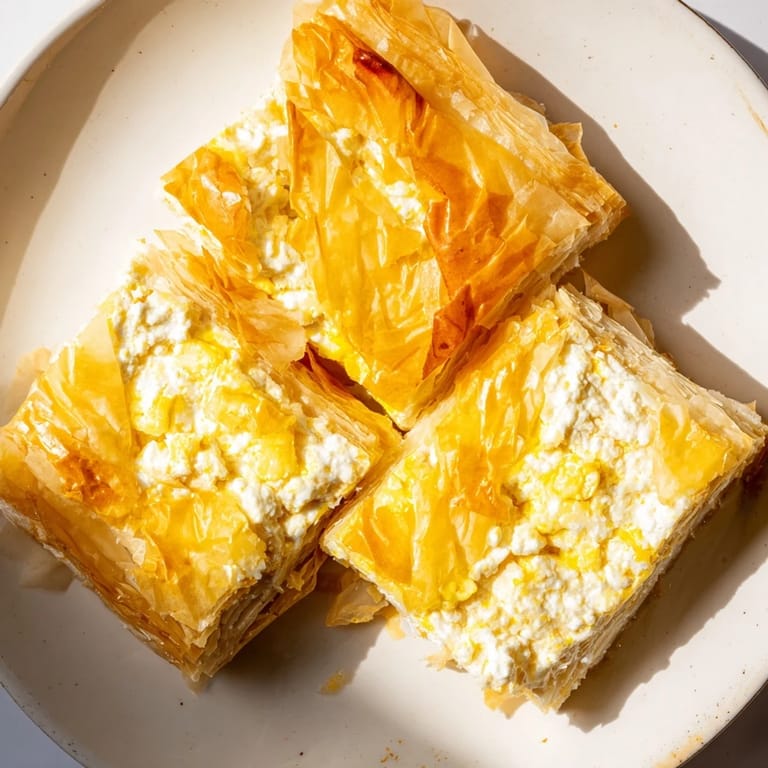
 This recipe is one of those kitchen victories that tastes like tradition but feels entirely personal—yours to make, yours to adjust, yours to share. Every oven, every hand, every kitchen will produce its own version, and that's exactly as it should be.
Recipe FAQs
- → What type of cheese works best for the filling?
Cottage cheese and crumbled feta provide the ideal creamy and tangy balance, creating a rich but light filling.
- → Can I substitute phyllo dough with another pastry?
Phyllo is preferred for its crispiness and layered texture, but puff pastry can be an alternative, though it will alter the texture.
- → What is the best way to achieve extra crispiness on top?
Brushing the top layers with sunflower oil and optionally egg yolk before baking ensures a golden, crisp finish.
- → How should leftovers be stored and served?
Store leftovers in the refrigerator and reheat gently to retain crispiness and flavor.
- → Is there a gluten-free version available?
Yes, using gluten-free phyllo dough sheets can adapt this dish for gluten-free diets.