 Save to Pinterest
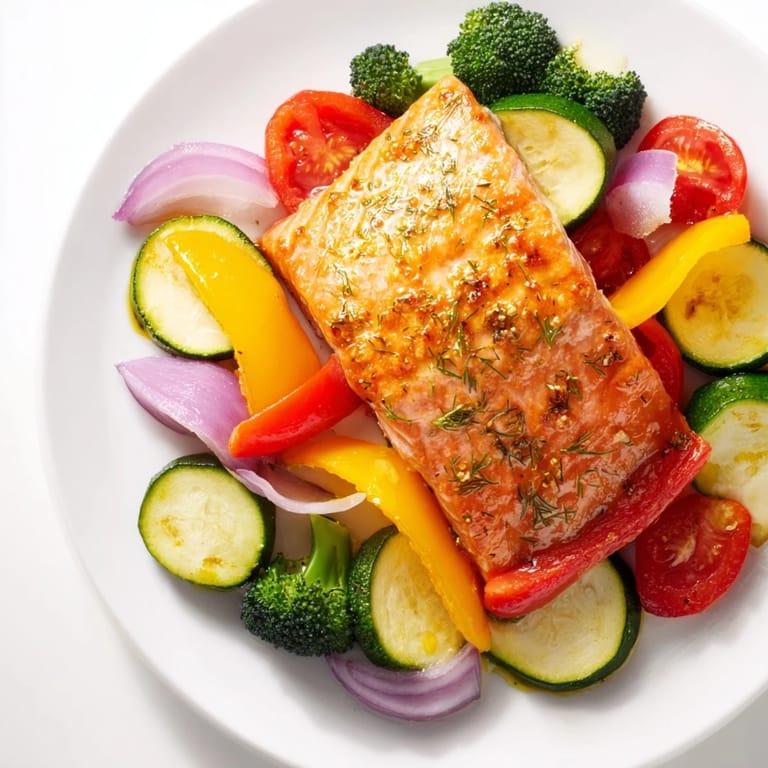
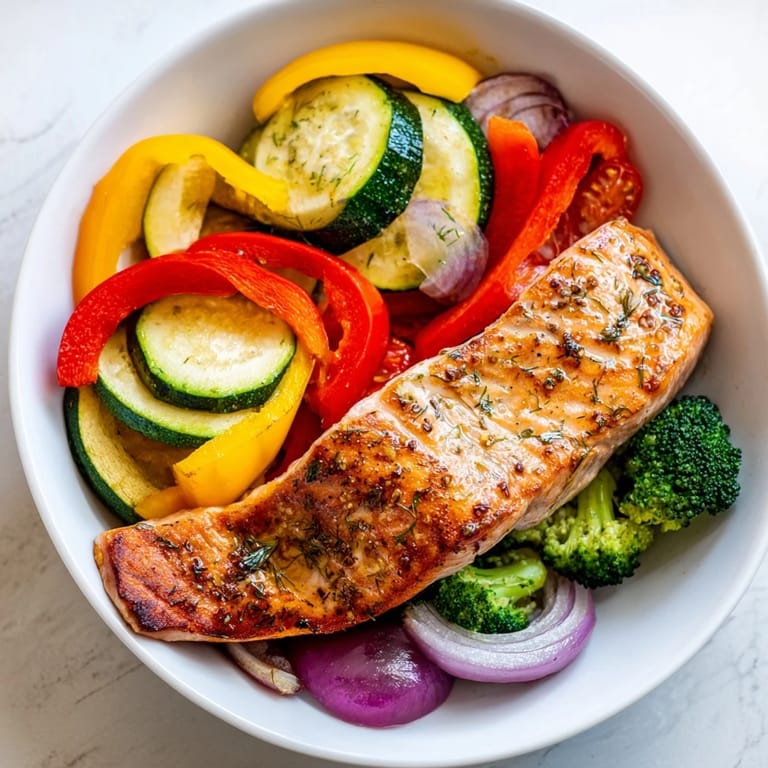
 I discovered the magic of sheet pan cooking on a Tuesday night when I realized I had exactly twenty minutes before everyone arrived for dinner. The salmon was defrosting, the vegetables were scattered across my counter, and I was genuinely stressed until I thought, why not roast everything together? That simple decision changed how I cook weeknight meals. The kitchen filled with the smell of lemon and dill, the vegetables turned golden and tender, and somehow one pan became my secret weapon for looking effortlessly put-together in the kitchen.
My neighbor Marcus was skeptical when I invited him over for a "sheet pan dinner," like somehow throwing everything on one pan meant cutting corners. But then he tasted it, and I watched his whole expression shift as he realized the vegetables had absorbed all that lemony, herby oil while the salmon stayed delicate underneath. He asked for the recipe right there at the table, which was worth more to me than any compliment.
Ingredients
- Salmon fillets (4, about 6 oz each): The star of the show—look for fillets that smell like the ocean, not fishy, and avoid any that look dull or gray at the edges.
- Olive oil (2 tbsp): This becomes your flavor vehicle, so use something you'd actually taste on salad, not the cheap stuff.
- Lemon (1, zested and juiced): Fresh lemon is non-negotiable here; bottled juice tastes thin and sad by comparison.
- Dill (1 tsp dried or 1 tbsp fresh): Fresh dill is brighter, but dried works beautifully if that's what you have on hand.
- Garlic powder (1 tsp): A pinch of salt, a quarter teaspoon of black pepper.
- Bell peppers (1 red, 1 yellow, sliced): The colors aren't just pretty—different colored peppers have different flavor notes, and together they taste more complex.
- Red onion (1 small, cut into wedges): The heat of the oven transforms onion into something almost sweet and jammy.
- Zucchini (1 medium, sliced into rounds): Cut them all roughly the same thickness so they cook evenly and don't turn mushy.
- Cherry tomatoes (1 cup, halved): These burst slightly during roasting and release their juices into the pan, building flavor.
- Broccoli florets (1 cup): Separated into florets so the heat reaches the inside and the edges get crispy.
Tired of Takeout? 🥡
Get 10 meals you can make faster than delivery arrives. Seriously.
One email. No spam. Unsubscribe anytime.
Instructions
- Heat your oven and prepare your stage:
- Preheat the oven to 425°F and line a large sheet pan with parchment paper or foil. This step takes thirty seconds but saves you from scrubbing salmon off a pan later, trust me.
- Build your flavor oil:
- In a small bowl, whisk together the olive oil, lemon zest, lemon juice, dill, garlic powder, salt, and pepper until everything is evenly distributed. Taste it—it should make you want to drink it, which is how you know it's right.
- Dress the vegetables:
- Scatter all your chopped vegetables across the sheet pan and drizzle them with half of that lemony oil mixture, then toss everything until each piece glistens and is coated evenly.
- Nestle in the salmon:
- Place the salmon fillets skin-side down (or whatever side looks prettier) right among the vegetables, slightly overlapping as needed. The vegetables will cushion them and infuse them with their own moisture as everything roasts together.
- Brush and roast:
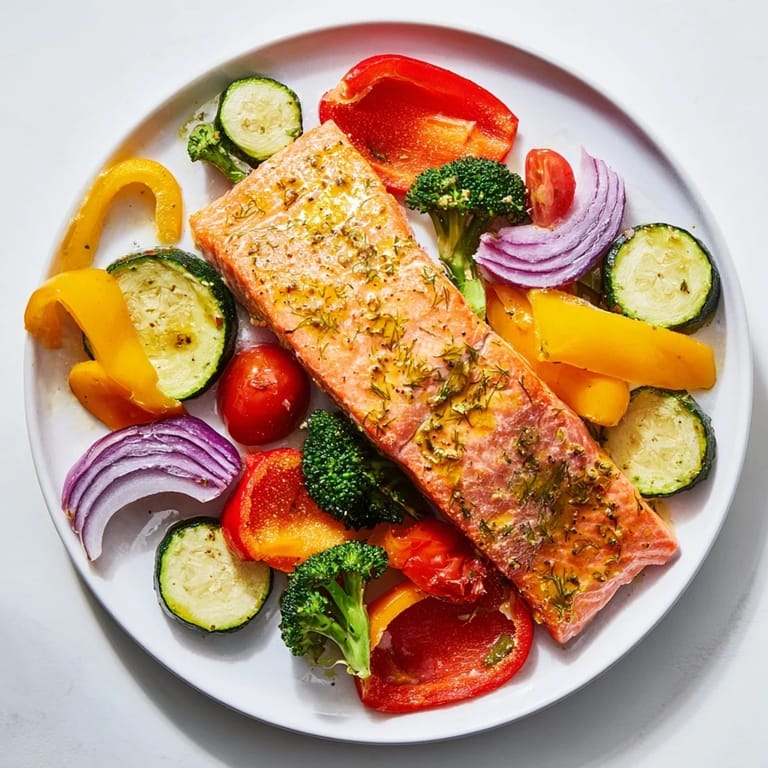
- Brush the remaining oil mixture over the salmon fillets and slide the entire pan into your hot oven for 18 to 20 minutes, until the salmon flakes easily when you press it with a fork and the vegetables are tender with slightly caramelized edges.
- Finish and serve:
- Pull everything out while it's still steaming, scatter fresh parsley over the top if you have it, squeeze extra lemon over everything, and serve immediately while the heat is still working its magic on the flavors.
 Save to Pinterest
 There was this moment last spring when my daughter took a bite and suddenly realized she actually loved salmon, which she'd spent years claiming to hate. It wasn't some elaborate dish I'd stressed over for hours—it was just this simple sheet pan with golden vegetables and tender fish. Sometimes the best meals aren't the most complicated ones; they're the ones that taste like someone cared enough to make something good without making a huge fuss about it.
Vegetable Swaps and Substitutions
The beauty of this recipe is how forgiving it is with vegetables, which means you can absolutely build this around what's actually in your crisper drawer. In summer I add thin-sliced asparagus and snap peas; in fall I roast thicker carrot rounds and Brussels sprouts halved lengthwise so the cut side caramelizes. Even green beans work wonderfully, and I've had great success adding cauliflower florets or chunks of fennel depending on the season and what I'm craving.
Building Extra Flavor Layers
Once you've mastered the basic formula, tiny additions transform it from weeknight dinner into something you'll crave. A scatter of capers adds a briny brightness, crumbles of feta cheese turn it slightly creamy, and I once added everything bagel seasoning on a whim which turned into my go-to move now. Even a splash of white wine drizzled over the vegetables before roasting deepens the flavors without requiring you to do anything differently.
Timing and Serving Suggestions
The entire recipe takes about thirty-five minutes from thought to table, which means you can start the oven while you're still in work clothes and have dinner plated before you'd normally be scrolling through recipes. Serve it straight from the pan if you're cooking for yourself, or transfer to a platter if people are coming over and you want it to feel slightly fancier. It pairs beautifully with a crisp white wine like Sauvignon Blanc, or honestly with a cold beer if that's more your speed.
- Let the pan cool for two minutes before moving it so the vegetables don't tumble off as you're plating.
- Leftover salmon keeps in the fridge for three days and actually tastes great cold on salads the next day.
- If you're cooking for one, just make the whole batch and enjoy the leftovers without guilt.
 Save to Pinterest
 Sheet pan cooking taught me that the best meals don't need to be stressful or complicated. There's something deeply satisfying about opening your oven and finding everything perfectly cooked, flavors mingled, and cleanup already half done.
Recipe FAQs
- → What temperature is best for roasting the salmon and vegetables?
Roast at 425°F (220°C) to ensure the salmon cooks through while the vegetables become tender and slightly caramelized.
- → Can I use different vegetables with this dish?
Yes, seasonal vegetables like asparagus, green beans, or carrots can be swapped in to suit your preference or availability.
- → How do I know when the salmon is cooked properly?
The salmon is done when it flakes easily with a fork and is opaque throughout.
- → Is it necessary to use fresh dill for the seasoning?
Either dried dill or fresh dill works well; fresh dill adds a brighter flavor, but dried dill is a convenient alternative.
- → What can I serve alongside this dish for a complete meal?
Pairing with a crisp Sauvignon Blanc or a light Chardonnay enhances the flavors, and a simple green salad complements the meal nicely.
- → How to make cleanup easier after cooking?
Line the sheet pan with parchment paper or aluminum foil before roasting to minimize cleanup.