 Save to Pinterest
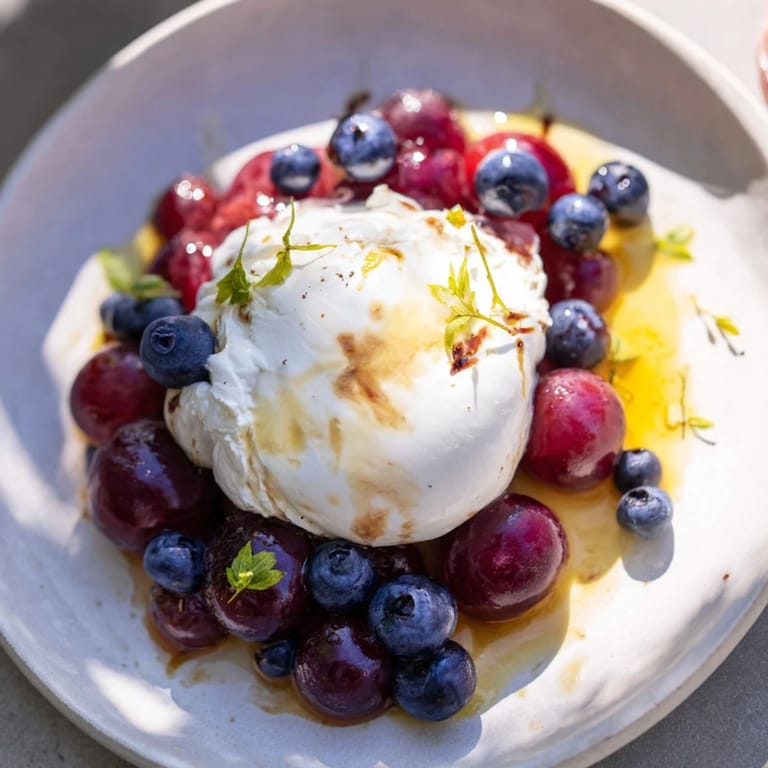
 There was this evening when my neighbor brought over a bottle of wine and I had nothing but scattered fruit and a ball of burrata in my fridge. I arranged them on a plate almost by accident, watched how the pale cheese caught the light like a little moon, and something about that moment—the simplicity, the color contrast—made us both stop talking for a second. That's when I realized the most elegant dishes often come from working with what you have, not what recipes demand.
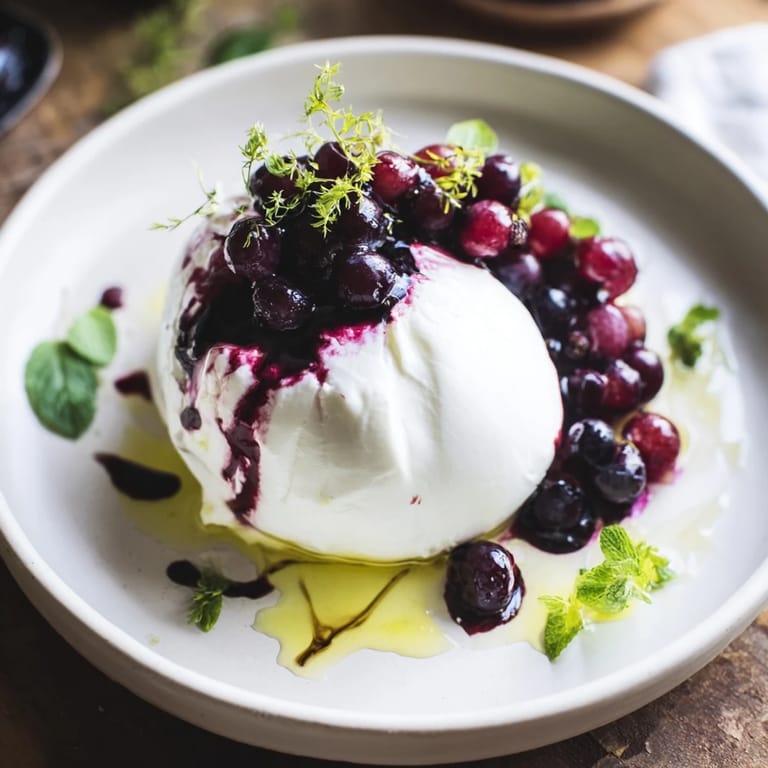
I made this for a small gathering on a quiet Saturday, and what struck me most was how everyone naturally leaned toward the center, how the burrata became the focal point of conversation. One friend cut into it and the cream spilled slightly onto the berries, and instead of feeling like a mistake, it seemed intentional—like the dish was meant to be a little messy, a little indulgent, a little shared.
Ingredients
- Fresh blueberries (1 cup): These hold their color and slight tartness, which balances the richness of the cheese—buy them the day you plan to serve this, as they bruise easily.
- Seedless purple grapes (1 cup, halved): The halving exposes more surface area and looks more intentional on the plate; I learned this after serving whole grapes that looked accidental.
- Burrata cheese (1 large ball, about 200 g): This is the star, so source it from a good cheese counter if you can—the creaminess of the center makes all the difference.
- Fresh basil leaves (1/3 cup, torn): Tear by hand rather than chopping; the bruising releases more flavor and looks prettier too.
- Baby arugula or mixed greens (1 cup, optional): Use this as a bed only if you want earthiness; skip it if you prefer the fruit and cheese to be the only players.
- Extra-virgin olive oil (2 tbsp): Don't use cooking oil here—the quality matters because it's one of only a few ingredients.
- Balsamic glaze (1 tbsp): The reduced version, not vinegar; it's sweeter and clings to the fruit beautifully.
- Sea salt and freshly ground black pepper: These finish the dish, so use the best you have on hand.
- Lemon zest (from 1 lemon, optional): A small scatter brightens everything without making it taste citrusy.
Tired of Takeout? 🥡
Get 10 meals you can make faster than delivery arrives. Seriously.
One email. No spam. Unsubscribe anytime.
Instructions
- Set your stage:
- If using greens, spread them across a wide, shallow bowl or platter in an even layer—think of it as creating a canvas. This step takes thirty seconds but makes the whole thing look intentional rather than thrown together.
- Create your ring:
- Scatter the blueberries and halved grapes in a generous circle around the edge, leaving a clear space in the very center. I like to alternate colors slightly so the eye moves around the plate.
- Place the moon:
- Set the burrata ball dead center, ideally on a small bed of its own juice if it's released any. This is the moment the dish becomes a composition rather than just food.
- Dress without overdoing:
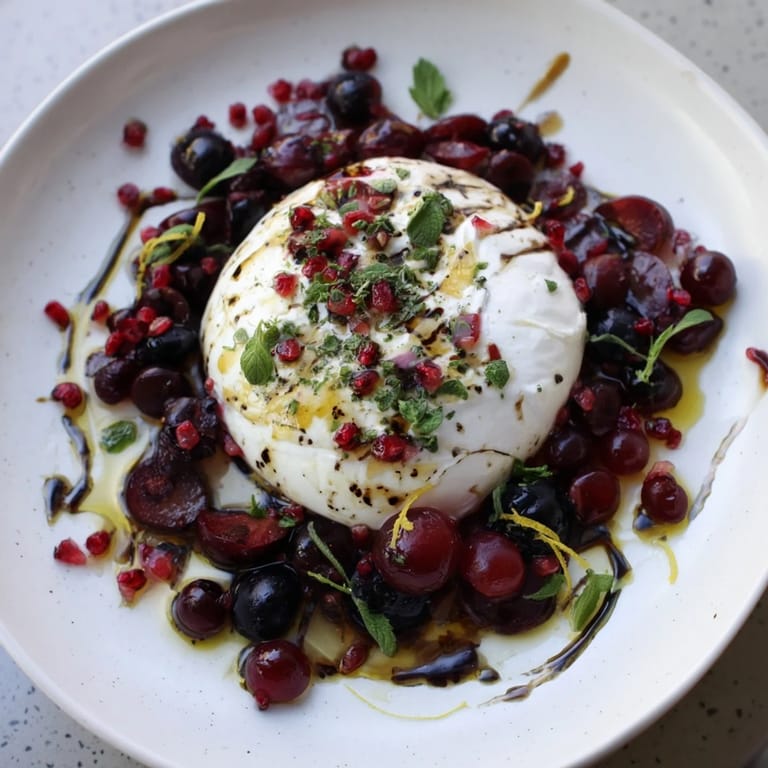
- Drizzle the olive oil in thin streams over everything, then spoon the balsamic glaze in that same delicate way. Too much liquid and the burrata slides; too little and the flavors feel flat.
- Finish with intention:
- Scatter the torn basil, lemon zest if using, and a pinch of salt and pepper across the top. Taste a grape to make sure you've seasoned correctly—you want the salt to enhance, not announce itself.
- Serve right away:
- This dish is best eaten within five minutes of assembly, while the cheese is still cool and the fruit hasn't begun to weep into the dressing.
 Save to Pinterest
 My mother once said that a dish doesn't have to be complicated to be special, and this salad proved her right. There's something quietly beautiful about food that celebrates its ingredients rather than hiding behind technique, and that's exactly what happens here when you bite through sweet berry into creamy cheese.
Why This Works as an Appetizer
Light salads can feel like the preamble to a meal, but something about the richness of burrata and the slight sweetness of the fruit makes this feel like an actual opening act rather than just a warm-up. It leaves you satisfied but not full, curious about what comes next, and it signals to your guests that you've put thought into what they're about to eat. Serve it with crusty bread so people have something to do with their hands while they talk.
The Seasonal Swap
I've made this in high summer with the ripest berries I could find, and I've also made it in early autumn when the grapes were just at their sweetest. The fruit is flexible—blackberries work beautifully if blueberries disappoint, and raspberries add a delicate tartness that's equally lovely. What matters is that the fruit tastes like something, not like water in a skin.
Small Details That Matter
The first time I made this, I added toasted pistachios because I had them, and the crunch became the element that kept people coming back to the plate. A friend suggested I try it with a drizzle of pomegranate molasses instead of balsamic, and that opened up an entirely different flavor direction. These aren't the recipe—they're invitations to make it your own.
- Toast nuts gently if you add them; burnt nuts ruin the delicate balance of flavors faster than anything else.
- A crisp Sauvignon Blanc or dry rosé beside this dish is almost mandatory because the acidity cuts through the richness beautifully.
- Make this only when the fruit and cheese are at their best, because there's nowhere for mediocre ingredients to hide.
 Save to Pinterest
 This salad taught me that the best meals sometimes happen when you stop overthinking and start noticing—noticing the color of fruit in the light, the way a friend's face softens over good food, the quiet satisfaction of something simple done well.
Recipe FAQs
- → What cheese complements the fruit in this salad?
Burrata cheese offers a creamy texture that contrasts deliciously with fresh blueberries and grapes.
- → Can I substitute grapes or blueberries with other fruits?
Yes, blackberries can replace blueberries, and other seedless grapes can be used to suit your taste.
- → What role does the balsamic glaze play in the salad?
The balsamic glaze adds a tangy sweetness that enhances the natural flavors of the fruit and cheese.
- → Is there a recommended herb to use beyond basil?
Fresh torn basil leaves provide a fragrant herbal note; arugula or mixed greens can be added for a peppery contrast.
- → How should this salad be served for best freshness?
Serve immediately after assembling to maintain the fresh textures and vibrant appearance.
- → Are there suggested wine pairings for this dish?
Crisp Sauvignon Blanc or a dry rosé complement the salad’s fresh and creamy flavors well.