 Save to Pinterest
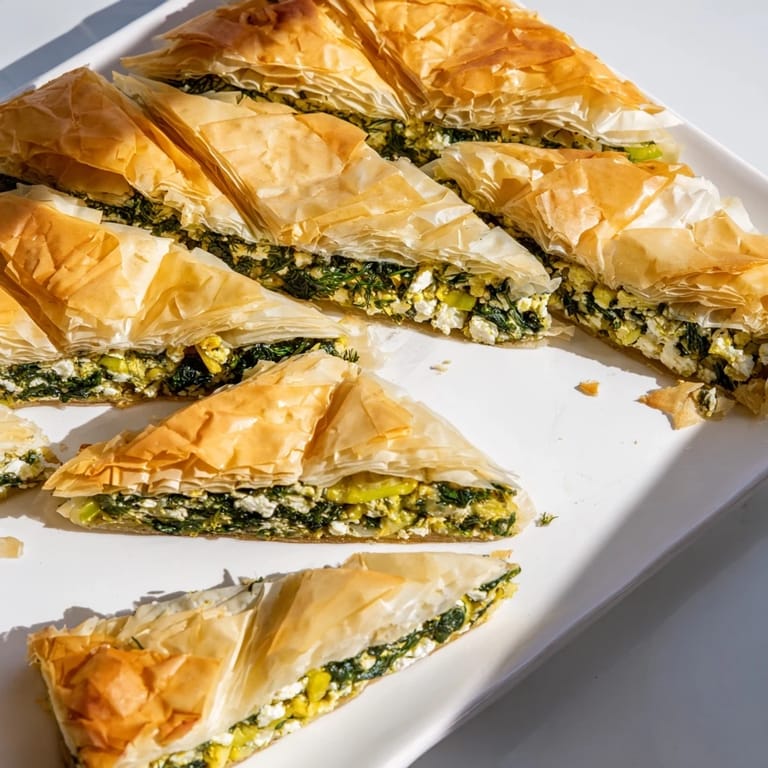
 There's something about the sound of phyllo sheets crackling under your fingers that makes you feel like you're doing something authentically Greek, even if you've never set foot in Athens. I discovered spanakopita during a cooking experiment gone right—I had a block of frozen spinach, some crumbly feta, and phyllo that was about to expire, so I threw them together on a whim. What emerged from the oven was golden, impossibly crispy, and so good that my kitchen smelled like an invitation nobody could refuse.
I made this for my neighbor once when her sister was visiting from out of town, and I remember how she cut into it and the phyllo made that delicate crackling sound—it's such a small thing, but it felt like the dish was announcing itself. Watching people eat something you made, seeing that moment when they realize it's both impressive and comforting, that's when spanakopita became more than just a recipe to me.
Ingredients
- Fresh spinach: Use two pounds of fresh if you can find it, but frozen works beautifully too—just squeeze it dry with your hands like you mean it, because excess moisture is the enemy of crispy phyllo.
- Onion and scallions: The onion gets soft and sweet when cooked down, while scallions keep their bite, giving you layers of flavor.
- Fresh dill and parsley: These aren't just garnish; they're what make this filling taste authentically Greek rather than generic.
- Feta cheese: The salty, tangy heart of the filling—crumble it by hand for better texture.
- Ricotta or cottage cheese: Optional, but it adds a creaminess that makes each bite more luxurious.
- Eggs: They bind everything together while keeping the filling moist.
- Phyllo dough: Handle it gently and keep sheets you're not using under a barely damp towel so they don't dry out and crack.
- Olive oil or butter: Brush it generously between every layer for maximum crispiness and golden color.
Tired of Takeout? 🥡
Get 10 meals you can make faster than delivery arrives. Seriously.
One email. No spam. Unsubscribe anytime.
Instructions
- Set your stage:
- Preheat your oven to 350°F and grease a 9x13-inch baking dish with a little oil. Having everything ready before you touch the phyllo makes the process feel less frantic.
- Soften the aromatics:
- Heat two tablespoons of olive oil in a large skillet and add your chopped onion and scallions, letting them turn soft and golden over medium heat—this takes about five minutes and fills your kitchen with the most welcoming smell.
- Wilt and dry the spinach:
- Add your spinach in batches if it's fresh, stirring until it collapses into something barely resembling its former self, then keep cooking until you see no more liquid pooling at the bottom. This step is crucial because watery filling means soggy pastry.
- Build the filling:
- Let the spinach cool slightly, then transfer it to a bowl with dill, parsley, crumbled feta, ricotta if you're using it, beaten eggs, black pepper, nutmeg, and salt—mix until everything is evenly distributed.
- Layer the base:
- Lay one sheet of phyllo in your baking dish, letting the edges hang over the sides, then brush it lightly with oil or melted butter. Repeat with six or seven more sheets, brushing each one as you go—this is where patience pays off in crispiness.
- Spread the filling:
- Distribute your spinach mixture evenly over the phyllo base, making sure it reaches the edges.
- Top and seal:
- Layer the remaining phyllo sheets on top, brushing each one with oil or butter, then tuck all those overhanging edges down into the dish to seal everything in.
- Score and bake:
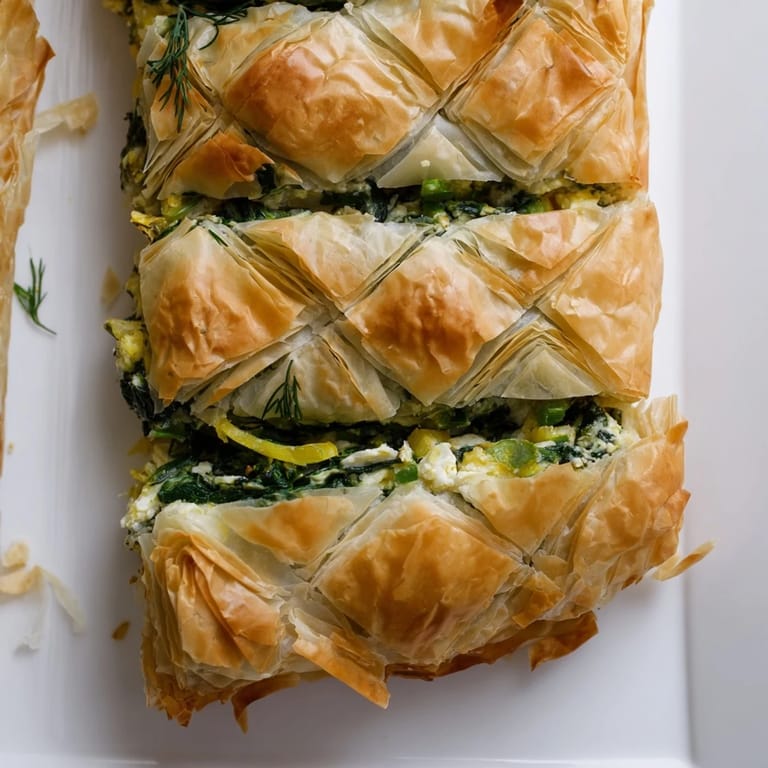
- Using a sharp knife, score the top into squares or diamonds without cutting all the way through—this gives you beautiful serving pieces and lets the heat penetrate. Bake for thirty-five to forty minutes until the top is deeply golden and you can hear it crackling slightly when you move the pan.
 Save to Pinterest
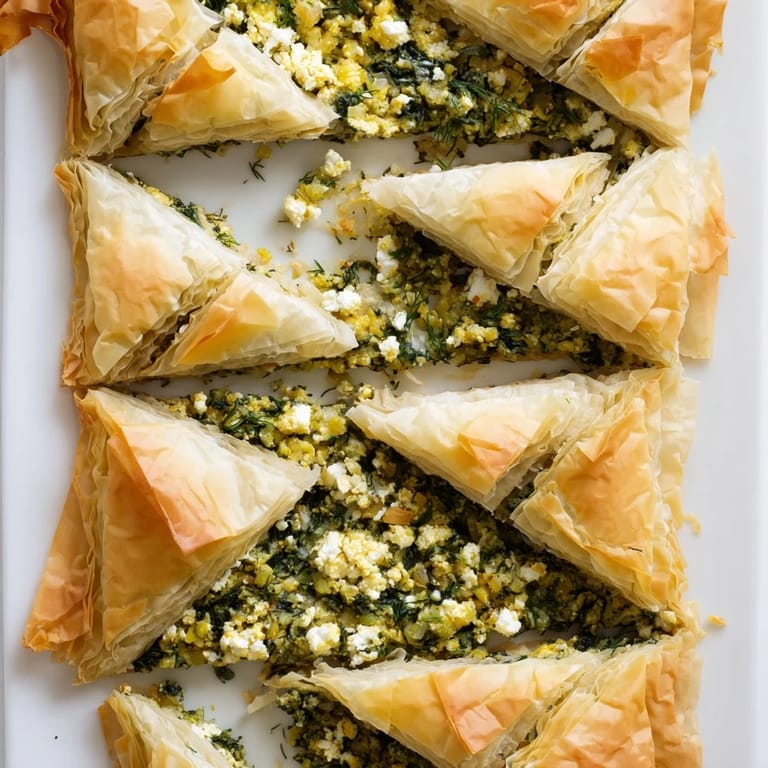
 The first time I served this warm, straight from the oven, my friend asked if it was store-bought, and I pretended to be offended—but honestly, that's when I knew I'd nailed it. It's funny how a simple combination of vegetables, cheese, and pastry can make you feel like you've given someone something precious.
The Phyllo Secret
Phyllo intimidates people, but it's actually forgiving once you accept that it wants to be brushed with oil or butter between every single layer. I used to try to be frugal with the oil and wondered why mine wasn't crispy—then I stopped fighting it and brushed generously, and suddenly everything changed. The oil isn't excess; it's the whole point, creating those paper-thin layers of crackle that make this dish sing.
Playing With Greens
While spinach is traditional, I've experimented with chard, kale, and even a combination of whatever greens I had hanging around, and spanakopita welcomes them all. The key is removing moisture and respecting the cooking time—some greens are wetter than others, so adjust accordingly. A friend once substituted half spinach with Swiss chard and swore it was even better, so trust your instincts.
Serving and Storage
Spanakopita is best served warm, though room temperature works fine too—there's a reason it appears at Greek gatherings, picnics, and celebrations. It keeps beautifully in the refrigerator for three or four days and reheats gently in a 300°F oven until warmed through, which means you can make it ahead without stress.
- Pair it with a crisp white wine like Assyrtiko or Sauvignon Blanc to cut through the richness.
- A simple green salad with lemon vinaigrette balances the heaviness perfectly.
- Let it cool for ten minutes after baking so the filling sets enough to hold together neatly when you cut into it.
 Save to Pinterest
 Making spanakopita feels like you're keeping a tradition alive, even if you're doing it in your own way. It's the kind of recipe that rewards you for showing up in the kitchen.
Recipe FAQs
- → What type of spinach is best for spanakopita?
Fresh spinach offers vibrant flavor but can be substituted with well-drained frozen spinach. Ensure excess moisture is removed for a firm filling.
- → Can I use other greens instead of spinach?
Yes, chard or a mix of leafy greens can be used to vary the flavor while maintaining the dish’s texture and color.
- → How do I prevent the phyllo from drying out?
Keep phyllo covered with a damp cloth while assembling and brush each layer lightly with olive oil or melted butter to maintain crispness and moisture balance.
- → What cheeses complement the spinach filling?
Feta provides a tangy sharpness while ricotta or cottage cheese adds creaminess. Combining both balances flavor and texture.
- → How should spanakopita be served?
Allow to cool slightly after baking to firm up, then slice into portions. It pairs wonderfully with crisp white wines like Assyrtiko or Sauvignon Blanc.
- → Can spanakopita be made in advance?
Yes, it can be prepared ahead and baked just before serving to maintain its flaky texture and fresh flavors.