 Save to Pinterest
 I'll never forget the first time I created a glazed ham centerpiece board for my sister's holiday brunch. I was terrified of being the one responsible for the main dish, but watching guests' eyes light up when they saw that glossy, caramelized ham surrounded by jewel-toned fruits and creamy cheeses made me realize this wasn't just food—it was an edible work of art that brought everyone together.
There's something magical about watching people approach a beautiful board. My mom actually teared up a little when she saw mine—not because of the ham, but because it represented effort and love in a way that fancy plating never could. That's when I knew this recipe was about more than cooking; it was about creating a moment.
Ingredients
- Boneless ham (3–4 lb): The foundation of your board. Boneless is forgiving and slices beautifully, or you can curl thin slices into roses for drama. Quality matters here since it's the star.
- Brown sugar and honey: These create that deep, glossy mahogany glaze. The honey adds sophistication to what could be just plain sweet.
- Dijon mustard: This is the secret weapon that keeps the glaze from being one-dimensional. It adds sophistication and cuts through the richness.
- Apple cider vinegar: A splash of acidity that balances everything beautifully and adds complexity to the glaze.
- Ground cloves (optional): If you use it, just a whisper—this spice has opinions and can easily overpower if you're not careful.
- Aged cheddar, brie, and blue cheese: Choose cheeses with personality. Aged cheddar brings nutty depth, brie offers creamy elegance, blue cheese adds bold intrigue. Gouda rounds it out with subtle sweetness.
- Red and green grapes on the vine: Keep them clustered on the vine for visual drama. They're the jewelry of the board.
- Fresh strawberries and apple slices: These create color contrast. Slice apples just before serving to prevent browning, or toss them gently in a little lemon juice.
- Cherry tomatoes and cucumbers: These fresh elements provide crisp textural contrast against soft cheeses and bread.
- Dried apricots: A texture surprise that adds chewiness and natural sweetness without competing with the ham.
- Baguette and assorted crackers: Your delivery vehicles. Choose a mix of textures—some sturdy for the heavier cheeses, some delicate for the soft ones.
- Whole grain mustard and fig jam: Condiments that elevate every bite. The fig jam especially becomes a flavor revelation when paired with aged cheddar.
- Olives and cornichons: These briny elements are essential for cutting through richness and refreshing the palate between bites.
- Roasted nuts and fresh herbs: Final touches that add textural interest and make everything feel intentional and finished.
Tired of Takeout? 🥡
Get 10 meals you can make faster than delivery arrives. Seriously.
One email. No spam. Unsubscribe anytime.
Instructions
- Make the glaze that changes everything:
- In a small saucepan, whisk together brown sugar, honey, Dijon mustard, apple cider vinegar, and cloves if using. Heat gently, stirring occasionally, until the sugar dissolves completely and the mixture becomes glossy and syrupy. This usually takes about 5–7 minutes. You want it pourable but not thin. Trust your instincts—when it coats the back of a spoon and drips slowly, you're there. Smell that aroma? That's the smell of something special about to happen.
- Prepare the ham for its close-up:
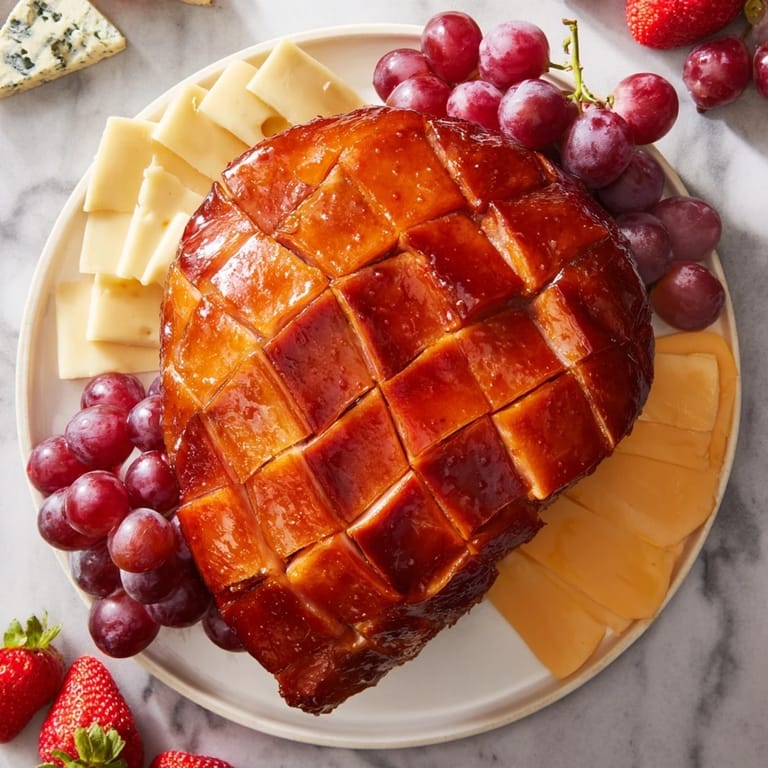
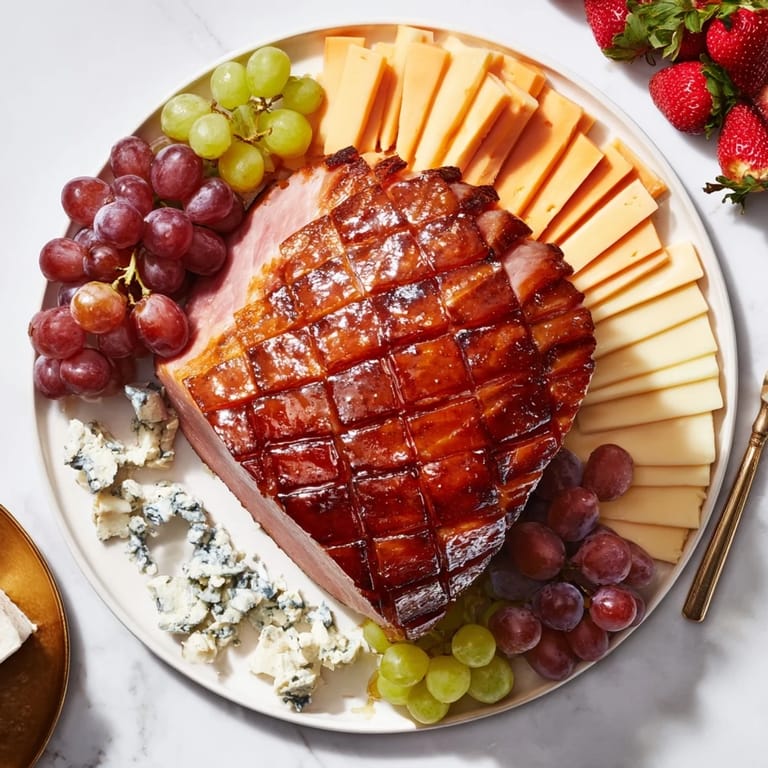
- Preheat your oven to 350°F. Place the ham in a roasting pan. Using a sharp knife, score the surface in a crosshatch diamond pattern—this isn't just decoration, it helps the glaze penetrate and caramelize beautifully. Don't cut too deep; you're making a pattern, not carving into the meat. Brush the glaze generously all over, making sure it pools in those scoring lines.
- Roast and baste with intention:
- Slide the ham into the oven. Set a timer for 20 minutes. When it goes off, take the pan out, brush on more glaze, and return it to the oven. This rhythm of basting every 20 minutes is what creates that caramelized, glossy exterior that makes people stop and stare. You're building layers of flavor and color with each pass. The whole process takes 1 to 1.5 hours, depending on your oven. The ham should be heated through and the glaze should be dark, bubbling, and caramelized at the edges.
- Rest and transform:
- Remove the ham from the oven and let it rest for 15 minutes. This is when the magic completes itself—the carryover heat finishes cooking, and the surface sets into that perfect crust. This is also when you can decide whether to serve it whole for drama or slice it into perfect rounds, or even gently curl thin slices into roses. The 15 minutes also gives you breathing room to arrange your board without stress.
- Build your edible landscape:
- Take your large board and place the glazed ham at the center—this is the anchor point, the thing everything else orbits around. Now, think in terms of color and texture. Arrange your cheeses in clusters, keeping types together. Grapes go on the vine, strawberries get scattered with intention, and apple slices fan out. Pile crackers at angles, lean breadsticks upright, scatter nuts, and tuck those briny olives and cornichons in the negative spaces. Group similar colors and textures together so the eye can follow them. This part isn't complicated—it's actually just organized thoughtfulness. Step back, adjust, feel it out. Does it look balanced? Does your eye travel naturally around the board?
- Finish with the final touches:
- Scatter fresh rosemary sprigs and thyme strategically around the board. These aren't just decoration—they're edible flavor hints and visual connectors that tie everything together. Set out cheese knives and small spreaders so guests know these items are meant to be explored and combined. Place small spoons next to the jams and mustards. Now step back. You've created something beautiful.
 Save to Pinterest
 My cousin actually proposed to his girlfriend while standing in front of one of these boards at their engagement party. He said later that he realized while looking at it how much care goes into creating something beautiful, and he wanted their life together to have that same intentionality. Now whenever I make this board, I think about that moment and smile.
The Art of Board Assembly
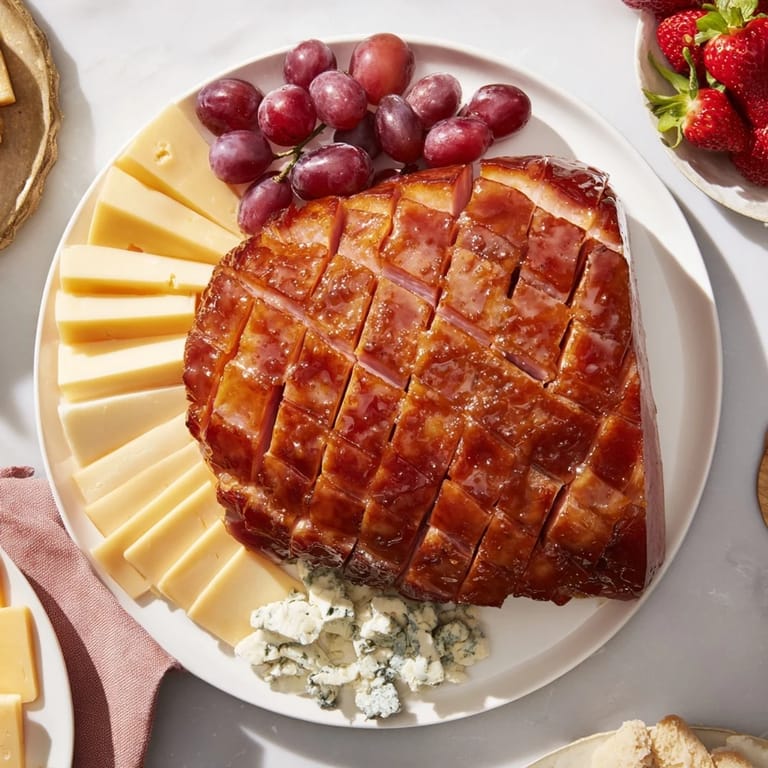
Creating a stunning board isn't about fancy techniques—it's about understanding balance and flow. Think of it like painting, but with edible elements. Your ham is your focal point, your light source. Everything else should complement and guide the eye toward it. Cold items can go on the board while the ham rests, but wait on the bread until the last moment so it stays crispy and fresh. The arrangement should feel generous but not chaotic. Leave some negative space—a board that's completely packed loses its visual power. The best boards tell a story of intention and care, and that's what makes people feel special when they gather around them.
Pairing and Serving Wisdom
This board is inherently flexible, which is part of its beauty. Serve it with sparkling wine for celebration, dry cider for casual elegance, or light-bodied reds if your crowd leans that way. The acidity in all these beverages cuts through the richness of the cheese and ham perfectly. Set everything out about 30 minutes before guests arrive so cheeses can come to room temperature and flavors open up. Have small plates available—people often want to create their own combinations and step away. The board itself becomes a centerpiece conversation starter, and that's worth as much as how it tastes.
Making It Your Own
The beauty of a glazed ham centerpiece board is that it's a template, not a rule. Swap proteins if pork isn't your thing—turkey ham works beautifully and cooks slightly faster. Add deviled eggs for richness, pickled vegetables for extra tang, or roasted vegetables if you want to lean heartier. This is your chance to think about who you're feeding and what flavors speak to them. Maybe your family loves spice, so you add hot honey drizzled over the cheese. Maybe they prefer subtlety, so you lean toward delicate fruits and milder cheeses. The formula works, but your instincts about your people matter more than any recipe.
- Try arranging elements in a spiral pattern instead of radiating outward—it feels modern and guides the eye differently
- Add height variation by stacking some elements or using small serving bowls for jams and mustards
- Keep some elements in reserve to refresh the board as things get picked over, so it always looks abundant
 Save to Pinterest
 This board has become my signature move, the thing I'm known for bringing to celebrations. But the real gift is watching people slow down, talk more, and eat less quickly because they're too busy admiring their plates and each other. That's when food becomes memory.
Recipe FAQs
- → How is the ham glaze prepared?
Combine brown sugar, honey, Dijon mustard, apple cider vinegar, and optional ground cloves in a saucepan. Heat gently until the mixture turns syrupy to create a sweet and tangy glaze.
- → What cheeses pair well with glazed ham?
Aged cheddar, brie, blue cheese, and gouda offer a range of creamy, sharp, and tangy flavors that complement the rich sweetness of the glazed ham.
- → Can the ham be substituted for dietary restrictions?
Yes, turkey ham can be used as a pork-free alternative while maintaining a similar texture and presentation.
- → What is the ideal way to arrange the board?
Place the glazed ham centrally, then symmetrically surround it with cheeses, fruits, vegetables, breads, and accompaniments to create a balanced and inviting display.
- → How should the ham be cooked for best results?
Roast the ham in a 350°F oven for 1 to 1.5 hours, basting with the glaze every 20 minutes until it is caramelized and heated through. Let it rest before slicing or arranging.
- → What accompaniments enhance the board's flavor?
Whole grain mustard, fig jam, mixed olives, cornichons, roasted nuts, and fresh herbs all add layers of taste and texture that enhance the overall experience.