 Save to Pinterest
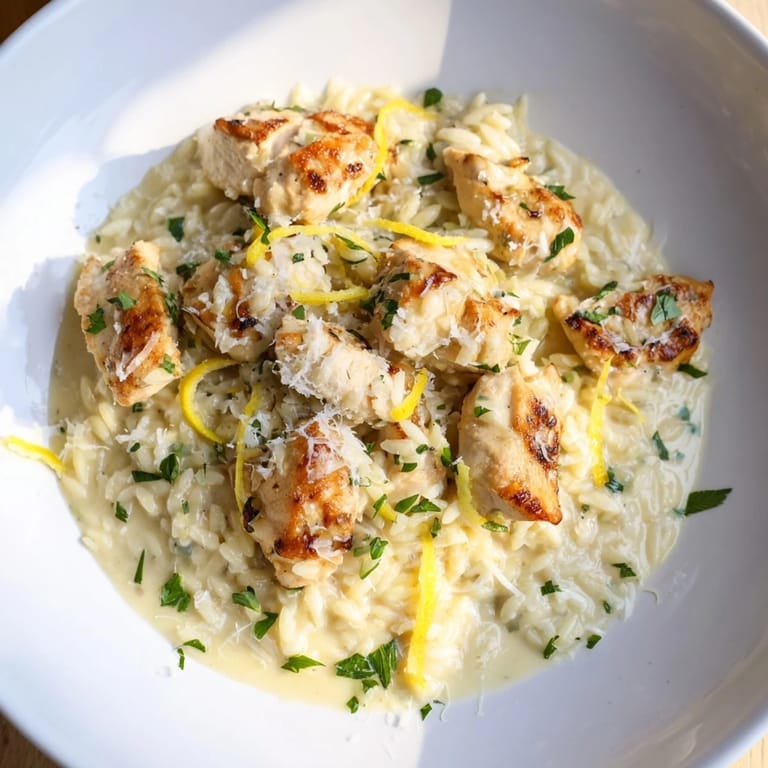
 There's something about a weeknight when you're standing in front of the stove, tired from the day, and you reach for a pan that promises comfort in under an hour. That's when creamy lemon chicken orzo became my go-to—a dish I discovered almost by accident, combining what was in my pantry with a craving for something both bright and soothing. The first time I made it, I was skeptical that lemon and cream could play so well together, but the moment that sauce came together, golden and silky, I understood. It's the kind of meal that tastes like you've been cooking all day, even though you haven't.
I remember making this for my sister on a cold Tuesday evening when she'd had a rough day at work. She walked in mid-cooking, and the smell of butter, lemon, and garlic hit her before she even took off her coat. By the time we sat down, she'd already forgotten whatever was bothering her, fork in hand, asking for seconds. That's when I knew this recipe was special—not just delicious, but capable of shifting a mood.
Ingredients
- Boneless, skinless chicken breasts (about 500 g): Cut into bite-sized pieces so they cook evenly and get a golden crust before the sauce takes over.
- Olive oil: Use good quality here—it's the foundation for that initial sear that builds flavor.
- Unsalted butter: This rounds out the cooking fat and keeps the flavor clean so the lemon can shine.
- Yellow onion: Finely chopped and cooked until translucent, it becomes nearly invisible but carries the savory base.
- Garlic cloves: Minced small enough that it distributes throughout the sauce rather than sitting in chunks.
- Orzo pasta: It cooks right in the broth, absorbing all that flavor and becoming impossibly tender.
- Low-sodium chicken broth: Low-sodium is crucial because you're adding cream, cheese, and lemon—the salt will come from those.
- Heavy cream: Don't skip this or substitute with milk on your first attempt; it's what makes the sauce luxurious.
- Lemon zest and juice: The zest goes in early for subtle citrus flavor, the juice at the end for brightness that wakes everything up.
- Dried thyme: A whisper of herbs that doesn't fight with the lemon but supports it.
- Crushed red pepper flakes: Optional, but worth adding if you like a quiet heat underneath the richness.
- Parmesan cheese: Grated fresh—it melts into the sauce and adds umami depth.
- Fresh parsley: Chopped just before serving, it brings a green, herbaceous finish.
Tired of Takeout? 🥡
Get 10 meals you can make faster than delivery arrives. Seriously.
One email. No spam. Unsubscribe anytime.
Instructions
- Season your chicken:
- Pat the bite-sized pieces with salt and pepper, letting them sit for a minute so the seasoning adheres.
- Get that golden sear:
- Heat olive oil in your skillet over medium-high heat until it shimmers, then add chicken in a single layer. Don't crowd the pan—let each piece touch the bottom so it browns properly, about 5-7 minutes total.
- Build your aromatics:
- Reduce heat to medium, melt butter, then add your chopped onion. Listen for it to soften and turn translucent, about 3 minutes—this creates the flavor foundation. Add minced garlic and orzo, stirring constantly for just a minute until the orzo takes on a light golden color.
- Deglaze and simmer:
- Pour in chicken broth and use your wooden spoon to scrape up every brown bit stuck to the pan—that's pure flavor. Stir in heavy cream, lemon zest, lemon juice, thyme, and red pepper flakes if using, then bring everything to a gentle simmer where small bubbles barely break the surface.
- Bring it together:
- Return the chicken to the pan and stir occasionally as the orzo softens, about 10-12 minutes. The pasta will absorb the broth and the sauce will thicken naturally.
- Finish with character:
- Stir in Parmesan and fresh parsley, taste it, and adjust salt and pepper to your preference—remember the cheese adds saltiness.
- Plate with intention:
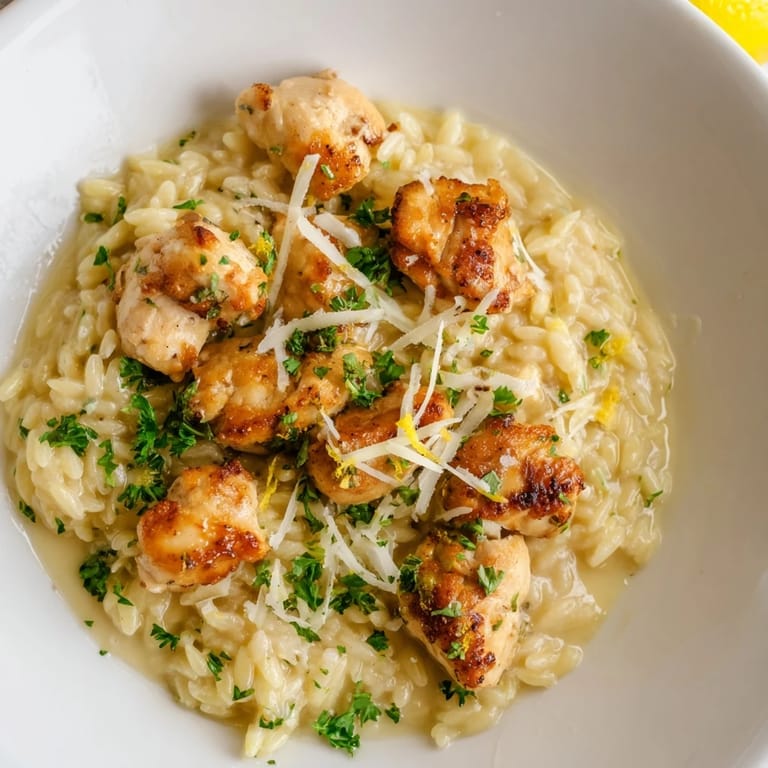
- Serve warm with extra parsley scattered on top and a lemon slice resting on each bowl.
 Save to Pinterest
 There was an evening when my neighbor smelled this cooking through our shared wall and knocked asking what I was making. Ten minutes later, we were eating together, and she admitted she'd been intimidated by cream sauces until that moment. That's when I realized this recipe does something special—it makes you feel like a confident cook, even if you've never made a cream sauce before.
Why This Works as a Weeknight Dinner
The magic of this dish is in its structure: you're not juggling multiple pans or waiting for water to boil. Everything cooks in sequence in one skillet, and by the time you're plating, the orzo has absorbed enough broth to become tender while the sauce clings to every piece. The total time is honest—45 minutes from cold pan to eating—but the active cooking time is maybe 20 minutes, which means you can actually relax while it simmers.
Variations That Keep It Fresh
Once you've made this a few times and it feels like second nature, you can play with it. A handful of fresh spinach stirred in at the end adds color and a slight earthiness, while peas bring sweetness that surprises people in the best way. Some evenings I'll add a splash of dry white wine after the broth for complexity, letting it reduce for a minute before adding the cream. The base is forgiving enough to handle these additions without losing its identity.
Serving and Pairing
This is a complete meal on its own, but a simple green salad with olive oil and vinegar alongside it feels right—something to cut through the richness and add texture. If you want to drink wine with it, a crisp Pinot Grigio or Sauvignon Blanc echoes the lemon and doesn't compete with the cream. The leftover sauce thickens slightly as it cools, so if you have any left over, it reheats gently and tastes even better the next day.
- Don't add the parsley until just before serving—it wilts if it sits in the hot sauce.
- If you prefer lighter, substitute half-and-half or whole milk, though it won't be quite as lush.
- A small pinch of nutmeg, added right before the cream, adds a whisper of warmth that nobody can quite identify but everyone loves.
 Save to Pinterest
 This recipe has quietly become the one I make when I want to feel capable in the kitchen and know the person across from me will be happy. It's comfort with elegance, effort that doesn't announce itself.
Recipe FAQs
- → What is the best way to ensure tender chicken pieces?
Cut chicken into even, bite-sized pieces and cook over medium-high heat until golden but still juicy, avoiding overcooking.
- → Can I substitute the heavy cream with something lighter?
Yes, half-and-half or whole milk can be used for a lighter, less creamy texture without compromising flavor.
- → How can I add more vegetables to this dish?
Add baby spinach or peas during the last few minutes of cooking to keep them fresh and vibrant.
- → What type of pan works best for this preparation?
A large deep skillet or sauté pan allows even cooking and easy stirring of the creamy orzo and chicken mixture.
- → Which wines pair well with the creamy lemon flavors?
Crisp white wines like Pinot Grigio or Sauvignon Blanc complement the bright lemon and creamy textures wonderfully.