 Save to Pinterest
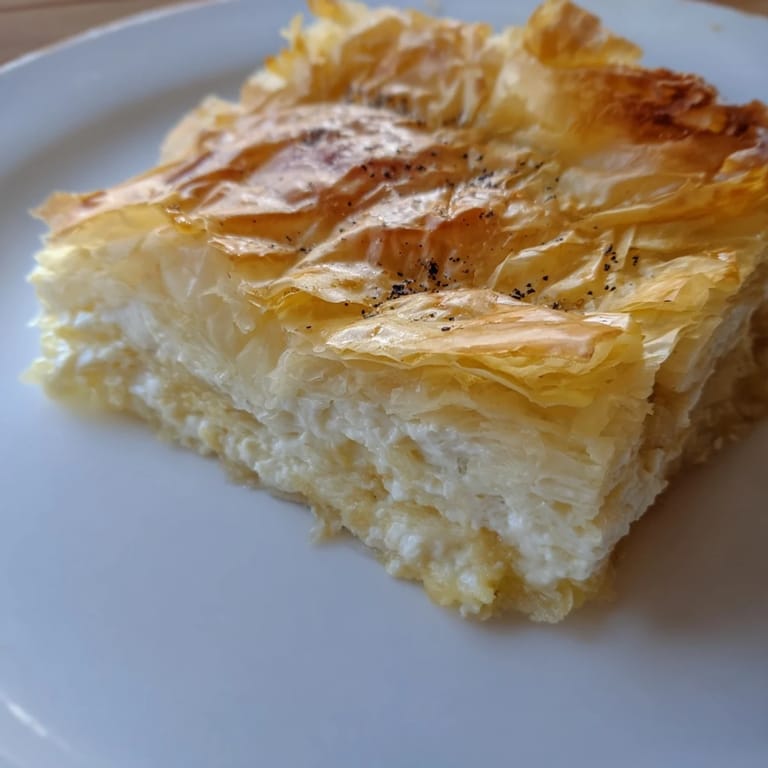
 The first time I tasted banitsa, it was still warm from my neighbor's oven, steam rising off the golden squares as she slid them onto a plate. She'd made it that morning before dawn, layers of butter-soaked phyllo so crisp they shattered between my teeth, giving way to this creamy, tangy filling that tasted like feta and eggs had been made tender by time and tradition. I watched her casual confidence as she cut it—no measurements, just knowing—and I realized I'd been eating restaurant food my whole life when this was the real thing.
I made this for a Sunday morning gathering, and watching people's faces when they bit through that crispy top into the soft, savory middle reminded me why comfort food exists. My friend who usually skips breakfast came back for a third piece, and she never mentioned it, but I saw her writing down what I was doing. That's when I knew this recipe was going to travel, the way good recipes do.
Ingredients
- Feta cheese: 400 g crumbled—use good quality feta because this is where all the flavor lives; if it tastes too harsh on its own, soak it in water for an hour first.
- Plain yogurt: 250 ml to blend with the eggs and feta, creating that custard-like filling that stays creamy even when baked.
- Phyllo dough: One 400 g package, thawed—this is non-negotiable; frozen sheets will shatter when you try to work with them, and that's where patience becomes your best tool.
- Unsalted butter: 60 g melted, plus extra for the pan; each layer gets a delicate brush, not a pour, so the pastry gets crispy without becoming greasy.
- Eggs: 4 large ones to bind everything and give the filling structure and a subtle richness.
- Whole milk: 50 ml to loosen the mixture just enough so it spreads smoothly between the layers without tearing the delicate dough.
- Salt and black pepper: 1/2 tsp salt and 1/4 tsp freshly ground pepper—season boldly because the dough itself is neutral.
Tired of Takeout? 🥡
Get 10 meals you can make faster than delivery arrives. Seriously.
One email. No spam. Unsubscribe anytime.
Instructions
- Prepare your workspace:
- Preheat the oven to 180°C and brush your baking dish with melted butter, getting into the corners where the phyllo will crisp up fastest. Have a damp towel ready—this will be your phyllo's best friend, keeping the sheets supple while you work.
- Make the filling:
- Whisk the eggs with yogurt, milk, salt, and pepper until completely smooth, then fold in the crumbled feta so gently the cheese stays in distinct pieces rather than becoming uniform. This texture difference is what makes each bite interesting.
- Layer the foundation:
- Unroll your phyllo and immediately cover it with that damp towel; even five minutes exposed to air will make it brittle. Lay one sheet in the dish, brush it lightly—and I mean lightly—with melted butter, then repeat three more times, building a crispy base.
- Fill and layer:
- Spread one-quarter of the cheese mixture evenly over your phyllo stack, then add 3 to 4 more sheets of phyllo, buttering each one. Repeat this sandwich of dough and filling until you've used all the cheese mixture, then crown it with 3 to 4 more buttered sheets on top for that golden crust.
- Score and finish:
- Using a sharp knife, cut straight down through all the layers into squares or diamonds—this matters because it helps steam escape evenly and lets the filling set properly. Pour any remaining melted butter over the top like you're anointing it.
- Bake until golden:
- Put it in the oven for 30 to 35 minutes, watching around the 25-minute mark until the top turns deep golden brown and you can hear the pastry beginning to crackle. This sound is how you know it's done.
- Rest and serve:
- Let it cool for 10 minutes—this lets the filling set just enough so it doesn't leak everywhere when you pick up a piece, though warm is always better than cold.
 Save to Pinterest
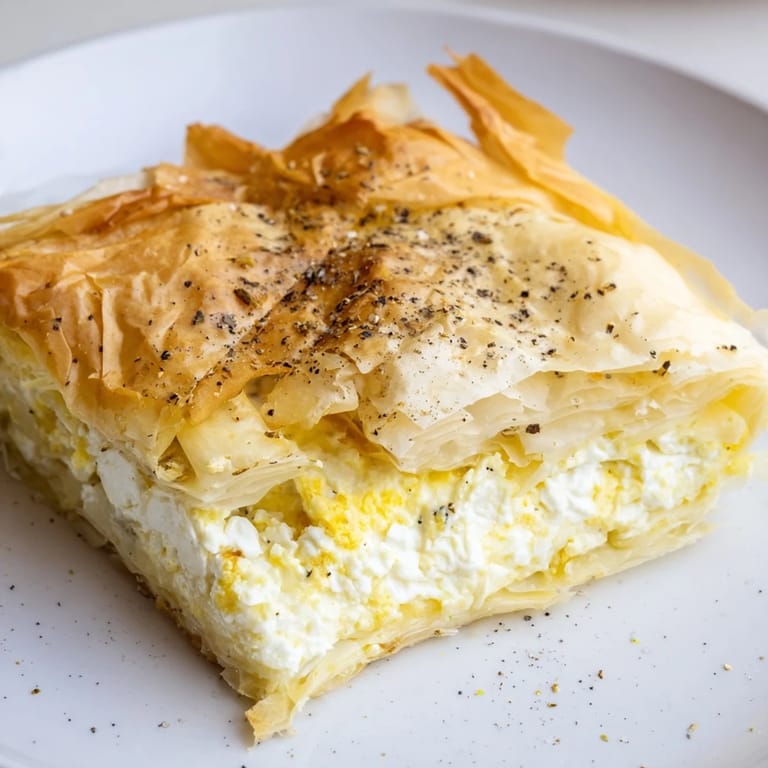
 There's a moment, about 20 minutes into baking, when the smell hits you—butter and cheese and toasted dough all at once—and you realize why this dish has survived centuries and migration and every change that time brings. It's the smell of someone caring enough to layer things by hand, to do it right.
The Phyllo Technique That Changes Everything
Phyllo dough intimidates people, and I get it; those paper-thin sheets look like they'll tear if you breathe too hard on them. But here's what I discovered: they're actually forgiving if you treat them with respect and keep them damp. The key is confidence—work steadily, don't fuss, and understand that a tiny tear doesn't matter because you're layering anyway. By the time you've placed your fourth sheet, you'll feel like you've done this a hundred times.
What to Serve Alongside
Banitsa doesn't need much, which is part of its beauty. Traditionally it's paired with ayran, that cold yogurt drink that cuts through the richness like nothing else can, or you could serve it with a simple tomato and cucumber salad dressed just with salt and oil. I've also found that a gentle green salad with lemon vinaigrette balances things perfectly if you're making this for lunch or dinner rather than breakfast.
Storage and Make-Ahead Ideas
Banitsa is one of those rare dishes that's almost better the next day when the flavors have melded and settled, though the crispy top does soften slightly; you can refresh it in a 160°C oven for 10 minutes if you want that crackle back. Keep it covered loosely on the counter for up to three days, or you can assemble the whole thing unbaked, wrap it tightly, and freeze it for up to a month—just add five minutes to the baking time straight from frozen.
- Cold banitsa for breakfast is perfectly acceptable and somehow feels even more luxurious.
- You can swap half the feta for Bulgarian sirene cheese or ricotta if you want something milder and creamier.
- A handful of fresh dill or parsley folded into the filling will make people ask what your secret ingredient is.
 Save to Pinterest
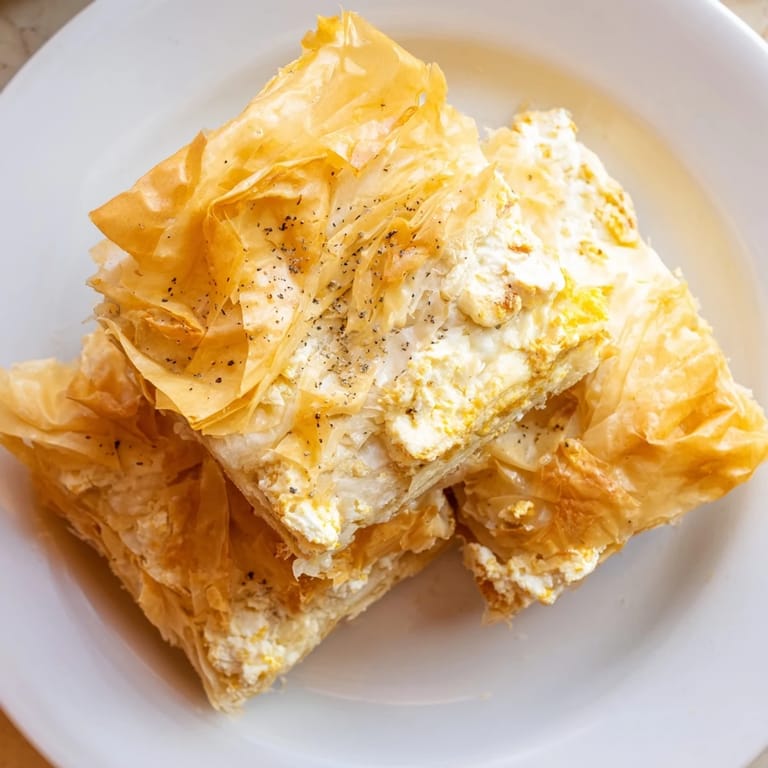
 This recipe is an invitation to slow down for 55 minutes and experience the satisfaction of building something delicate that emerges from the oven transformed. Once you've made it once, you'll keep making it, because that's how banitsa works—it becomes a reason to gather people around a table.
Recipe FAQs
- → What type of cheese best suits this dish?
Crumbled feta cheese is ideal for its tangy and creamy texture, though Bulgarian sirene or ricotta can be used for milder flavor.
- → How do I keep phyllo dough from drying out?
Keep the sheets covered with a damp towel while working to prevent drying and tearing.
- → Can this dish be made ahead of time?
Yes, you can prepare and assemble it before baking, then bake fresh when ready to serve.
- → What herbs complement the flavors here?
Fresh dill or parsley added to the filling highlights the savory cheese and enhances aroma.
- → What is the best way to serve this pastry?
Serve warm or at room temperature, paired nicely with cold yogurt drinks or fresh vegetable salads.