 Save to Pinterest
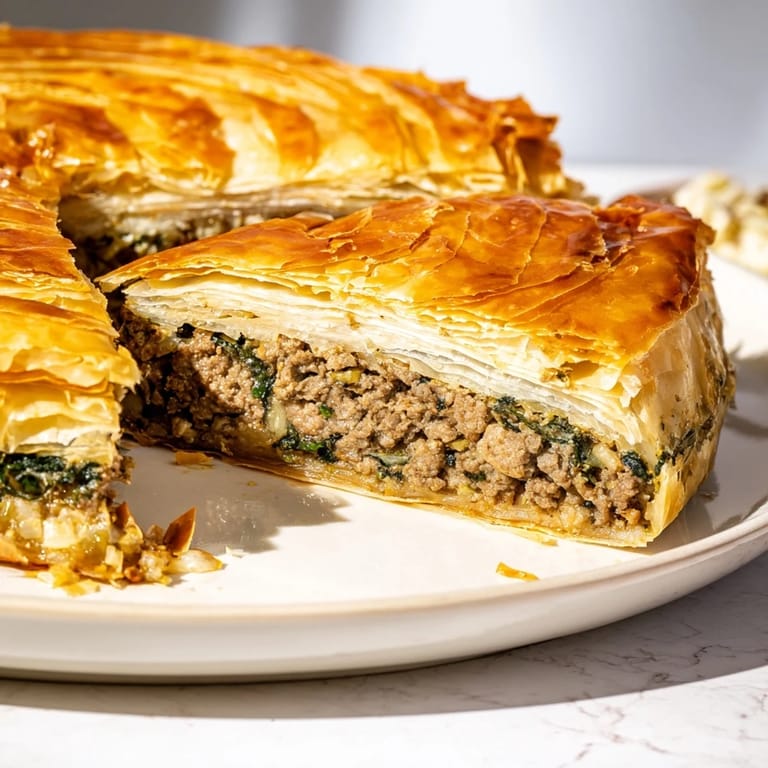
 The first time I watched my neighbor Amela roll burek, her hands moved with a rhythm that came from decades of practice. She'd lay out those impossibly thin phyllo sheets like she was handling silk, each one kissed with a butter-and-oil mixture, the kitchen filling with the smell of toasted grain and browning butter. I stood at her elbow asking questions she'd already answered a dozen times, but she didn't mind—she just kept rolling, coiling each log into a golden spiral with the patience of someone who understood that good food takes time. That afternoon, I realized burek wasn't just dinner; it was a conversation between her hands and the pastry.
I made this for a potluck once, nervous about bringing something so unfamiliar to a crowd used to casseroles and pasta. When I pulled it from the oven, the kitchen smelled like a Balkan market—earthy spinach, caramelized onions, butter crisping at the edges. A friend took one bite and closed her eyes, and that's when I knew I'd gotten it right. Now whenever I make it, I think about that moment of quiet appreciation.
Ingredients
- Ground beef: Look for an 80/20 ratio so the filling stays moist without pooling grease—too lean and it tastes dry, too fatty and you'll end up blotting oil after baking.
- Fresh spinach: Don't skip the step of chopping it fine; chunky spinach gets in the way of rolling and creates pockets of steam that can make the pastry soggy.
- Onion and garlic: Minced fine so they distribute evenly and cook into the beef rather than creating separate bites.
- Phyllo pastry sheets: Keep them under a damp towel or they'll crack and shatter as soon as you try to handle them—I learned this the hard way.
- Butter and vegetable oil: The combination is crucial; pure butter burns at high heat, but oil alone doesn't give you that golden, crispy finish.
Tired of Takeout? 🥡
Get 10 meals you can make faster than delivery arrives. Seriously.
One email. No spam. Unsubscribe anytime.
Instructions
- Heat your oven and prep your stage:
- Set the oven to 190°C and line your baking tray with parchment paper so nothing sticks. This small step saves cleanup and prevents the bottom from browning too fast.
- Combine your filling:
- Mix the beef, spinach, onion, garlic, salt, pepper, and paprika in a bowl until it looks uniform. The filling shouldn't be wet—if spinach releases too much moisture, squeeze it gently in a clean kitchen towel first.
- Make your butter mixture:
- Melt butter and stir in vegetable oil so they're evenly combined. Having this ready before you touch the phyllo saves frustration when you're juggling delicate sheets.
- Layer your phyllo:
- Lay one sheet on your work surface, brush it lightly with the butter-oil mixture, then layer another on top and brush again. Keep going until you have a stack of 2 to 3 sheets that feels sturdy but still pliable.
- Spread and roll:
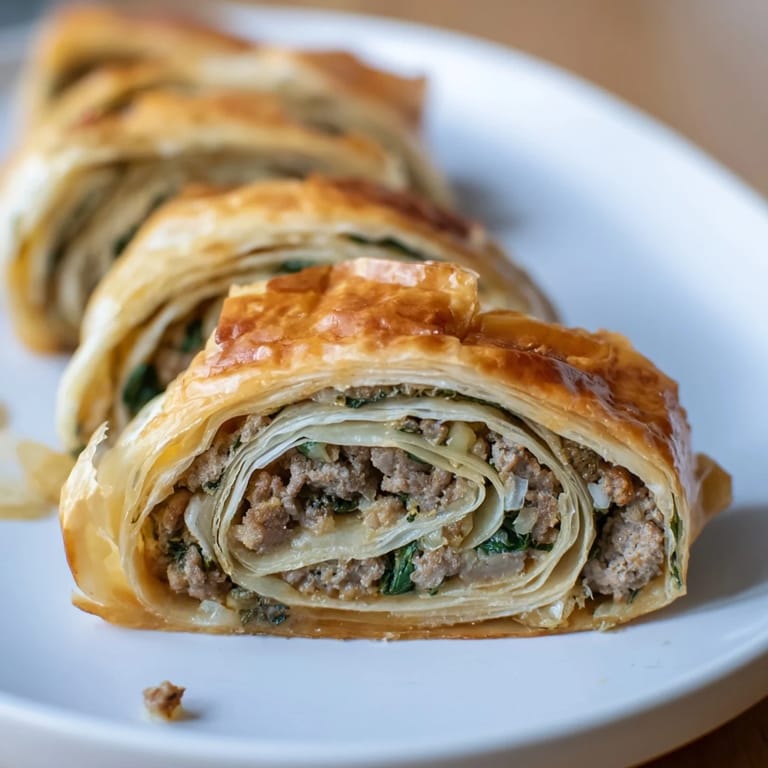
- Along one long edge of your phyllo stack, spread a thin line of filling, leaving a border so it doesn't squeeze out. Roll it up tightly like you're rolling a sleeping bag, then coil the whole thing into a spiral and place it seam-side down on the tray.
- Repeat and brush:
- Keep layering, filling, and coiling until everything is used up. You might end up with one large spiral or several smaller ones—either works beautifully.
- Add your final touches:
- Brush the top generously with remaining butter mixture. If you want extra crispness and a golden sheen, mix yogurt with a tablespoon of water and brush that on too.
- Bake until golden:
- Slide everything into the oven for 35 to 40 minutes until the pastry is shattered-crisp and deep golden. The filling will be cooked through and the butter will smell like nutty, toasted silk.
- Rest and serve:
- Let it sit for 10 minutes out of the oven—this keeps the filling from being scalding and lets the pastry set. Slice it warm and serve alongside yogurt or cucumber salad.
 Save to Pinterest
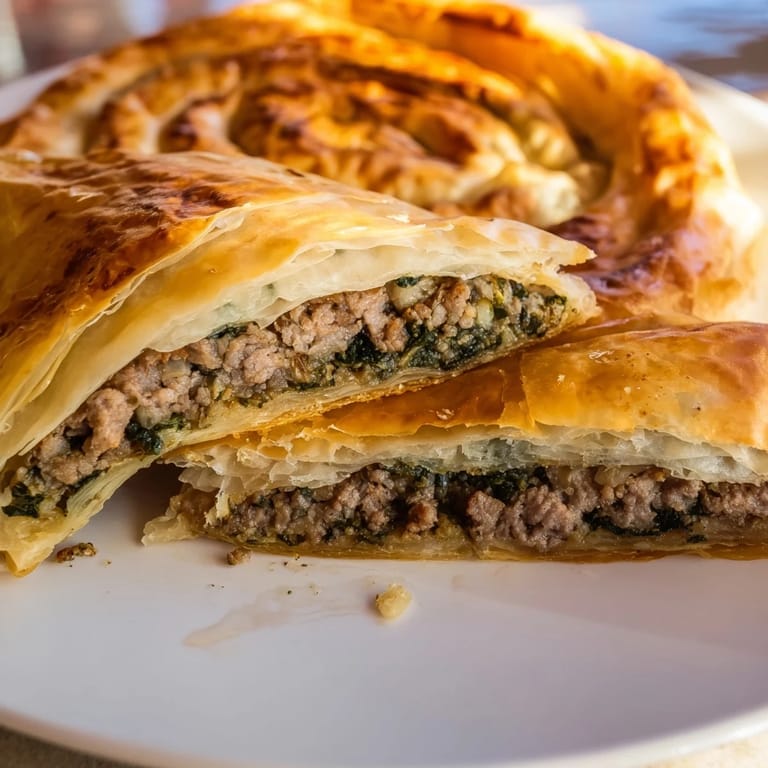
 There's a moment when the burek comes out of the oven and the kitchen fills with that golden, buttery aroma that makes everyone stop and pay attention. It's not fancy or fussy, but it feels like an accomplishment, like you've just recreated something from someone's grandmother's kitchen, something that matters.
Variations and Swaps
I've made this with ground lamb when I wanted something richer, and the shift is subtle but real—the lamb brings an earthiness that plays beautifully with the spinach. For a vegetarian version, I skip the meat entirely and crumble feta cheese into the spinach instead, which gives you salt and creaminess in place of the umami from the beef. You can also layer in some ricotta if you want a softer, moister filling, though it changes the character of the dish.
The Science of Crispy Pastry
Phyllo gets crispy because butter and oil separate the layers and prevent steam from making them stick together—each sheet crisps individually. The key is a light touch with the brush; too much butter pools and makes it greasy, too little and the layers bond together. Some people swear by the yogurt-and-water wash at the end, which adds a little extra structure and gives you that deep golden color that looks like you went to culinary school.
Serving and Storage
Burek is best eaten warm or at room temperature, never straight from the fridge where the pastry turns chewy and dense. Leftovers keep for a few days in an airtight container, and you can reheat gently in a 160°C oven for about 10 minutes to restore some of the crispness. It also freezes beautifully before baking, so you can assemble it, freeze it, and bake directly from frozen—just add a few extra minutes to the baking time.
- Serve alongside plain yogurt, a simple cucumber and tomato salad, or both for the full Balkan experience.
- A squeeze of fresh lemon brightens the filling and cuts through the richness of the butter.
- Make this the day before up to the baking stage so you're just popping it in the oven when guests arrive.
 Save to Pinterest
 Making burek is an act of patience and care, the kind of cooking that reminds you why people gather around food. There's no shortcut to something this good, and that's exactly what makes it worth your time.