 Save to Pinterest
 My sister called me three days before her birthday asking if I could bake something spring-themed, and honestly, I almost said no—until she mentioned how much she missed the lemon blueberry cake our grandmother used to make. That afternoon, I found myself at the farmer's market, filling a basket with the brightest blueberries I could find and squeezing lemons until my hands smelled like sunshine. The memory of watching Grandma fold berries into batter with such care suddenly made sense, and I knew exactly what I needed to create.
I'll never forget assembling this cake on my sister's kitchen counter while she sat nearby with her kids, who kept sneaking tastes of the frosting when they thought I wasn't looking. The moment I set it down in front of her at dinner, the whole room went quiet—not in a dramatic way, but in that genuine way where everyone's already imagining how it's going to taste. She cried a little, which maybe sounds like a lot for a cake, but it was really about feeling remembered.
Ingredients
- All-purpose flour (2 1/2 cups): This is your structure, so measuring by weight if you can makes a real difference in how level your cake rises and how tender the crumb stays.
- Baking powder and baking soda (2 tsp and 1/2 tsp): They work together to lift the cake without making it taste metallic—don't be tempted to add extra thinking it'll help.
- Unsalted butter (1 cup for batter, 1/2 cup for frosting): Room temperature is non-negotiable here; cold butter won't incorporate properly and you'll spend twenty minutes wondering why your batter looks gritty.
- Granulated sugar (1 3/4 cups): This dissolves into the butter to create that signature tender crumb, so creaming them together really does matter.
- Eggs (4 large, room temperature): Cold eggs can seize the batter, which I learned the hard way when I grabbed them straight from the fridge in a rush.
- Lemon zest and juice (2 tbsp zest, 1/3 cup juice): Fresh lemons are essential—bottled juice tastes tinny and the zest loses its brightness within days of grating.
- Whole milk (1 cup, room temperature): It helps balance the acidity of the lemon and keeps the crumb from becoming too dense.
- Fresh blueberries (1 1/2 cups plus 1 tbsp flour for tossing): The flour coating prevents them from sinking to the bottom, a trick that actually works if you do it gently right before folding.
- Cream cheese and powdered sugar for frosting: The cream cheese needs to be soft enough to beat smoothly, and sifting the powdered sugar removes lumps that can make frosting grainy.
Tired of Takeout? 🥡
Get 10 meals you can make faster than delivery arrives. Seriously.
One email. No spam. Unsubscribe anytime.
Instructions
- Prepare your workspace:
- Preheat the oven to 350°F and grease those three 8-inch pans thoroughly, then line them with parchment—it feels like extra work but it's the difference between a cake that slides out perfectly and one you're chiseling out of the pan. I learned to poke the parchment into the corners and trim it flush with the rim so everything stays tidy.
- Combine dry ingredients:
- Whisk together the flour, baking powder, baking soda, and salt in a medium bowl, breaking up any small lumps of flour you find hiding. This step ensures everything distributes evenly through the batter instead of creating pockets of dense cake.
- Cream butter and sugar:
- In a large bowl, beat the softened butter and sugar together for about 3 to 4 minutes until it looks pale and fluffy, like the color of wet sand. You'll feel the mixture get lighter under the beaters, and you'll actually hear the sound change from thick to airy.
- Incorporate eggs one at a time:
- Add each egg individually and beat well after each addition—rushing this or adding them all at once can break the emulsion and leave you with a separated, curdled-looking batter. Wait for each egg to be fully incorporated before adding the next, which takes about 30 to 45 seconds per egg.
- Add lemon flavor:
- Mix in the lemon zest and fresh lemon juice until the batter smells absolutely bright and alive. The aroma at this point should make you smile every time you lean over the bowl.
- Alternate wet and dry ingredients:
- Add about a third of the flour mixture, then a third of the milk, then another third of flour, then milk, ending with the last of the flour. Stir gently until just combined—overmixing at this stage develops gluten and can make the cake tough.
- Fold in the blueberries:
- Toss the berries with 1 tbsp flour so they don't all sink to the bottom, then fold them into the batter as gently as you can, using a rubber spatula to turn the batter rather than stir it. Some of them will still sink a little, and that's okay—you'll still have pockets of berry throughout.
- Divide and smooth:
- Pour the batter evenly into the three prepared pans, smoothing the tops with a spatula so they bake level. Aim to distribute the batter as equally as possible among the pans, though they don't need to be perfectly identical.
- Bake until golden:
- Bake for 25 to 30 minutes, watching for the moment when a toothpick inserted into the center comes out clean with maybe just a tiny crumb clinging to it. The cakes should smell incredible and the edges should pull slightly away from the pan sides.
- Cool with patience:
- Let the cakes rest in their pans for 10 minutes—this is when they set enough to handle—then turn them out onto wire racks to cool completely. Trying to frost warm cake is a recipe for melting frosting, trust me.
- Make the frosting:
- Beat the softened cream cheese and butter together until smooth and combined, then add the sifted powdered sugar, lemon juice, vanilla, and a pinch of salt. Beat until fluffy and spreadable, about 2 to 3 minutes, and taste it to see if it needs more lemon juice for your preference.
- Assemble the cake:
- Place the first cake layer on your serving plate, spread a generous layer of frosting on top, then repeat with the second layer and frosting. Finish with the third layer and frosting on top and all around the sides, smoothing it as much or as little as you like.
- Decorate and celebrate:
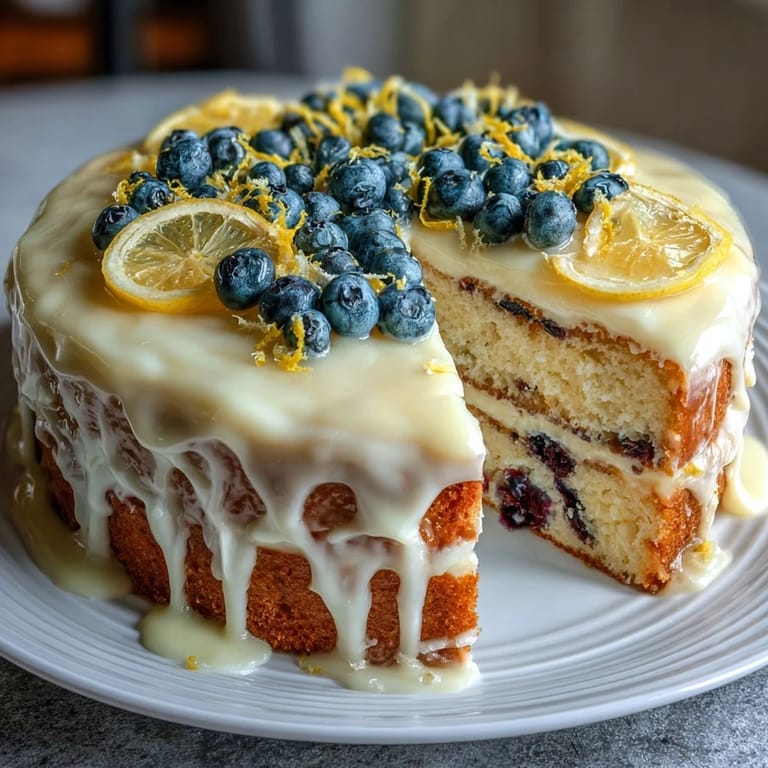
- Top the cake with fresh blueberries, a sprinkle of lemon zest curls, and any edible flowers if you have them. Step back and admire what you've made before anyone else sees it.
 Save to Pinterest
 There's a moment after frosting when the cake looks almost too pretty to cut into, and that's when you know you've done something right. My sister took a photo before anyone could touch it, and that picture showed up in our family group chat for months—proof that something made with care actually matters.
The Lemon Syrup Secret
After I made this cake the second time, I started brushing each layer with a simple lemon syrup before frosting, and it changed everything about how the cake tasted. The syrup keeps the layers moist and intensifies the lemon flavor in a way that feels almost subtle until someone takes that first bite and their eyes light up. To make it, just combine 1/4 cup fresh lemon juice with 2 tablespoons sugar, heat until the sugar dissolves, and brush it on each warm layer right after they come out of the pan.
Why Fresh Blueberries Matter Here
Frozen blueberries will work in a pinch, but they release more moisture as they thaw in the batter, which can throw off the moisture balance and make your cake less tender. Fresh berries have a firmer structure that holds up better during baking, plus their flavor is brighter and more distinct, which is the whole point when you're building a cake around them. If you only have frozen blueberries, don't thaw them—add them directly to the batter still frozen, and it helps them hold their shape and stay suspended rather than sinking.
Make-Ahead and Storage Tips
This cake actually gets better a day ahead, which feels like a gift when you're hosting something important. The flavors meld and the crumb becomes even more tender, though you might notice the frosting softens slightly, so keep it in a cool kitchen or lightly refrigerated.
- Unfrosted cake layers can be wrapped tightly and kept for a day, or frozen for up to three months if you want to spread the work across two days.
- The frosting can be made several hours ahead and kept at room temperature, but avoid refrigerating it if possible because it hardens and becomes difficult to spread smoothly.
- The finished cake is best served within three days, stored loosely covered on the counter or in a cake box to prevent it from drying out.
 Save to Pinterest
 This cake has a way of turning an ordinary day into something memorable, which is really all you can ask from a recipe. Make it for someone you care about, or make it just because the thought of lemon and blueberries together makes you happy.
Recipe FAQs
- → How do I keep blueberries from sinking in the batter?
Toss the fresh blueberries in a tablespoon of flour before folding them into the batter. This helps suspend them evenly during baking.
- → Can I prepare the cake layers ahead of time?
Yes, the cake layers can be baked a day in advance. Once cooled, wrap them tightly to maintain moisture until assembly.
- → What is the best way to enhance the lemon flavor?
Brushing each layer with a simple lemon syrup prior to frosting intensifies the zesty lemon taste throughout the cake.
- → What tools do I need to make this cake?
You will need three 8-inch round cake pans, mixing bowls, an electric mixer, a whisk, a rubber spatula, wire racks, and a zester or microplane for lemon zest.
- → How should I store the assembled cake?
Keep the assembled cake refrigerated to maintain freshness, especially due to the cream cheese frosting, and bring to room temperature before serving.
- → Are there any common allergens in this cake?
Yes, it contains wheat (gluten), eggs, and dairy (butter and cream cheese). Take care if allergies are a concern.