 Save to Pinterest
 My colleague brought a tin of hojicha tea to the office one afternoon, and the smell that escaped when she opened it stopped me mid-sentence. That toasted, almost nutty warmth sparked something—what if I layered that earthy depth into something indulgent? Tiramisu has always been my go-to when I want elegance without drama, so I started wondering if the two could live together on the same spoon. Turns out, they don't just coexist; they transform each other into something neither could be alone.
I made this for a dinner party on a rainy November evening, and watching my friends take that first bite—there was this pause, a moment where they were trying to place the flavor. Someone said it tasted like autumn felt, and I knew I'd found something special. The dessert became less about technique and more about that small magic of combining two completely different food traditions and having them whisper to each other instead of argue.
Ingredients
- Hojicha loose leaf tea: This is roasted green tea, and loose leaf makes a cleaner syrup than bags—the flavor comes through clearer and the steeping is more forgiving.
- Mascarpone cheese: Let this sit on the counter for 20 minutes before using; cold mascarpone fights you during folding, but softened mascarpone becomes silk.
- Heavy cream: Keep it genuinely cold from the fridge—whipping cold cream takes less effort and holds its structure longer.
- Egg yolks: The double boiler method isn't fussy; it gently pasteurizes while thickening, so you get safety and silky texture at once.
- Ladyfinger biscuits: These are the backbone—they need to absorb the syrup without falling apart, so the brief dip is everything.
- Granulated sugar: Use regular sugar in the yolk mixture; it dissolves cleanly and won't leave grittiness.
Tired of Takeout? 🥡
Get 10 meals you can make faster than delivery arrives. Seriously.
One email. No spam. Unsubscribe anytime.
Instructions
- Brew the hojicha syrup with intention:
- Boil water, add tea, and let it steep exactly 5 minutes—longer and the syrup turns bitter and loses that gentle roasted charm. Stir in sugar while the liquid is still hot so it dissolves completely, then let it cool on the counter until it's room temperature.
- Create the egg yolk custard over gentle heat:
- Place your heatproof bowl over barely simmering water and whisk constantly; the motion and heat work together to thicken the yolks into pale ribbons. This takes 5 to 7 minutes and feels like it's taking forever, but patience here means a custard that's both safe and impossibly smooth.
- Whip the cream to stiff peaks separately:
- This takes about 2 to 3 minutes with an electric mixer and gives you structure that will hold the dessert together. The moment you see stiff peaks, stop—overbeating turns cream grainy.
- Beat mascarpone and vanilla until smooth:
- This step prevents lumps in the final cream, taking just a minute or two of mixing until there are no streaks of unmixed cheese left.
- Fold everything together with a gentle hand:
- Add the cooled custard to the mascarpone, folding with a spatula in slow, patient strokes. Then fold in the whipped cream the same way, turning the bowl rather than stirring aggressively, until the mixture is one airy, unified cloud.
- Dip each ladyfinger briefly into the hojicha syrup:
- Count to two as you dunk—that's all the time they need to absorb flavor without becoming soggy. Arrange them in a single layer in your dish, and this layer becomes the platform for everything that follows.
- Layer with rhythm: fingers, then cream, then repeat:
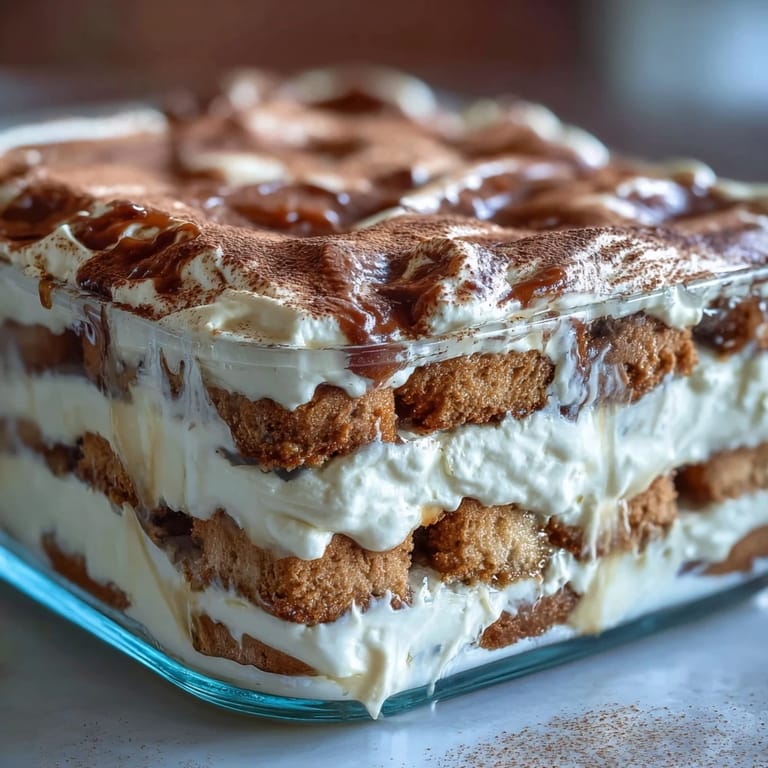
- Spread half the mascarpone cream evenly over the first layer of ladyfingers, then dip and arrange a second layer of fingers on top. Finish with the remaining cream, spreading it smooth and level.
- Chill for at least 4 hours, preferably overnight:
- This is where the magic actually happens—the flavors mellow and marry, and the structure sets so each spoonful holds together. Patience here transforms it from assembled to unified.
- Dust with cocoa or hojicha powder just before serving:
- This final flourish adds visual warmth and a whisper of extra flavor that reminds everyone what makes this dessert different.
 Save to Pinterest
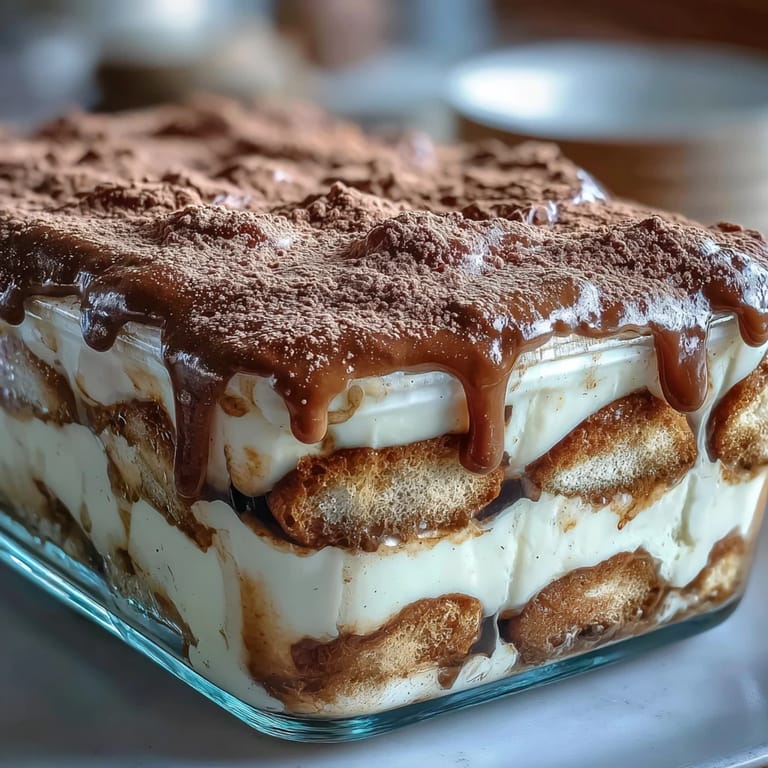
 There's a moment the next morning when you slice into this dessert for the first time and see the layers have fused into something cohesive, where you can actually taste how the hojicha syrup has whispered itself into every corner. That's when you understand why people love making tiramisu—it's less about following steps and more about witnessing a transformation that only happens with time.
The Hojicha Choice
Hojicha is roasted green tea, and that roasting process is what gives it that warm, almost caramel-like undertone that feels so different from regular green tea. When I first started using it, I treated it like any other tea, but I learned quickly that its flavor is more delicate and needs respect in the steeping—oversteep it even slightly and you lose the subtlety that makes it special. The 5-minute window is precise because that's where the sweet spot lives between full flavor extraction and bitterness.
Why This Fusion Works
Tiramisu is already about contrast—bitter coffee against sweet cream, crisp ladyfingers against soft filling. Hojicha brings those same contrasts but from a different angle: toasted warmth against delicate creaminess, earthiness against sweetness. The mascarpone acts as a translator between the two traditions, its neutral richness allowing both the Italian structure and the Japanese flavor to shine without fighting.
Timing and Temperature Matter
I learned the hard way that cold ingredients and a hot kitchen are not friends when you're making this dessert. The mascarpone needs to be soft enough to fold smoothly, the cream needs to be whipped from a genuinely cold state, and the hojicha syrup needs to be genuinely cool before it touches the ladyfingers. Getting these temperatures right transforms the assembly from frustrating to fluid.
- Let mascarpone sit out for 20 minutes before you start so it's soft but not greasy.
- Dip ladyfingers with intention—two seconds in the syrup, then arrange immediately while your hands remember the motion.
- Chill overnight if you can; the dessert tightens up and slices cleaner, and the flavors settle into something even more harmonious.
 Save to Pinterest
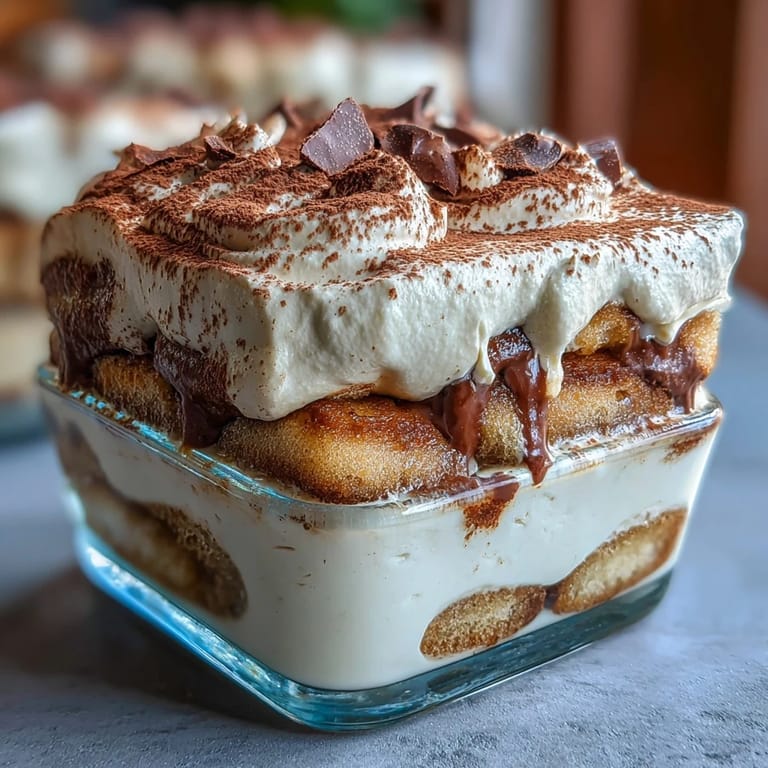
 This dessert quietly became one of those recipes I return to whenever I want to feel clever in the kitchen without the stress. It sits beautifully between cultures and doesn't apologize for being a little different.
Recipe FAQs
- → What makes hojicha tiramisu different from traditional tiramisu?
Instead of coffee, this version uses hojicha—a roasted Japanese green tea with toasty, earthy notes. The result is a dessert with less bitterness and more warm, nutty undertones while maintaining the beloved creamy texture and layered structure of the classic Italian favorite.
- → Can I make hojicha tiramisu ahead of time?
Absolutely. In fact, it benefits from chilling overnight. The flavors deepen and the texture sets more firmly, making it ideal for preparing a day before serving. Just add the final dusting of cocoa or hojicha powder right before serving.
- → What can I use if I can't find hojicha tea?
Matcha powder works for a brighter, grassier flavor. Alternatively, regular roasted green tea or even a blend of cocoa powder with a touch of vanilla can approximate the toasty profile, though authentic hojicha provides the most distinctive results.
- → Why do the egg yolks need to be cooked over simmering water?
This tempering process pasteurizes the eggs while creating a thick, pale base that stabilizes the mascarpone cream. It ensures food safety while contributing to the silky, luxurious texture that holds up beautifully during chilling.
- → How do I prevent the ladyfingers from becoming too soggy?
The key is a quick dip—just 1-2 seconds per side. The biscuits should absorb some liquid but remain structurally sound. They'll continue softening as the dessert chills, so brief dipping prevents a mushy final texture.
- → Can I make this dessert alcohol-free?
Yes, the base version contains no alcohol. For those who enjoy a traditional tiramisu kick, adding 2 tablespoons of coffee liqueur or Marsala wine to the tea syrup is optional and creates a more complex flavor profile.