 Save to Pinterest
 My mother stood at the kitchen counter on a random Tuesday morning, watching me fumble with a whisk over a double boiler, steam rising between us like a small cloud. She'd never asked me to make Eggs Benedict—I'd volunteered, wanting to prove I could master something that seemed impossibly fancy. That hollandaise nearly broke twice before I slowed down and listened to her gentle advice: patience, not speed. Now, years later, whenever I make this dish, I think of her hands guiding mine, and how the silkiest sauce always comes when you stop rushing.
I'll never forget the Mother's Day when my sister came home from college and I decided to make this for breakfast. The kitchen was chaos—muffins burning in the toaster, bacon grease popping, eggs sliding into water that wasn't quite the right temperature. But when I finally slid that first plate in front of her, the yolk breaking into the hollandaise, her quiet smile said everything. She didn't mention the slightly wonky assembly or the fact that one muffin was darker than the others. That's when I understood this dish isn't about perfection; it's about showing up for someone with your whole effort.
Ingredients
- English muffins, split and toasted: The foundation matters—look for ones with those characteristic nooks and crannies that catch the hollandaise like tiny golden pockets.
- Canadian bacon: Thicker than regular bacon and more forgiving, it brings a subtle smokiness without overpowering the delicate eggs.
- Large eggs: Room temperature eggs poach more evenly, so pull them from the fridge a few minutes before cooking if you remember.
- White vinegar: Just a tablespoon helps the egg whites set faster without affecting the taste, a small trick that makes poaching feel less stressful.
- Egg yolks for hollandaise: The richness of this sauce depends entirely on these yolks, so use the freshest eggs you can find.
- Unsalted butter, melted and warm: Warm, not hot—this detail separates a silky sauce from a separated, broken mess.
- Fresh lemon juice: Freshly squeezed makes a noticeable difference in brightness and prevents the sauce from tasting one-dimensional.
- Cayenne pepper and salt: Just specks of cayenne add warmth and sophistication, so don't be shy but don't overdo it either.
- Fresh chives or parsley: A small touch of green brings life to the plate and makes it feel finished rather than just functional.
Tired of Takeout? 🥡
Get 10 meals you can make faster than delivery arrives. Seriously.
One email. No spam. Unsubscribe anytime.
Instructions
- Build your hollandaise base gently:
- Fill your saucepan with an inch of water and let it simmer softly—this is where patience begins. Whisk your egg yolks and lemon juice together in a heatproof bowl set over (never touching) the water, and you'll feel the mixture thicken almost immediately as the heat embraces it.
- Add butter like you're making a friend's secret:
- Drizzle that warm melted butter slowly while whisking constantly—rushing this step is how hollandaise breaks. Once it's thick, glossy, and silky, pull it off the heat, season it, and keep it warm but not hot, maybe covered loosely with foil.
- Warm your Canadian bacon with intention:
- A skillet over medium heat is all you need for those slices to develop a light brown edge in just a minute or two per side. This happens faster than you'd think, so stay close and don't walk away.
- Swirl your way to perfect poached eggs:
- Bring a large saucepan of water to a gentle simmer with a tablespoon of vinegar, then create a gentle whirlpool with your spoon. Crack each egg into a small bowl first, then slide it into the center of the swirl—this trick prevents the whites from scattering like startled birds.
- Judge doneness by feel, not by clock:
- After three to four minutes, the whites should be set and opaque while the yolk still jiggles softly when you touch it with the slotted spoon. Lift each egg out carefully and let it drain on a paper towel for a few seconds.
- Assemble with the confidence of someone who knows what they're doing:
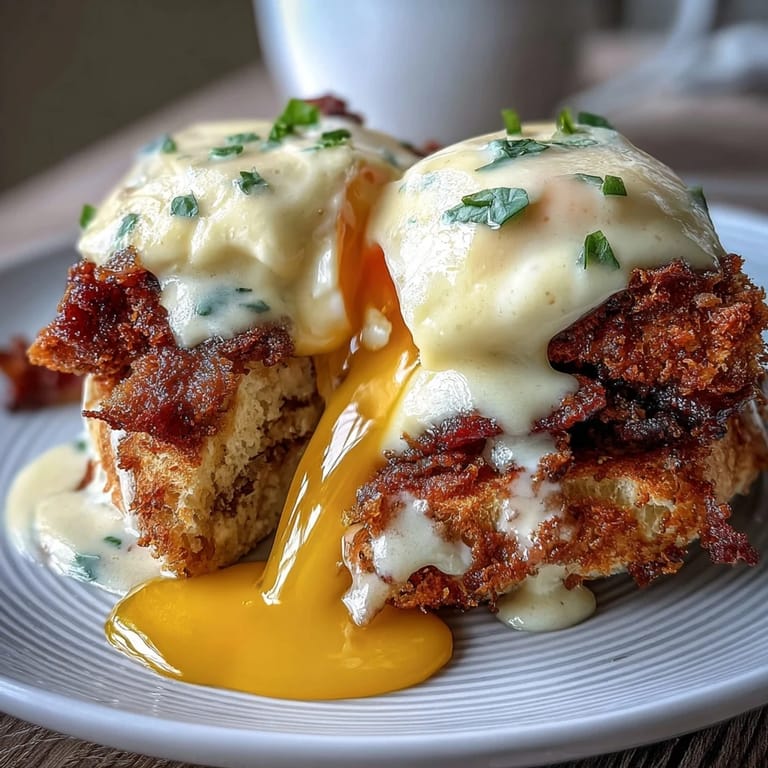
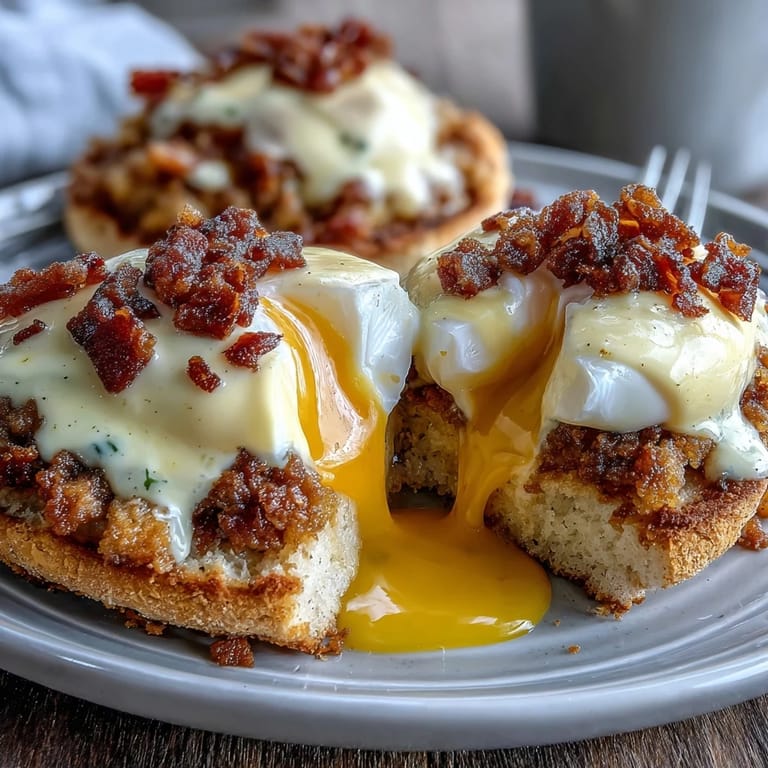
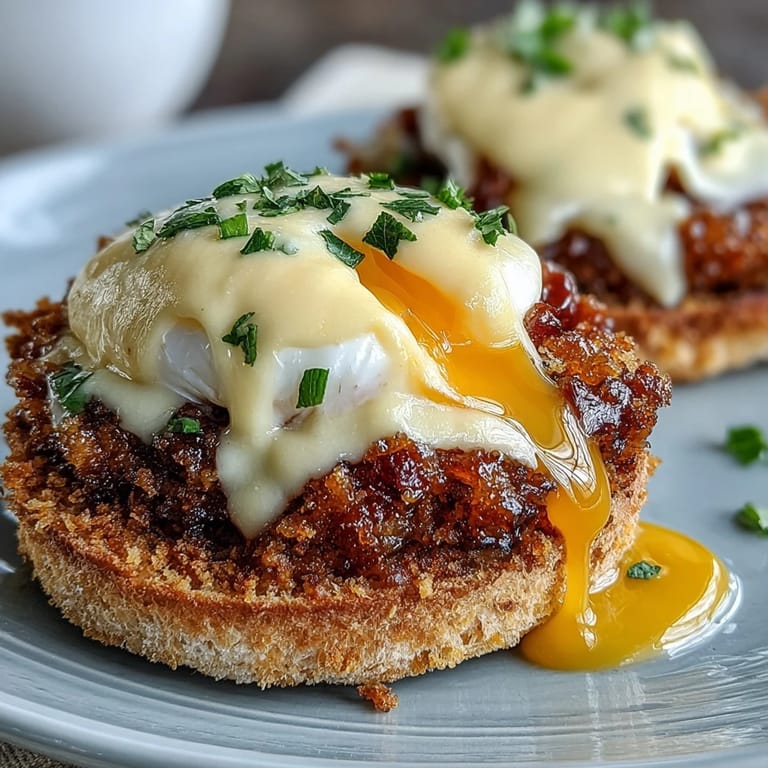
- Two muffin halves per plate, bacon on top of each, then the poached egg, then a generous spoonful of hollandaise that cascades like liquid gold. A whisper of chives, a crack of pepper, and you're done.
 Save to Pinterest
 There's a moment when everything comes together on the plate—the steam from the warm muffin mixing with the aroma of butter and lemon, the way the yolk breaks and mingles with that velvety sauce—and you realize you've created something memorable. It's not just breakfast; it's a small ceremony of care.
Why This Dish Feels More Impressive Than It Is
Eggs Benedict has a reputation for being complicated, which is partly why making it at home feels like a victory. The truth is, each component is simple on its own—you're just coordinating three easy things to happen at roughly the same time. The moment you understand that, you stop feeling nervous and start feeling capable. Once you've made it twice, you'll find yourself making it for weekends when people you care about show up at your door.
The Art of Timing Without Stress
Make your hollandaise first and keep it warm to the side—this buys you flexibility and one less thing to think about when you're managing eggs and bacon. Toast your muffins while the water for poaching heats, and warm your bacon in the same skillet you'll use for nothing else. If one component finishes before the others, it's fine; everything is more forgiving when you stay calm. The secret isn't about being fast; it's about thinking three steps ahead so you're never actually rushed.
Making It Your Own
The beauty of Eggs Benedict is that it's a template, not a rulebook. I've made versions with crispy prosciutto instead of Canadian bacon, with wilted spinach underneath like Eggs Florentine, even with sliced avocado for something lighter. The hollandaise is the constant—that's your signature—but everything else can bend to what you have or what sounds good that morning. Listen to your ingredients and trust your instincts, because the best version is the one that reflects what you're in the mood to create.
- A squeeze of hot sauce stirred into the hollandaise adds warmth and complexity without dominating the dish.
- If you're nervous about poaching, practice with one egg first while everything else waits patiently on the side.
- Serve immediately after assembly so the warmth of the muffin and bacon stays locked in with the runny yolk.
 Save to Pinterest
 This dish is a love letter you cook, one that says you took time and care to create something beautiful for the person in front of you. It's worth making again and again.
Recipe FAQs
- → What’s the best way to poach eggs perfectly?
Use vinegar in gently simmering water to help coagulate the whites quickly. Crack eggs individually and slide them gently into the water, cooking 3–4 minutes for soft yolks.
- → How do I keep hollandaise sauce from curdling?
Whisk continuously over gentle heat and avoid overheating. Keep it warm rather than hot to maintain smooth texture.
- → Can Canadian bacon be substituted for a vegetarian option?
Yes, sautéed spinach or avocado work well as savory, flavorful alternatives.
- → What sides pair well with this dish?
Fresh fruit, mixed greens, or light salads complement the richness nicely.
- → How should I store leftovers safely?
Keep components separate; refrigerate and reheat hollandaise gently to avoid separation.