 Save to Pinterest
 My first encounter with gochujang wasn't in a restaurant but at my neighbor's kitchen counter on a random Tuesday afternoon, when she was stress-cooking after a tough work day. She had an air fryer, leftover chicken, and what she called her secret weapon—a jar of gochujang she'd been hoarding. Twenty minutes later, the whole building smelled incredible, and I understood why she kept that jar so close. This version is that same magic, but lighter and easier to pull off whenever the craving hits.
I made this for my sister's book club potluck, and honestly, I wasn't sure how it would land with a group of people who'd never tried gochujang before. The moment that platter came out, the room went quiet—not awkward quiet, but the kind where everyone's too busy eating and nodding at each other to talk. Three people asked for the recipe that night, and one of them now makes it monthly.
Ingredients
- Boneless, skinless chicken thighs (1.5 lbs, cut into bite-sized pieces): Thighs stay juicier than breast meat, and the smaller pieces cook evenly in the air fryer without any dry spots hiding inside.
- Salt, black pepper, soy sauce, rice wine, garlic powder, ginger powder: This marinade builds flavor into the chicken itself—don't skip it, even if you're tempted to rush.
- Potato starch (1 cup): This creates a lighter, crispier crust than flour and is your secret to that authentic Korean fried chicken texture.
- Eggs (2 large, beaten): The egg wash helps the starch adhere and creates those irresistible crunchy bits.
- Cooking spray or neutral oil: A few spritzes on the basket and chicken pieces make all the difference in air fryer cooking—don't be shy about it.
- Gochujang (1/4 cup): This Korean chili paste is the star; its fermented depth and gentle heat tie everything together.
- Honey, brown sugar, soy sauce, rice vinegar, garlic, sesame oil: Together, these balance the heat of gochujang with sweetness and umami depth that makes you want another bite.
- Toasted sesame seeds and green onions: These aren't just garnish—they add texture and freshness that complete the dish.
Tired of Takeout? 🥡
Get 10 meals you can make faster than delivery arrives. Seriously.
One email. No spam. Unsubscribe anytime.
Instructions
- Marinate the chicken:
- Toss your chicken pieces with salt, pepper, soy sauce, rice wine, garlic powder, and ginger powder in a large bowl. Let them sit for 10 to 15 minutes—this is when the flavors start moving into the meat, so don't skip ahead even if you're hungry.
- Heat your air fryer:
- Set it to 400°F and let it preheat while you prep the rest. A proper preheat matters more in air fryers than you'd think.
- Set up the coating station:
- Pour potato starch into one shallow dish and beaten eggs into another. This assembly-line approach keeps your hands less messy and the coating more uniform.
- Double-coat for maximum crunch:
- Dredge each chicken piece in starch, dip into egg, then coat in starch again. That extra starch layer is what gives you that restaurant-quality crispiness.
- Arrange in the air fryer:
- Lightly spray the basket with oil, then layer the coated chicken in a single even layer without stacking or crowding. Work in batches if needed—cramming them in guarantees uneven cooking and some sad, chewy pieces.
- Spray and cook the first side:
- Give the chicken tops a light spray of oil, then air fry for 10 minutes. The oil spray is what transforms the starch into golden, crispy coating rather than pale and disappointing.
- Flip and finish:
- Use tongs to flip each piece, spray again, and cook for another 8 to 10 minutes until everything is golden brown and cooked through. The chicken should be hot and crispy, not soft.
- Build the glaze while chicken cooks:
- Combine gochujang, honey, brown sugar, soy sauce, rice vinegar, minced garlic, and sesame oil in a small saucepan over medium heat. Stir constantly as it simmers for 3 to 4 minutes until it thickens slightly—you'll notice it coating the back of your spoon.
- Toss and coat:
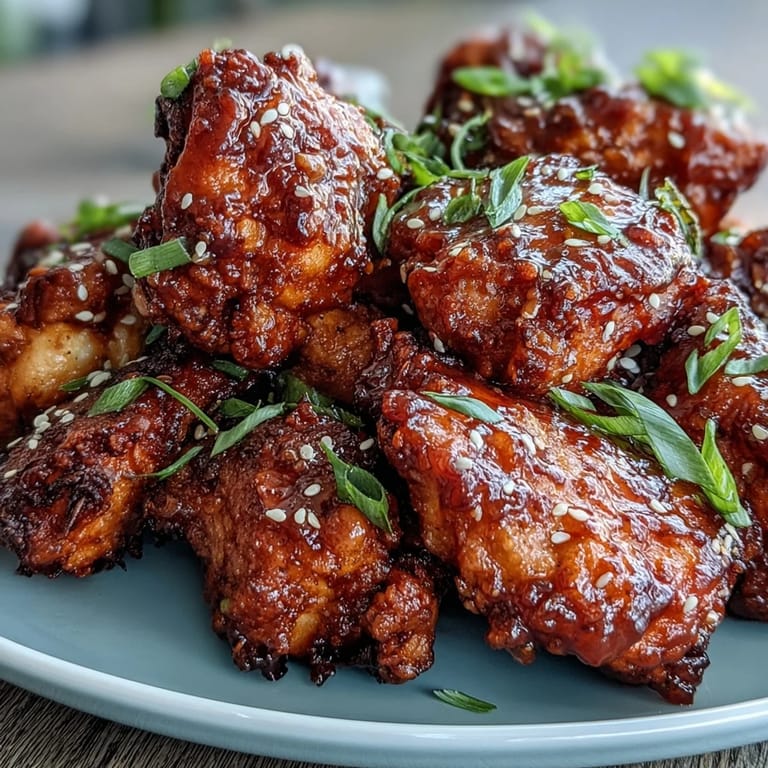
- Transfer the hot chicken to a large bowl, pour the warm glaze over it, and toss until every piece is evenly covered. The heat of the chicken helps the glaze coat and cling.
- Plate and garnish:
- Move everything to a serving platter and scatter toasted sesame seeds and sliced green onions on top. The green onions add a cool, fresh bite that cuts through the richness beautifully.
 Save to Pinterest
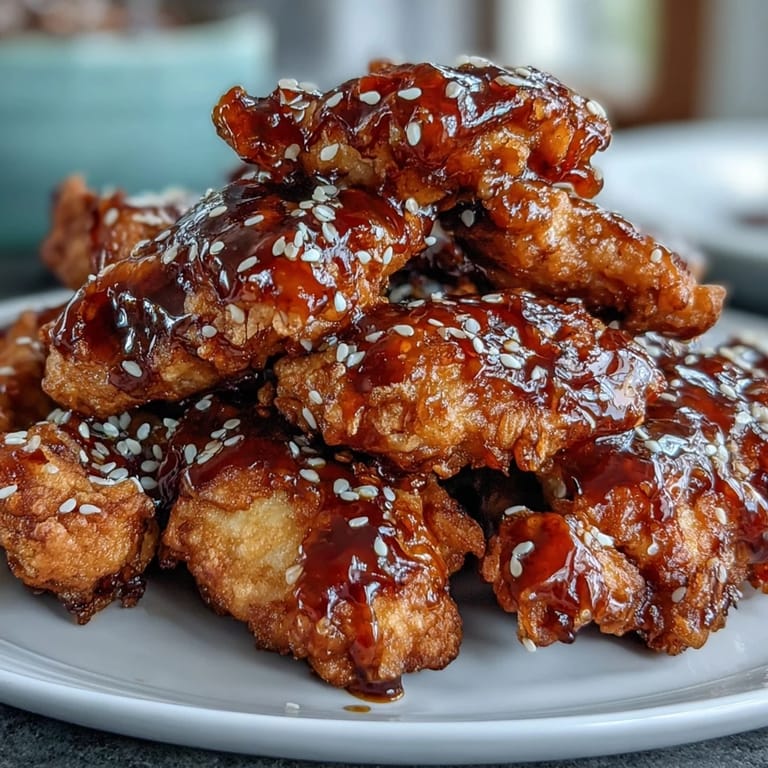
 There's something about watching someone taste gochujang fried chicken for the first time—they pause, their eyes get a little wider, and then they reach for another piece without thinking. That moment of realization that spicy and sweet and crispy can all exist together in one bite is worth every minute of prep.
The Magic of Potato Starch
Potato starch is lighter than flour and creates a crust that stays crispy even after the chicken cools slightly—something I discovered by accident when leftovers from lunch were somehow still good at dinner. It also browns faster and deeper, giving you that gorgeous golden-brown exterior without any burnt bits. Once I switched from cornstarch to potato starch, there was no going back.
Making It Your Own
The beautiful thing about this recipe is how flexible it is without losing its soul. Want extra heat? A pinch of gochugaru (Korean chili flakes) stirred into the glaze turns up the spice dial. Prefer chicken breast? It'll work, but watch it closely since it dries out faster than thighs—maybe shave a minute or two off the cooking time. The glaze is so good that it works as a dipping sauce too, so even if someone prefers their chicken without the full coating, they'll want a bowl of it on the side.
Serving and Pairing
Serve this over steamed rice with a side of pickled radish or quick cucumber kimchi if you have it—the acidity is a perfect counterbalance to the richness of the glaze. A cold beer or even a simple ginger ale works beautifully alongside it. I've also served it at room temperature as part of a Korean-inspired spread with rice cakes, vegetable pancakes, and various dipping sauces, and it disappeared just as fast.
- Pickled vegetables and steamed rice are your best friends here—they refresh your palate between bites.
- Leftover chicken reheats well in the air fryer at 350°F for just a few minutes if you need to make it ahead.
- Double the glaze recipe if you like extra sauce for dipping or drizzling.
 Save to Pinterest
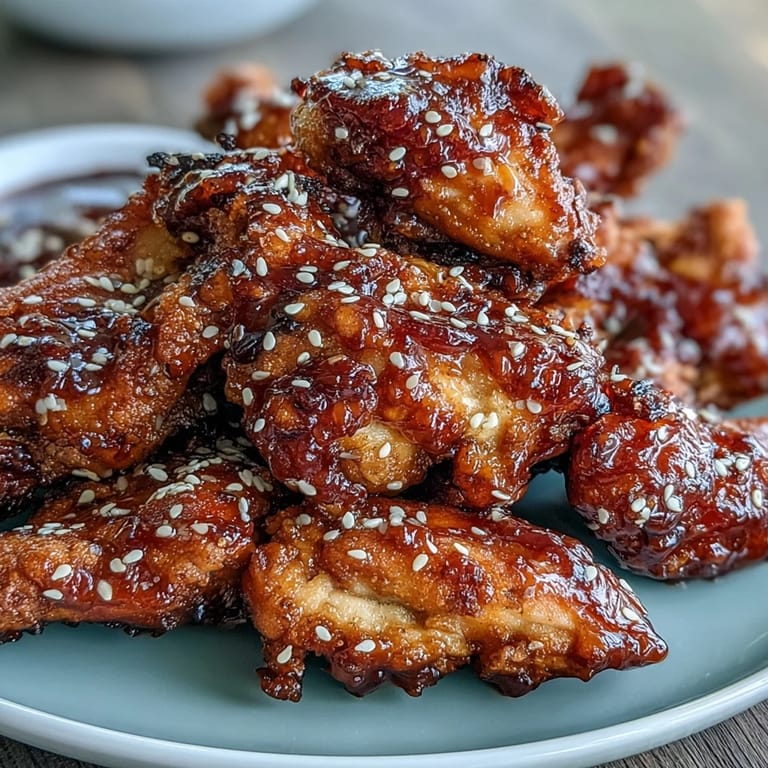
 This dish is proof that lighter cooking methods don't mean sacrificing texture, flavor, or that satisfied feeling you get from really good fried chicken. Every time I make it, I'm grateful for an air fryer and a jar of gochujang that somehow turned a random Tuesday into something worth repeating again and again.
Recipe FAQs
- → What is the best cut of chicken for this dish?
Boneless, skinless chicken thighs work best for tenderness and flavor, but chicken breasts can be used with adjusted cooking time.
- → How can I make the coating extra crispy?
Double dredging in potato starch with an egg wash in between creates a crunchy and light crust when air-fried.
- → Can I adjust the spiciness of the glaze?
Yes, adding Korean chili flakes (gochugaru) to the glaze increases heat without altering the overall flavor balance.
- → Is the glaze gluten-free?
Check the labels of gochujang and soy sauce as some varieties contain gluten; use tamari for a gluten-free option.
- → What sides pair well with this chicken dish?
Pickled radish and steamed rice complement the spicy-sweet flavors and provide a balanced meal.
- → How long should I marinate the chicken?
Marinating for 10 to 15 minutes allows the seasonings to infuse without overpowering the natural chicken flavor.